Summer tennis camps solve two problems at once. Your child stays active and develops real skills while you get reliable childcare during the week. But camps vary wildly in quality, structure, and what you actually get for your money.
Some camps are glorified babysitting where kids hit balls for an hour then watch movies the rest of the day. Others provide intensive skill development with certified coaches, proper progression, and structured training that creates measurable improvement.
This guide covers what summer tennis camps actually look like in Glendale and Burbank, what you'll pay, how to choose between options, and everything you need to know before registering your child for summer 2026.
Types of Summer Tennis Camps Available
Tennis camps split into three main categories based on format and intensity. Know which type fits your child's goals before you register.
Half-Day Camps (3-4 Hours)
Typical schedule runs 9am-12pm or 1pm-4pm. Kids spend the entire time on tennis drills, skill development, and match play. No other activities included.
This format works best for kids who already have afternoon activities lined up, families with flexible work schedules, or children who don't have the stamina for full-day programs.
Half-day camps typically cost $200-300 per week in the Glendale area. Lower price than full-day but you need backup childcare for the rest of the day.
Full-Day Camps (6-8 Hours)
Most run 9am-4pm with drop-off starting at 8:30am. Morning focuses on tennis training. Afternoon includes swimming, games, or other recreational activities depending on the facility.
Full-day camps solve the childcare problem for working parents. Your child gets tennis instruction plus supervised activities that keep them engaged all day.
Expect to pay $350-500 per week for full-day formats. Higher cost but includes lunch supervision and afternoon activities beyond just tennis.
Intensive Training Camps
Designed for competitive players preparing for tournaments or high school teams. Focus exclusively on tennis with 5-6 hours of daily training including match play, strategy work, and physical conditioning.
These camps typically require tryouts or skill assessments. Not suitable for beginners or recreational players. Pricing runs higher, usually $400-600 per week, because of smaller group sizes and specialized coaching.
Summer Camp Schedules and Age Groups
Most camps run in one-week sessions throughout June, July, and August. Registration typically opens in March or April, with popular weeks filling up by May.
Ages 3-5 (Beginner / Red Ball)
Half-day formats work best for this age group. Younger kids tire quickly and need shorter sessions with frequent activity changes. Red Ball programs use red balls, small courts, and lots of movement-based games.
Expect 2-3 hours maximum per day. Longer sessions lead to attention problems and behavioral issues as kids get tired.
Ages 6-8 (Intermediate / Orange Ball)
This group can handle half-day or full-day formats. Morning tennis training with afternoon recreational activities works well. Tennis portion runs 3-4 hours with proper breaks.
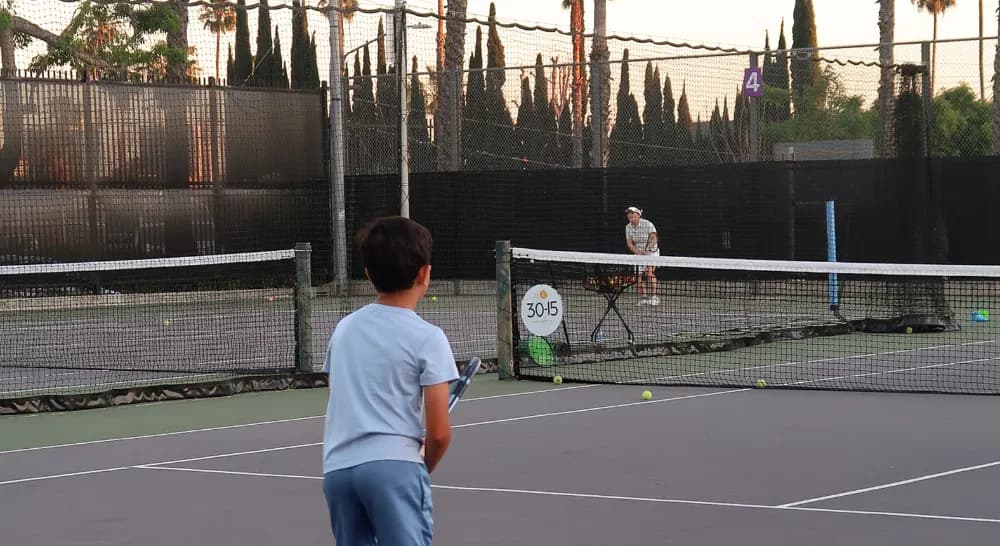
Quality camps like 30-15 Tennis Academy maintain small group sizes even during summer programs. Four players per court keeps everyone actively involved instead of standing around waiting.
Ages 9-11 (Advanced / Green Ball)
Full-day programs or intensive training camps suit this age. Kids can sustain longer training blocks and benefit from structured drilling. Tennis training extends to 4-5 hours daily for serious players, mixing technical work, tactical development, match play, and physical conditioning.
Ages 12+ (Competitive / Yellow Ball)
High school players preparing for season or tournament competitors. Training mirrors college-level intensity with focus on match preparation and competitive skills. These programs often include video analysis, mental training components, and tournament simulation drills.
What Summer Tennis Camps Cost in 2026
Pricing varies based on format, duration, and what's included beyond tennis instruction.
Public Recreation Programs
City of Glendale and Burbank Parks & Recreation offer the most affordable options. Half-day camps typically run $150-200 per week. Lower cost means larger group sizes and less individualized instruction — expect 8-12 kids per court rather than the 4-6 at private programs.
These camps fill up extremely fast. Registration usually opens in March and popular weeks sell out within days.
Private Academy Camps
Dedicated tennis academies charge more but provide better instruction quality and smaller groups. Half-day camps run $250-350 per week. Full-day programs cost $400-500 per week. Academy members often receive discounted rates, sometimes 10-15% off regular pricing. Ready to join the academy? Sign up for tennis.
Higher price buys certified coaches, proper equipment for each age group, and structured progression rather than random activities.
Multi-Week Discounts
Most camps offer reduced pricing when you register for multiple weeks. Common structure: full price for first week, 10% off second week, 15% off third week or more. Sibling discounts also exist at many programs — the second child typically gets 10-15% off when registered for the same week.
What Affects Camp Pricing
Coach-to-camper ratio. Four kids per coach costs more than 10 kids per coach. But your child gets significantly more attention and hitting time.
Included activities. Tennis-only camps cost less than camps including swimming, field trips, or lunch. Know what you're paying for.
Facility quality. Programs at dedicated tennis facilities with climate control, quality courts, and proper equipment cost more than public park programs.
What to Pack for Tennis Camp
Proper preparation prevents mid-week emergency runs to buy forgotten items. Pack these essentials.
Tennis Equipment (Required)
Tennis racket. Properly sized for your child's height. Most camps have loaners but bringing their own racket helps with comfort and consistency.
Tennis shoes. Non-marking court shoes with lateral support. Running shoes work temporarily but lack the ankle stability needed for tennis movement.
Athletic clothing. Moisture-wicking shirts and shorts. Pack at least two sets if camp runs multiple days. Cotton t-shirts get soaked and stay wet.
Protection and Hydration (Essential)
Large water bottle. 24-32 ounces minimum. Kids playing tennis in California summer heat need constant hydration. Label it clearly with permanent marker.
Sunscreen. SPF 30+ applied before arrival. Pack extra in their bag for reapplication. Spray sunscreen works better than lotion for quick mid-day touch-ups.
Hat or visor. Wide brim protects face and neck. Choose one that fits snugly so it doesn't fly off during running drills.
Food and Snacks
Lunch (for full-day camps). Pack items that don't need refrigeration and won't get crushed in a backpack. Avoid anything requiring heating.
Snacks. High-energy options like granola bars, fruit, crackers. Avoid candy or sugary items that cause energy crashes.
Nut-free options. Many camps have nut-free policies due to allergies. Check specific camp rules before packing.
How to Choose the Right Summer Camp
These questions help you evaluate camps before spending money on registration.
What's the Coach-to-Camper Ratio?
Four to six kids per coach is ideal. Eight to ten is acceptable for older, more independent kids. Anything above 10 means excessive waiting and minimal individual attention. Don't accept vague answers — get specific numbers for the age group you're registering.
Are Coaches Certified?
Ask if coaches hold USPTA or PTR certification and whether they're trained in youth development. High school players or college students working summer jobs aren't inherently bad coaches, but they should be supervised by experienced teaching professionals.
What Equipment Does the Camp Use?
Camps for younger kids should use red and orange balls with appropriately sized courts. Programs putting 7-year-olds on full courts with yellow balls don't understand child development. Ask to see the courts and equipment during registration if possible.
What's the Refund Policy?
Kids get sick. Family emergencies happen. Typical policies: full refund if cancelled 10+ days before start, 50% refund 3-10 days before, no refund within 72 hours. Some camps offer makeup weeks for medical emergencies with documentation.
Registration Tips and Timeline
Popular camps fill up quickly. Follow this timeline to secure spots.
March-April: Research and Register Early. Most programs open registration in March. The best weeks fill up within 2-3 weeks. Register as soon as you know your schedule.
May: Confirm Details and Pay Balances. Many camps require deposits at registration with balance due 30 days before camp starts. Confirm you received confirmation emails with all camp details.
Two Weeks Before: Prepare Equipment. Check that tennis racket still fits your child — kids grow fast. Complete any required medical forms or emergency contact paperwork.
Week Of: Final Preparations. Pack everything the night before. Talk through the schedule with your child. Knowing what to expect reduces first-day anxiety.
What to Expect During Camp Week
First Day Jitters Are Normal
Many kids feel nervous about camp, especially if they don't know other campers. Good programs pair new kids with camp buddies and structure activities to encourage interaction. Drop-off might involve tears — this is normal and usually resolves within 15 minutes once activities start.
Skill Improvement Takes Time
One week of camp won't transform your child into a tournament player. Realistic goals: improved consistency, better understanding of technique, increased confidence on court. Progress shows up more clearly 2-3 weeks after camp when skills have time to solidify.
Fatigue Is Expected
Kids will be tired at pickup. Playing tennis for 3-4 hours daily in summer heat is physically demanding. Early bedtimes help recovery. Soreness in legs and shoulders is common and normal — this isn't injury, just muscles adapting to increased activity.
Register Before Spots Fill Up
The right summer tennis camp provides structured skill development in small groups with certified coaches who understand youth development. Your child stays active, builds real tennis skills, and makes friends while you get reliable summer childcare.
Quality matters more than price. A $200 camp with 12 kids per court and inexperienced coaches wastes your money and your child's time. A $350 camp with proper instruction and 4-to-1 ratios creates actual improvement.
30-15 Tennis Academy runs summer programs with the same small-group structure and certified coaching as regular season classes. Sessions fill up quickly — early registration is recommended to secure preferred weeks. Learn more about summer camp schedules and registration at 3015tennisacademy.com or call 818-722-3015. Explore our junior programs for age- and skill-based training.
Frequently Asked Questions
Can my child attend if they've never played tennis before?
Most camps welcome complete beginners and group kids by skill level. Beginners work on basic coordination and having fun while experienced players focus on technique refinement. Confirm during registration that the camp accommodates true beginners. Some intensive camps require baseline skills and aren't suitable for first-time players.
What happens if it rains?
Policies vary by camp. Some have indoor courts or covered facilities and continue rain or shine. Others cancel the day and offer makeup sessions or partial refunds. Ask about weather policies before registering, especially for expensive camps where losing days to weather significantly reduces value.
Should I register my child with friends or let them make new ones?
Both approaches work. Attending with friends provides comfort and guaranteed social connection. Attending solo pushes kids to make new friends and build independence. Consider your child's personality. Shy kids might benefit from the security of a known friend. Outgoing kids often thrive meeting new people.
How do I know if my child is ready for full-day camp?
Consider stamina and independence. Can they handle 6-7 hours away from home? Do they self-regulate snack and water breaks? Can they manage their belongings? If unsure, start with half-day camp and expand to full-day the following summer.
What if my child wants to quit mid-week?
Talk through the reasons. First-day nerves often fade by day two. Legitimate concerns about safety, bullying, or inappropriate coaching should be addressed immediately with camp directors. Most camps don't offer refunds for quitting mid-week, so try to resolve issues rather than withdraw unless circumstances are serious.