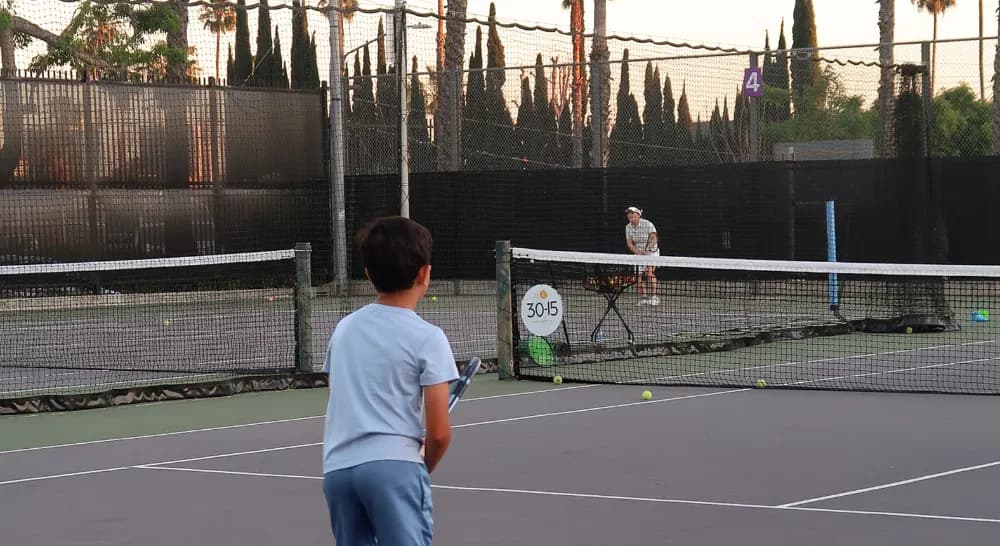
Getting your child started in tennis means navigating different program types, age-specific equipment, and wildly varying teaching approaches. Some programs throw kids on full courts with regular balls and expect them to figure it out. Others use modified equipment and scaled courts that actually let children succeed from day one.
The difference matters. Kids who start with age-appropriate progression stick with tennis longer and develop better technique. Those who start with equipment too advanced for their size get frustrated and quit.
This guide explains how youth tennis actually works, what to look for at different ages, what you'll pay in Glendale, and how to find programs that set your child up for long-term success rather than quick burnout.
How Youth Tennis Programs Work by Age and Stage
Youth tennis doesn't use the same equipment and courts at every age. The USTA developed a progression system using modified balls, smaller courts, and appropriate racket sizes based on the child's physical development.
Red Ball (Ages 3-5): The Starting Point
Red balls are larger, softer, and bounce about 75% lower than regular tennis balls. Kids play on a 36-foot court with lower nets and use 19 to 23-inch rackets depending on their height.
This stage focuses on fundamental movement patterns, basic hand-eye coordination, and getting comfortable hitting a moving ball. The lower bounce keeps the ball in a child's natural strike zone, which means more successful contact and less frustration.
Red ball programs typically run 45-60 minutes because younger children have shorter attention spans. Effective programs mix skill drills with games that keep kids moving and engaged rather than standing in lines.
Orange Ball (Ages 6-8): Building Consistency
Orange balls bounce about 50% lower than regular balls. Courts expand to 60 feet, nets stay at full height, and racket sizes increase to 23-25 inches.
At this stage, kids start adding variations to strokes. They learn topspin basics, begin developing serve consistency, and understand simple match strategy like hitting crosscourt versus down the line.
Sessions typically run 60-75 minutes. Kids at this age can handle longer training blocks and benefit from more structured drills that build specific skills.
Green Ball (Ages 9-11): Transitioning to Full Court
Green balls bounce about 25% lower than standard balls. Players use full-size courts (78 feet) and full-size nets. Racket sizes range from 25-27 inches.
This is the bridge to competitive tennis. Kids refine stroke mechanics, develop consistent serves, learn point construction, and start understanding match tactics and mental skills.
Training sessions run 75-90 minutes. Players at this level can sustain longer periods of focused work and benefit from match simulation drills.
Yellow Ball (Ages 12+): Competitive Development
Yellow ball programs use standard tennis balls on full courts with adult equipment. At this point, progression depends on skill level and competitive goals rather than age alone.
Programs split into recreational and competitive tracks. Recreational players focus on enjoyment and fitness. Competitive players train for tournaments, high school teams, or potential college play.
Session length varies from 90 minutes for recreational groups to 2+ hours for competitive training programs.
What Makes a Good Kids Tennis Program
Not all youth programs follow proper development progressions. Here's what separates effective training from babysitting with tennis balls.
Age-Appropriate Equipment and Court Sizes
Programs using regular yellow balls for 6-year-olds are setting kids up for failure. The ball bounces over their heads, they can't control it, and they spend most of the lesson chasing balls instead of hitting them.
Quality programs use the right equipment for each age group. Red balls for beginners, orange for intermediate, green for advanced juniors. Courts scale appropriately so kids can actually cover the space.
Small Group Sizes That Keep Kids Active
Maximum 4 players per court keeps everyone actively involved. 30-15 Tennis Academy structures all junior groups with this ratio because it eliminates long waiting periods where kids get bored and lose focus.
Public recreation programs sometimes run 8-10 kids on one court to keep costs down. This means each child hits maybe 10-15 balls per hour. That's not training. That's organized chaos with minimal skill development.
Coaches Who Understand Child Development
Teaching a 5-year-old differs completely from teaching a 15-year-old. Younger kids need shorter explanations, more movement variety, and game-based learning. Teenagers can handle technical feedback and longer drilling sessions.
Effective youth coaches adjust their teaching style to the age group. They keep 6-year-olds moving with fun games that secretly build footwork. They challenge 12-year-olds with drills that develop competitive skills.
Clear Progression Path Between Stages
Your child shouldn't stay in red ball for three years. Good programs have clear benchmarks for advancing to the next stage based on skill development, not just age.
They also communicate progress to parents. You should know what skills your child is working on, what they've mastered, and what comes next.
Focus on Fundamentals Over Winning
Programs that prioritize match wins for 7-year-olds miss the point. At young ages, proper technique development matters more than competitive results.
Building correct grips, footwork patterns, and swing mechanics takes time. Rushing kids into competition before fundamentals are solid creates bad habits that are harder to fix later.
What Kids Tennis Costs in Glendale
Youth tennis pricing varies based on format, group size, and facility quality. Here's what programs actually cost in the area.
Group Classes
Public recreation programs offer the lowest rates. Burbank Parks & Recreation runs 9-week sessions for about $55-60, which breaks down to roughly $6-7 per hour. These fill up fast and operate on fixed schedules.
Private academy group programs typically run $25-40 per child per session. The higher price buys smaller group sizes, better coach-to-student ratios, and more structured progression.
Monthly membership programs at dedicated academies range from $390-610 per month depending on training frequency. Programs offering 2-4 lessons per week provide consistent training schedules, progress tracking, and often include member benefits beyond just court time.
Private Lessons
One-on-one instruction for kids runs $60-95 per hour depending on coach credentials and experience. This format works best for technique corrections, competitive tournament prep, or kids who need individual attention to stay focused.
Private lessons aren't necessary for beginners. Most kids do fine in small group settings where they learn alongside peers.
Summer Camps
Half-day summer camps (usually 9am-12pm or 1pm-4pm) typically cost $200-350 per week. Full-day camps run $350-500 per week depending on what's included.
Some camps are pure tennis training. Others mix tennis with other activities like swimming, games, or field trips. Know what you're paying for before signing up.
What Affects the Price
Group size. Four kids per court costs more per child than eight kids per court. But your child gets double the hitting time and attention.
Coach credentials and experience. Certified coaches with youth development training charge more than part-time instructors without formal teaching credentials.
Facility quality. Dedicated tennis facilities with proper equipment, climate-controlled environments, and maintained courts cost more to operate than public park programs.
What to Expect in the First Few Months
Setting realistic expectations prevents frustration for both you and your child.
First Few Sessions
Your child will probably miss more balls than they hit. This is completely normal. Hand-eye coordination for tracking and hitting a moving object takes time to develop.
Good coaches structure early lessons so kids experience success quickly. Shorter distances, slower balls, and simpler targets let beginners make contact and feel accomplished.
After 8-10 Weeks
Most kids can sustain short rallies with the coach feeding balls. They understand basic rules and can keep score in simple games. Their hand-eye coordination improves noticeably.
They shouldn't have perfect technique yet. Clean, consistent strokes take 6-12 months of regular practice. But they should show clear improvement in making contact and controlling where the ball goes.
After 6 Months
Kids who train consistently can rally with other students, play simple matches, and understand basic strategy like positioning and shot selection.
They should enjoy being on court. If your child dreads lessons after six months, something's wrong with the program or teaching approach.
The Commitment Required
One lesson per week produces gradual improvement over months. Two lessons per week accelerates skill development noticeably. Three or more sessions per week is for competitive players with tournament goals.
Practice between lessons matters too. Kids who hit against a wall for 15 minutes a few times per week progress faster than those who only pick up a racket during lessons.
How to Choose the Right Program for Your Child
These questions help you evaluate programs before enrolling.
What Equipment Does the Program Use?
If they can't clearly tell you they use red, orange, or green balls based on age and skill level, they're not following proper youth development guidelines.
Ask to see the courts and equipment. Red ball programs should have smaller courts set up. If 5-year-olds are playing on full courts with regular balls, walk away.
What's the Coach-to-Student Ratio?
Get a specific number, not "it varies." Four to six kids per court is reasonable. Eight or more means excessive waiting time and minimal individual attention.
Can You Watch a Class Before Enrolling?
Most quality programs let parents observe or offer trial sessions before requiring commitment. Watch how coaches interact with kids, how much time children spend actually hitting balls versus standing around, and whether kids seem engaged or bored.
How Do They Handle Frustrated or Struggling Kids?
Some kids pick up tennis quickly. Others need more time and patience. Ask how coaches adapt when a child is struggling or losing interest.
Good answers mention modifying drills, adjusting difficulty, or using different teaching approaches. Bad answers suggest the child just needs to try harder or isn't athletic enough.
What Happens If My Child Wants to Quit?
Understand refund and cancellation policies upfront. Programs requiring non-refundable payment for entire seasons create problems if your child decides tennis isn't for them. Month-to-month or per-session payment options reduce risk.
Red Flags in Youth Tennis Programs
These warning signs indicate programs you should avoid.
Using Adult Equipment for Young Children. Regular yellow balls and full courts for kids under 10 shows the program doesn't understand youth development. This approach frustrates children and builds poor technique.
Coaches Who Don't Engage with Kids. Standing on the other side of the net feeding balls without corrections, encouragement, or engagement isn't coaching. It's glorified ball machine operation.
Unclear or Nonexistent Progression Standards. If the program can't explain how kids advance from one stage to the next, they're making it up as they go. Effective programs have clear benchmarks for moving from red to orange to green ball.
High-Pressure Competitive Focus Too Early. Programs pushing 6-year-olds into tournaments prioritize parental ego over child development. Competition has its place, but not before fundamental skills are established.
No Trial or Observation Allowed. Requiring full payment before letting you see a class or talk to current parents suggests they don't want scrutiny. Confident programs welcome observation.
Get Your Child Started the Right Way
The right youth tennis program uses age-appropriate equipment, maintains small group sizes, and focuses on proper development instead of rushing kids into competition. These fundamentals determine whether your child builds good habits or spends years correcting bad techniques.
30-15 Tennis Academy structures junior programs around the red, orange, green ball progression system. Groups stay at 4 players maximum per court. Coaches focus on biomechanical fundamentals that create lasting skill development rather than quick wins that don't transfer to higher levels.
Your child's first class is free. See how the program actually works, evaluate the coaching approach, and let your child decide if they enjoy it before committing money. Book a trial session at 3015tennisacademy.com or call 818-722-3015. Programs run for ages 3 through 18, with groups organized by both age and skill level. You can enroll now when you are ready to join.
Frequently Asked Questions
What age should my child start tennis?
Most programs accept kids starting at age 3-5, though some offer intro programs for 3-year-olds. The key is physical readiness, not just age. Can your child follow basic instructions, take turns, and maintain focus for 30-45 minutes? Starting earlier doesn't create better players. A child who starts at 7 with proper fundamentals often catches up to one who started at 4 with poor technique. Quality of instruction matters more than early start age.
Do I need to buy equipment before the first lesson?
Most programs provide equipment for trial sessions. Once your child commits to regular lessons, you'll need to buy a properly sized racket. Don't buy online based solely on age recommendations. Take your child to a tennis shop where staff can measure and fit the right size. Wrong racket size builds poor swing mechanics that are hard to correct later.
How do I know if my child is in the right program level?
Your child should succeed at most drills but still be challenged. If they're dominating every activity, they need to move up. If they're constantly failing and frustrated, they need either more time at their current level or a better teaching approach. Talk to the coach — they should have clear observations about your child's skill development and recommendations for next steps.
Should my child play other sports or focus only on tennis?
Multi-sport participation through age 12-14 develops better overall athleticism and prevents burnout. Kids who specialize too early are more likely to quit from overuse injuries or mental fatigue. After age 14, specialization makes sense if your child has competitive goals and genuine passion for tennis. Before that, variety builds better athletes and keeps sports fun.
How do I motivate my child to practice between lessons?
Make it fun and pressure-free. Hit against a wall for 10 minutes. Play games where they earn points for hitting targets. Rally gently without keeping score. Avoid turning practice into forced work. If tennis becomes a chore, they'll grow to resent it. The goal is building a lifelong love for the sport, not creating the next professional player.