Tennis training differs from tennis lessons in structure, intensity, and goals. Lessons teach you how to hit a forehand. Training builds the physical conditioning, technical precision, tactical awareness, and mental toughness needed to execute that forehand under match pressure.
The distinction matters because casual players seeking recreational improvement need different programming than competitive juniors preparing for tournaments. Training implies systematic development toward specific performance goals, not just learning strokes.
This guide explains what tennis training actually involves, how it differs from standard lessons, what recreational versus competitive training looks like, and where to find quality programs in Glendale.
What Tennis Training Means (Versus Lessons)
Most people use "lessons" and "training" interchangeably. They describe different things.
Tennis Lessons: Learning Fundamentals
Lessons teach you tennis strokes and basic court positioning. A coach feeds balls, demonstrates proper technique, and corrects form.
Think of lessons as learning the alphabet. You need them first. Without solid stroke mechanics, nothing else works.
Lessons work perfectly for beginners, casual players, or anyone addressing specific technical problems.
Tennis Training: Systematic Performance Development
Training assumes you already know how to hit the ball. It develops your ability to perform under pressure through structured programs addressing multiple components.
Physical conditioning. Building endurance, power, agility, and movement patterns specific to tennis.
Technical refinement. Improving stroke mechanics beyond basics through biomechanical analysis and correction.
Tactical development. Learning point construction, shot selection, court positioning, and match strategy.
Mental preparation. Handling pressure, maintaining focus, and managing emotions during competition.
Match play experience. Regular competitive situations that replicate tournament conditions.
Training programs follow periodized schedules where intensity and focus change throughout the year based on competition calendars.
Why the Distinction Matters
Players often sign up for training when they actually need lessons, or stick with lessons when they should be training.
A 50-year-old learning tennis for fitness needs lessons, not competitive training protocols. A junior preparing for college recruitment needs training, not casual lessons.
Matching program type to actual goals prevents wasted time and money.
Types of Tennis Training Programs
Training programs structure themselves around different performance goals.
Recreational Training
Goal Consistent improvement for enjoyment and fitness
Frequency 2-3 sessions per week
Focus Stroke consistency, basic strategy, controlled match play
Recreational training provides structure for casual players who want systematic improvement without tournament pressure.
Sessions emphasize skill development, fitness, and enjoying the sport. Players learn proper technique and basic tactics while getting good exercise.
Most adults seeking tennis training fall into this category. You want to improve but competitive results don't drive your participation.
Competitive Training
Goal Tournament preparation and ranking advancement
Frequency 4-6 sessions per week
Focus Match simulation, tournament tactics, mental toughness, physical conditioning
Competitive training prepares players for tournaments through high-intensity drills that replicate match conditions.
Sessions include point-play situations, strategic pattern development, and managing pressure. Physical training becomes essential at this level.
Juniors preparing for high school tennis, USTA tournaments, or college recruitment need competitive training.
Advanced/Elite Training
Goal Professional development or top-level college preparation
Frequency Daily on-court plus separate strength/conditioning
Focus Technical precision, advanced tactics, peak physical performance, mental resilience
Elite training operates at near-professional standards with multiple daily sessions covering all performance aspects.
Players at this level train 15-25 hours weekly including court time, strength work, video analysis, and recovery protocols.
Very few recreational facilities offer true elite training. This typically happens at specialized academies.
What Happens During Tennis Training Sessions
Training sessions follow structured formats different from typical lessons.
Warm-Up and Movement Preparation
Quality training starts with proper warm-up that prepares the body for tennis-specific movement.
This includes dynamic stretching, movement drills, and progressive hitting to raise heart rate and activate proper muscle patterns.
Warm-ups take 10-15 minutes. Skipping this increases injury risk and reduces session effectiveness.
Technical Drills and Pattern Work
The main portion of training focuses on specific patterns and situations players encounter in matches.
Drills replicate real point scenarios rather than random hitting. For example, practicing the exact sequence: wide forehand, recovery, short ball approach, volley finish.
Repetition builds muscle memory for these patterns so they become automatic under pressure.
Live Ball and Situational Play
Training includes significant live ball time where players make decisions without coach instruction.
This might be games starting from specific situations. For instance, every point begins with the server hitting to the deuce court backhand, then play out the point.
Situational constraints force players to develop tactical thinking and decision-making skills.
Competitive Point Play
Sessions end with actual match play to test skills under competitive pressure.
This isn't casual hitting. Players keep score, play with consequences, and practice managing emotions when points matter.
The gap between drilling and performing appears here. Training must include regular competitive situations.
Cool-Down and Assessment
Proper training finishes with controlled cool-down and coach feedback.
Players learn what they did well, what needs work, and what to focus on before the next session.
Common Tennis Training Drills and Their Purpose
Different drill types develop different skills.
Consistency Drills
Sustained rallies with targets for depth and placement. The goal is keeping the ball in play while maintaining quality.
Example: Crosscourt rallies to a specific target zone, trying to hit 20 consecutive balls without error.
These build the foundational consistency needed before adding pace or variation.
Pattern Recognition Drills
Repeated sequences that mimic common point patterns. Players learn to recognize situations and execute appropriate responses.
Example: Deep ball to backhand corner, short ball to forehand, approach down the line, volley finish.
Running this pattern 50 times builds automatic responses that don't require conscious thought during matches.
Decision-Making Drills
Drills where players choose from multiple options based on ball quality and court position.
Example: Rally until one player receives a ball inside the service line, then they must decide whether to hit winner, approach net, or reset the point.
These develop tactical awareness and shot selection under pressure.
Physical Conditioning Drills
High-intensity drills designed to build tennis-specific fitness.
Example: Rapid-fire alternating wide balls where players must recover to center between each shot, continuing until failure.
These develop the movement speed and recovery ability needed for competitive play.
Pressure Situation Drills
Competitive games with consequences that create mental pressure.
Example: First to seven points, but you only get one serve. This forces focus on every single point.
Training mental toughness requires actually experiencing pressure situations regularly.
Tennis Training Programs in Glendale
Several Glendale facilities offer structured training programs beyond casual lessons.
30-15 Tennis Academy
Location School St, Glendale, CA 91202
Training Levels Recreational through competitive
Approach Biomechanical foundations and systematic progression
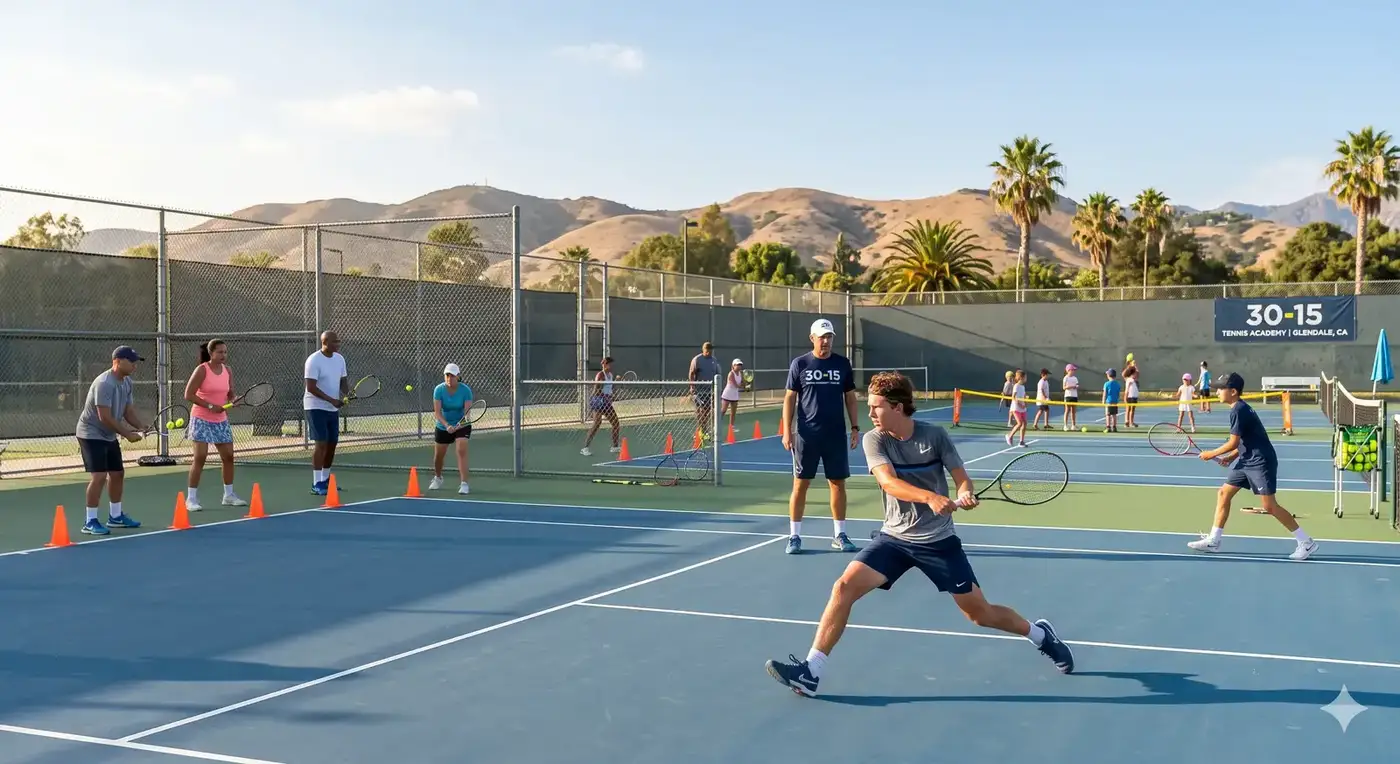
30-15 structures all training around proper technical development. Coaching staff led by co-founders Mher and Oleg focus on identifying and correcting root causes of technical problems rather than applying quick fixes.
Training groups never exceed 4 players per court. This ratio ensures individual feedback during every session while maintaining the peer dynamic that drives improvement.
Programs available for ages 3 through adult. Recreational training emphasizes stroke development and enjoyment. Competitive training prepares juniors for tournament play through match simulation and tactical development.
Contact: (818) 722-3015 or 3015tennisacademy.com
Glendale Tennis Academy
Locations Fremont Park and Scholl Canyon
Training Levels All levels with competitive focus
Glendale Tennis Academy emphasizes tournament preparation through USTA-partnered programs. Training includes competitive match play, ranking development, and college preparation pathways.
The academy operates structured programs at two locations with certified coaching staff. Strong focus on junior competitive development.
Contact: (323) 719-4975 or glendale-tennis.com
Independent Coaches and Private Training
Several independent coaches in Glendale offer personalized training programs, typically operating at public courts or through private arrangements.
Private training provides maximum individual attention but lacks the peer competition and structured curriculum that group programs offer.
Best for advanced players needing specific tactical or technical work, or for schedules that don't fit group programs.
What Tennis Training Costs
Training pricing varies based on program type, group size, and training frequency.
Recreational Training Programs
Group training: $200-350 per month for 2-3 sessions weekly
Semi-private training: $50-70 per person per hour
Private training: $85-120 per hour
Recreational programs cost less than competitive training because they require fewer weekly sessions and less intensive programming.
Competitive Training Programs
Academy programs: $400-700 per month for 4-6 sessions weekly
Tournament preparation: $500-900+ per month including match play and fitness
Competitive training costs more because it requires more coaching hours, match play organization, and often supplementary fitness training.
30-15 Training Pricing
Monthly programs at 30-15 range from $390-955 depending on training frequency. This includes 2-4 sessions per week with 4-player maximum groups.
All programs maintain the same quality standards regardless of whether you choose recreational or competitive track. The difference lies in session content and intensity, not coaching quality.
What Affects Training Costs
Group size makes the biggest difference. Four players per court costs more than eight but delivers significantly better training.
Frequency matters too. Training twice weekly costs less than four times weekly, but produces slower improvement.
Facility quality affects pricing. Dedicated training centers with proper amenities cost more than programs at basic public courts.
How to Start Tennis Training
Beginning a training program requires matching your current level and goals with appropriate programming.
Assess Your Current Level
Complete beginners need lessons before training. You must know basic strokes before entering structured training programs.
If you can rally consistently for 10-15 shots with control, you're ready for recreational training. If you compete in leagues or tournaments, you need competitive training.
Define Your Goals
Be honest about objectives. Want fitness and social interaction? Recreational training fits. Preparing for high school team or tournaments? Need competitive training.
Goals determine program selection more than current skill level.
Try Before Committing
Quality programs offer trial sessions so you can experience the training approach before paying for packages.
Use trials to evaluate coaching style, group dynamics, and whether the program intensity matches your goals.
Commit to Consistency
Training requires regular attendance to work. Sporadic participation prevents systematic development.
Choose a frequency you can maintain for at least 3 months. Two sessions weekly with perfect attendance beats four sessions weekly that you miss half the time.
Supplement with Practice
Training sessions alone produce limited improvement. Players need additional practice time to reinforce what training teaches.
Even one extra hour weekly hitting with a partner accelerates progress significantly.
Start Structured Tennis Training
Tennis training provides systematic development that casual lessons can't match. Whether you seek recreational improvement or competitive results, structured programs deliver faster progress through proper progression and regular feedback.
30-15 Tennis Academy offers training programs for recreational through competitive levels with emphasis on biomechanical foundations and individual development. Small groups ensure meaningful feedback during every session.
Your first session is complimentary. Experience the training approach, evaluate group dynamics, and determine if the program fits your goals before committing. Located at School St in Glendale. Programs for ages 3 through adult at all skill levels. Contact 3015tennisacademy.com or call 818-722-3015 to schedule your free trial session.
Frequently Asked Questions
Do I need tennis lessons before starting training?
Yes if you're a complete beginner. Training assumes you know basic strokes and can sustain rallies. Without fundamental technique, you can't execute the drills and situations training involves. If you can rally 10+ shots consistently with control, you're ready for recreational training. Complete beginners should take 8-12 lessons first to learn proper strokes.
What's the difference between recreational and competitive training?
Recreational training focuses on consistent improvement for enjoyment and fitness. Sessions emphasize stroke development, basic strategy, and controlled match play at comfortable intensity. Competitive training prepares players for tournaments through high-intensity drills that replicate match pressure. Includes tactical development, physical conditioning, and mental toughness work. The training volume and intensity differ significantly.
How many training sessions per week do I need?
Depends on goals. Recreational improvement happens with 2-3 sessions weekly. Competitive development requires 4-6 sessions plus supplementary fitness work. More important than frequency is consistency. Two sessions weekly for 6 months produces better results than four sessions weekly that you attend sporadically.
Can adults do competitive tennis training or is it just for juniors?
Adults can absolutely do competitive training if they play tournaments or high-level league tennis. The training principles are identical regardless of age. Most adult programs lean recreational because most adults play tennis for fitness and social reasons rather than competitive results. But competitive adult training exists for those who want it.
How long until training produces visible improvement?
Recreational training typically shows progress after 6-8 weeks of consistent attendance. Technical changes appear first, then consistency improves, then you see results in match play. Competitive training improvements take longer to show in tournament results. Players often improve technically and tactically for months before rankings reflect the work. Trust the process and measure progress against your own previous performance, not just match results.