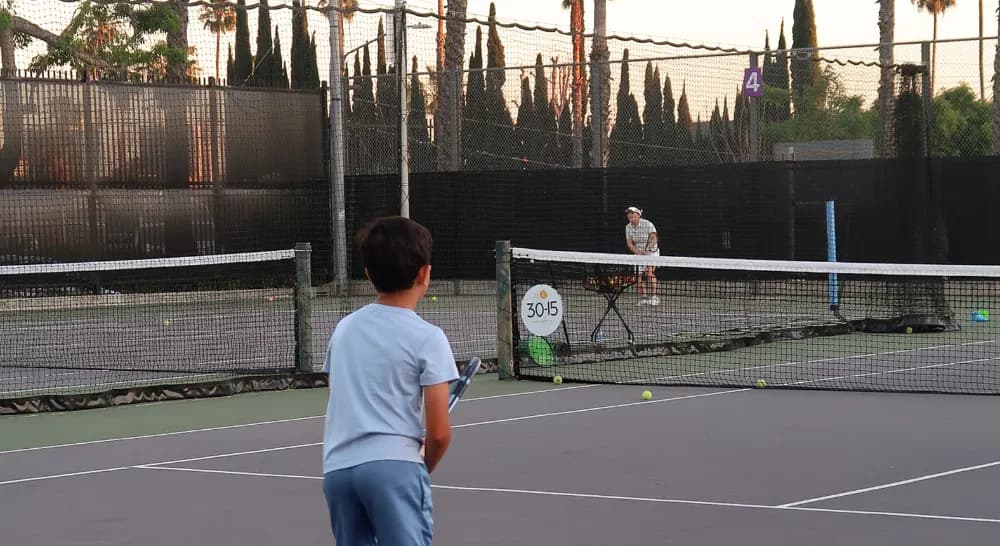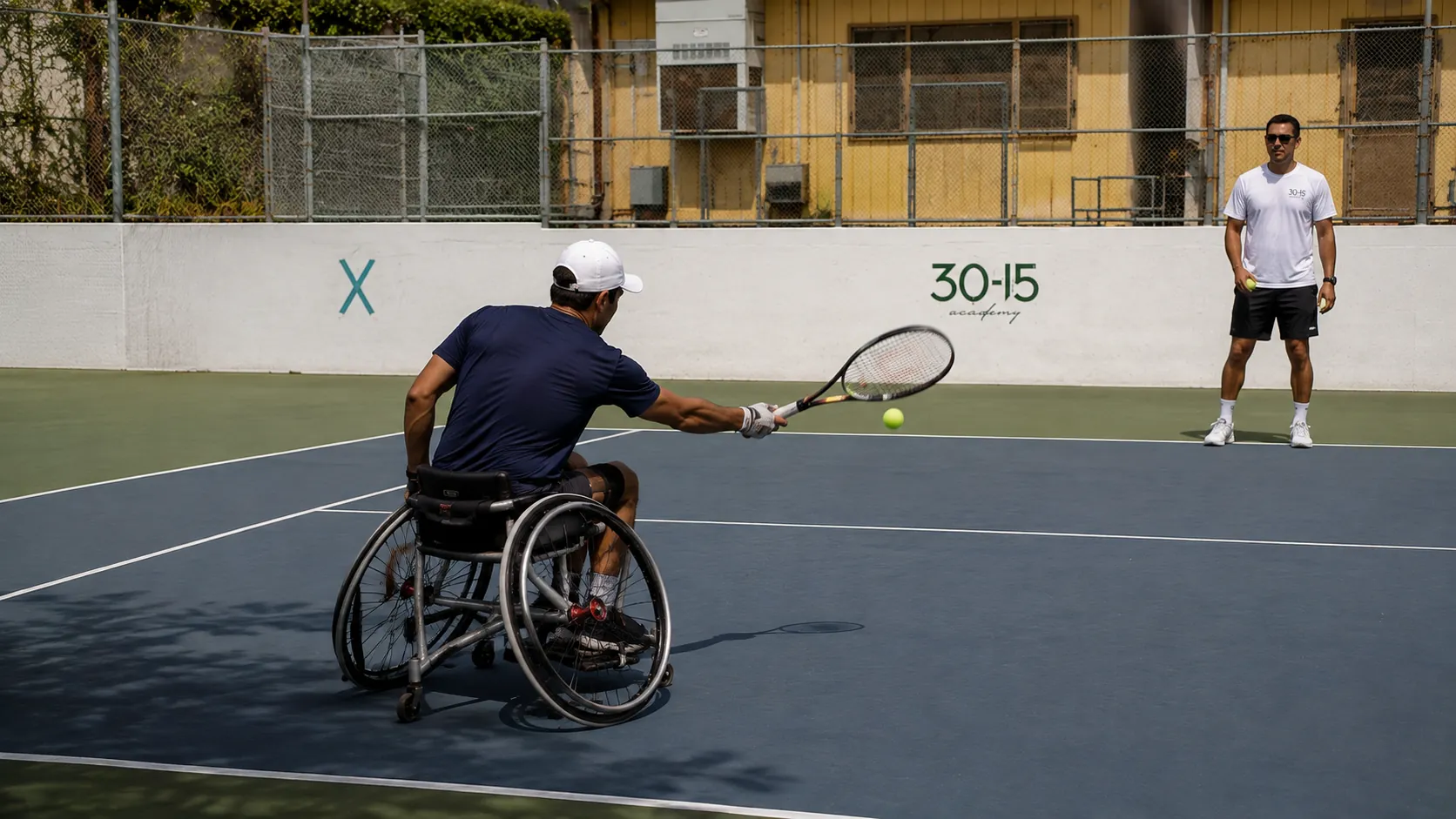
Wheelchair tennis and adaptive tennis open the sport to players of many abilities, and the game is closer to standard tennis than most people assume. The core skills, strokes, and strategy are the same, with thoughtful adjustments that make the court work for each player.
Adaptive tennis is a broad term. It covers wheelchair players, players with visual or hearing differences, players with intellectual disabilities, and anyone who benefits from a modified approach to learning the game.
This guide explains how adaptive and wheelchair tennis work, what to look for in an inclusive program, honest notes on accessibility and cost, and how to find the right starting point in the Glendale area.
Understanding Adaptive and Wheelchair Tennis
Adaptive tennis is not a single sport but a family of approaches that adjust the game to the player rather than the other way around.
The goal is participation and genuine skill development. A good adaptive session is real tennis, not a watered-down version, with the same emphasis on technique, footwork or chair work, and shot selection.
Wheelchair Tennis
Wheelchair tennis follows nearly the same rules as the standard game, with one key difference: the ball may bounce twice, and the second bounce can land outside the lines. Everything else, scoring, court size, net height, stays the same.
Players use a sport wheelchair designed for quick turns, and much of the coaching focuses on chair mobility alongside the strokes. It is fast, tactical, and played competitively at the highest levels, including the Paralympics.
Other Forms of Adaptive Tennis
Adaptive tennis also serves players who are blind or have low vision, often using an audible ball and a smaller court, and players who are deaf or hard of hearing, where coaching relies more on visual cues.
It includes players with intellectual or developmental disabilities, where sessions emphasize clear routines, patience, and breaking skills into small, repeatable steps. The right adjustments depend entirely on the individual.
What an Inclusive Tennis Program Looks Like
Not every facility is set up the same way. Knowing what supports good adaptive coaching helps you ask the right questions.
A Coach Willing to Adapt
The single most important factor is coaching that meets each player where they are. Experienced certified tennis coaches who break skills into clear steps and adjust drills to a player's needs can deliver excellent sessions even without disability-specific certification, provided they communicate openly about what they can offer.
Honest Communication About Capabilities
A trustworthy program tells you plainly what it can and cannot accommodate today. That honesty matters more than a long list of promises, because it lets you make an informed choice and plan around real conditions.
Flexible, Individualized Sessions
Adaptive coaching is rarely one-size-fits-all. Private or small-group formats tend to work best because the coach can tailor pace, drills, and goals to the individual rather than a fixed group curriculum.
A Welcoming Environment
Beyond physical setup, the atmosphere counts. A program where staff and other players are supportive and patient makes the difference between a one-time visit and a sport someone sticks with for years.
Accessibility: What to Check Before You Go
Accessibility is specific and practical. It helps to confirm the details that matter for the individual player rather than assuming.
Court Surface and Access
Wheelchair players generally need a smooth, hard court surface and a clear, step-free route from parking to the court. A quick conversation or visit confirms whether a given facility works for a particular chair and player.
Parking, Restrooms, and Pathways
Accessible parking close to the courts, an accessible restroom, and gates wide enough for a sport wheelchair all matter for a comfortable session. These are reasonable things to ask about ahead of time.
Equipment Considerations
Sport wheelchairs are specialized and not something every academy keeps on hand. Many players bring their own chair. If you do not have one, ask what is realistically available rather than assuming equipment will be provided, and discuss options openly with the coach.
Talking Through Individual Needs
The most reliable approach is to contact us and describe the player's specific situation. A direct conversation about goals, mobility, and any support needs lets a coach give an honest answer about how they can help, rather than guessing from a generic program description.
What Adaptive Tennis Costs
Pricing for adaptive lessons is generally similar to standard coaching, since the core service, a coach's time on court, is the same. Format drives the cost more than the adaptive element itself.
Private Versus Group
Private lessons, which many adaptive players start with for the individualized attention, commonly run $85 to $120 per hour in the area. Small-group sessions cost less per person and can work well once a player has the basics.
Equipment Costs
The largest additional cost in wheelchair tennis is usually the sport wheelchair itself, which is a personal purchase rather than a per-lesson fee. Some players access chairs through adaptive sports organizations or grants, which is worth researching separately.
Finding Support
National and regional adaptive sports organizations, along with the USTA's adaptive tennis resources, can point players toward equipment loan programs, clinics, and funding. These are valuable complements to local coaching.
The Benefits of Adaptive Tennis
Tennis offers real rewards for adaptive players, and they go well beyond the physical side of the game.
Physical Health
Tennis builds upper-body strength, coordination, and cardiovascular fitness. For wheelchair players in particular, the chair work develops mobility and endurance that carry over into daily life.
Mental and Social Rewards
Learning a skill and seeing steady progress builds genuine confidence. Tennis is also social by nature, and adaptive programs and clinics often become a community where players support one another on and off the court.
A Sport for Life
Tennis can be played recreationally for fun or pursued competitively all the way to elite levels. That range means a player can start casually and decide later how far they want to take it, without ever outgrowing the sport.
How to Get Started With Adaptive Tennis
Starting is mostly about an honest first conversation and a willingness to try a session.
Step 1: Clarify Goals and Needs
Decide what the player wants from tennis, whether that is fitness, fun, social connection, or competition, and note any specific access or support needs. This shapes the right format and pace.
Step 2: Reach Out and Ask Directly
Call or message a local academy and describe the situation plainly. Ask what they can accommodate now, what the court access is like, and whether a private intro session makes sense as a starting point.
Step 3: Try an Introductory Session
A first session lets both the player and the coach see what works. Treat it as a two-way assessment: the coach learns the player's abilities, and the player learns whether the environment feels right.
Step 4: Build From There
Once a starting point is established, progress looks like any other tennis journey: consistent sessions, steady skill building, and adjustments along the way. Connecting with adaptive sports groups can add community and competition over time.
Adaptive Tennis at 30-15 Tennis Academy
At 30-15 Tennis Academy in Glendale, the coaching philosophy centers on meeting each player where they are, which is exactly the mindset adaptive tennis requires. Founders Mher and Oleg, with coaches Alec and Erik, run small, individualized sessions and emphasize clear, step-by-step skill development.
We want to be straightforward: we do not advertise specialized adaptive equipment such as sport wheelchairs, and accommodations depend on the individual player and our court access. The best next step is a direct conversation so we can give you an honest answer. Please reach out through our contact page or call us to discuss a player's needs, and we will tell you candidly how we can help and where we may refer you for additional support.
It is worth saying plainly that there is no single profile of an adaptive player. Two people with the same diagnosis may need very different adjustments, and a player's goals can range from gentle recreation to serious competition. That is why the most useful first step is always a conversation about the individual rather than a label.
Start the Conversation About Inclusive Tennis
Everyone deserves a real shot at the game, and the best first step is an honest talk about what a player needs. Call 30-15 Tennis Academy at 818-722-3015 or book a free trial to discuss accommodations and try a first session. We are located at School St, Glendale, CA 91202, serving Glendale and nearby communities, and we coach players of all ages from four years old up. Tell us about the player and we will be candid about how we can help.
Frequently Asked Questions
What is the difference between adaptive tennis and wheelchair tennis?
Wheelchair tennis is one form of adaptive tennis, played in a sport wheelchair with a two-bounce rule. Adaptive tennis is the broader category that also includes coaching adjusted for players who are blind or low vision, deaf or hard of hearing, or who have intellectual or developmental disabilities.
Do I need my own wheelchair for wheelchair tennis?
Most players use a specialized sport wheelchair, which differs from a daily chair, and many bring their own. Not every academy keeps sport chairs on hand, so it is best to ask directly and, if needed, look into adaptive sports organizations that offer equipment loans.
Is adaptive tennis suitable for beginners?
Yes. Adaptive tennis welcomes complete beginners, and a good coach breaks the game into small, manageable steps. An introductory session is a low-pressure way to try it and see how the player responds.
How much does inclusive tennis coaching cost?
Coaching costs are generally similar to standard lessons, often $85 to $120 per hour for private instruction, with small groups costing less per person. The main extra cost in wheelchair tennis is the sport wheelchair, which is a personal purchase rather than a lesson fee.
Where can I find para tennis in Glendale?
Start by talking with a local tennis academy and contact regional adaptive sports organizations and the USTA's adaptive tennis resources for clinics, equipment, and competition. Combining local coaching with these networks gives the most complete path.