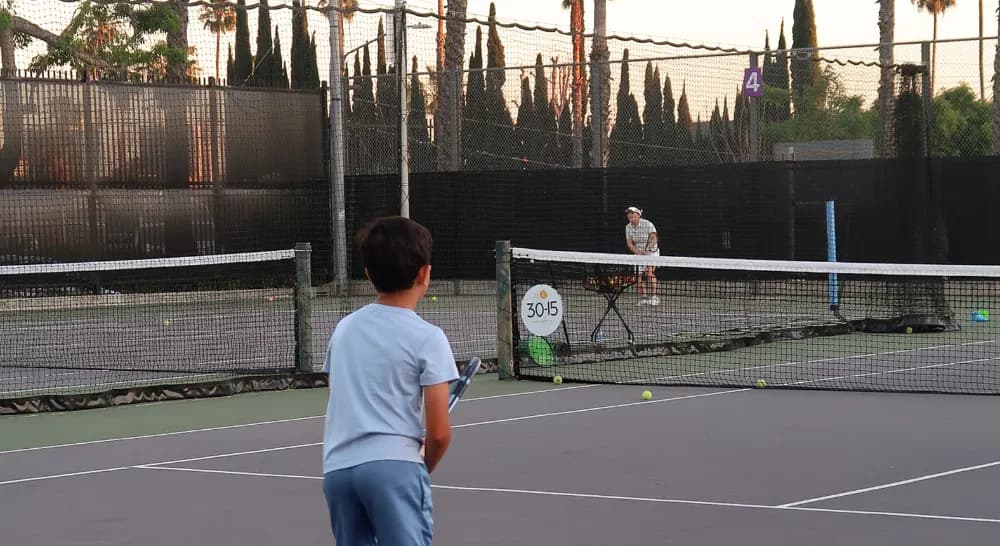
Corporate tennis events give teams something most offsites do not: a level playing field where the intern and the VP can rally on the same court. Nobody needs experience, and everybody moves, laughs, and competes a little.
Tennis flexes to fit the goal. You can run a relaxed team-building clinic, a structured company tournament, or an ongoing wellness program that keeps employees active all year.
This guide explains the formats, what they typically cost, what makes a corporate tennis event actually work, and how to book one in Glendale without turning it into a planning headache.
Why Tennis Beats the Usual Team-Building Options
Trust falls and escape rooms have their place, but tennis brings a few advantages that translate directly to the workplace.
It is genuinely inclusive. With a coach running drills, complete beginners are rallying within minutes, so nobody sits on the sidelines feeling left out.
It builds real communication. Doubles requires calling balls, covering for a partner, and adjusting on the fly, which is teamwork people can feel rather than just talk about.
And it is energizing rather than draining. Employees leave a tennis event physically refreshed and in a good mood, which beats the slump that follows a day of conference-room exercises.
What Companies Use Tennis Events For
Onboarding new hires and helping them mix with the existing team in a low-pressure setting.
Rewarding a team after a big project, launch, or quarter, where the event doubles as a thank-you.
Building cross-department relationships by pairing people who rarely work together into doubles teams.
Kicking off or sustaining a workplace wellness initiative with an activity people genuinely want to repeat.
Types of Corporate Tennis Events
There are a few proven formats. The right one depends on your group size, mix of skill levels, and goal.
Team-Building Clinics
A coach-led session of drills, games, and friendly mini-competitions. Designed so beginners and experienced players have fun side by side.
Pros: fully inclusive, no skill required, high energy
Cons: less competitive structure for groups that want a clear winner
Company Tournaments
A bracket-style or round-robin event, usually doubles so more people play at once. Great for groups with a competitive streak.
Pros: built-in excitement, clear structure, memorable
Cons: needs enough players of comparable ability, more coordination
Wellness Programs
Recurring sessions, weekly or monthly, that keep employees active over time rather than as a one-off. Often tied to a company benefits or wellness budget.
Pros: lasting health impact, sustained morale, strong retention perk
Cons: requires ongoing commitment and scheduling
Hybrid Events
Plenty of companies combine formats, for example a clinic for newcomers running alongside a friendly tournament for experienced players. The certified tennis coaches can split a group by level so everyone is engaged at once.
What Corporate Tennis Events Cost
Cost depends on group size, event length, number of coaches and courts, and whether it is a one-time event or a recurring program. These ranges give you a realistic starting point.
One-Time Events
A two-hour clinic or tournament for a small-to-mid team often falls in the few-hundred to low-thousands range, scaling with how many coaches and courts are needed to keep everyone active. Larger groups need more staff, which raises the total but keeps the per-person cost reasonable.
Recurring Wellness Programs
Ongoing programs are usually priced per session or as a monthly arrangement, and the per-employee cost drops compared with one-offs. Many companies fund these through a wellness or professional-development budget.
Budgeting Tips
Decide your goal first, then size the event to it. A morale boost can be a single clinic, while a retention or wellness goal justifies a recurring program. Always confirm the coach-to-participant ratio, because too few coaches means too much standing around.
A Sample Corporate Tennis Event Timeline
Seeing how a typical two-hour event flows makes it easier to picture and to plan around. Most clinics follow a rhythm like this.
Warm-Up and Icebreakers (15 minutes)
Light movement and simple partner drills get people loosened up and laughing. This is when nervous beginners realize they will be fine, which sets the tone for everything after.
Skill Stations (40 minutes)
The group rotates through coach-led stations on forehands, volleys, and serves. Stations keep everyone active at once and let coaches give quick, individual pointers as people cycle through.
Games and Mini-Competitions (45 minutes)
Teams play short, fun games or a friendly mini-tournament. The format rewards teamwork over raw skill, so a beginner-heavy team can still win, which keeps the energy high and the competition good-natured.
Cool-Down and Wrap (20 minutes)
A short cool-down, a few photos, and recognition for standout moments close things out. This is also a natural point to mention how the group can keep playing if there is interest in a recurring program.
Benefits Companies Actually See
Beyond a fun afternoon, organizations tend to notice a few concrete payoffs from tennis events.
Stronger cross-team relationships, because pairing people from different departments into doubles creates conversations that rarely happen in the office.
A morale lift that outlasts the event, since shared physical activity and a few laughs tend to stick with people longer than a slideshow or a catered lunch.
Better engagement with wellness initiatives, because an activity employees genuinely enjoy is one they will actually repeat, unlike many top-down wellness mandates. In short, the return on a tennis event tends to outlast the afternoon it took to run.
What Makes a Corporate Tennis Event Succeed
The difference between a great event and an awkward one usually comes down to a few planning choices.
Plan Around Mixed Skill Levels
Assume a wide range, from people who have never held a racket to a few regular players. The format must keep both ends engaged, which is why coach-led drills and doubles work so well.
Keep Everyone Moving
The fastest way to lose a corporate group is to have people waiting in long lines. Enough courts, enough coaches, and station-based drills keep idle time low and energy high.
Match the Format to the Culture
A highly competitive team will love a tournament. A team that includes people self-conscious about athletics will do better with a relaxed, no-scoreboard clinic. Read the room before you pick.
Handle the Logistics in Advance
Confirm rackets and balls, water, timing, and a weather backup plan early. Working with an established tennis academy in Glendale means most of this is handled for you, so your team just shows up and plays.
How to Book a Corporate Tennis Event
Booking is straightforward once you know your basics. A few details up front make the planning quick.
Step 1: Define Goal and Group Size
Know whether you want team building, competition, or wellness, and have a rough headcount. These two facts shape everything else.
Step 2: Pick a Date and Format
Choose a window that works for most of the team and a format that fits the goal. Mornings and early evenings tend to draw the best turnout.
Step 3: Confirm Details With the Academy
Reach out to contact us with your headcount, goal, and preferred dates, and the team will recommend the right format, coach count, and court setup. This is also when you confirm equipment and any catering or space needs.
Step 4: Communicate to Employees
Tell your team no experience is needed, what to wear, and that loaner rackets are available if required. Lowering the barrier to entry is what gets shy employees to actually show up.
Corporate Tennis Events at 30-15 Tennis Academy
At 30-15 Tennis Academy in Glendale, corporate groups get coach-led events designed so everyone plays, regardless of experience. Founders Mher and Oleg, along with coaches Alec and Erik, run drills and games that fold beginners and seasoned players into the same session without anyone feeling out of place.
Because the academy already runs small-group coaching with a strong coach-to-player ratio, your team gets attention rather than long lines. Whether you want a one-time team-building clinic, a company tournament, or a recurring office wellness program, the coaching staff can shape the event around your goals and group size.
It also photographs well and gives people stories to retell. The candid moments from a doubles point or a close mini-final become the kind of shared memory that shows up in team chats for weeks, which is exactly the bonding effect most offsites are reaching for and rarely manage to hit.
Get Your Team on the Court
Give your team an event they will actually talk about afterward. Call 30-15 Tennis Academy at 818-722-3015 or book a free trial to start planning your corporate tennis event. We are located at School St, Glendale, CA 91202, serving Glendale, Burbank, Pasadena, and the wider Los Angeles area, and we welcome groups of every skill level. Tell us your goal and we will build the event around it.
Frequently Asked Questions
Do employees need tennis experience to join a corporate event?
No. Team building tennis events are built for mixed groups, and a coach gets total beginners rallying within minutes. The drills and games are designed so experience level does not determine whether someone has fun.
How many people can a company tennis event include?
Group size is flexible. Smaller teams can run on a single court with one or two coaches, while larger companies need more courts and staff to keep everyone moving. Share your headcount when booking so the setup matches your numbers.
Can we set up an ongoing corporate wellness tennis program?
Yes. Recurring weekly or monthly sessions are a popular corporate wellness tennis option because they keep employees active over time and tend to cost less per person than one-off events. Many companies fund them through a wellness budget.
What should employees bring to an office tennis event in Glendale?
Athletic clothes, court shoes, and water are the essentials. Rackets and balls can be provided, so people do not need their own gear to take part. It is worth confirming loaner racket availability when you book.
How far in advance should we book a corporate tennis event?
Booking a few weeks ahead gives the best choice of dates and lets the academy line up enough coaches and courts for your group size. Larger or recurring programs benefit from even more lead time.