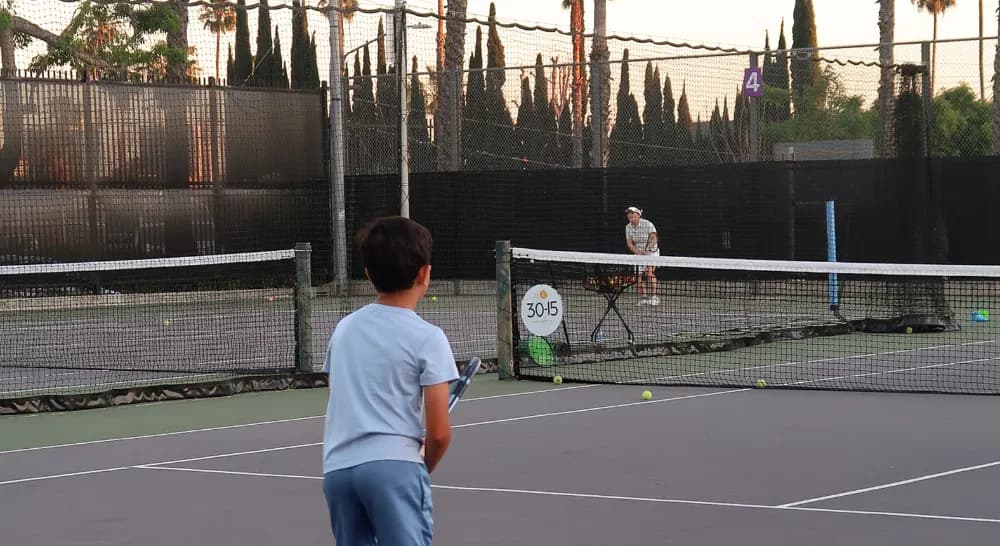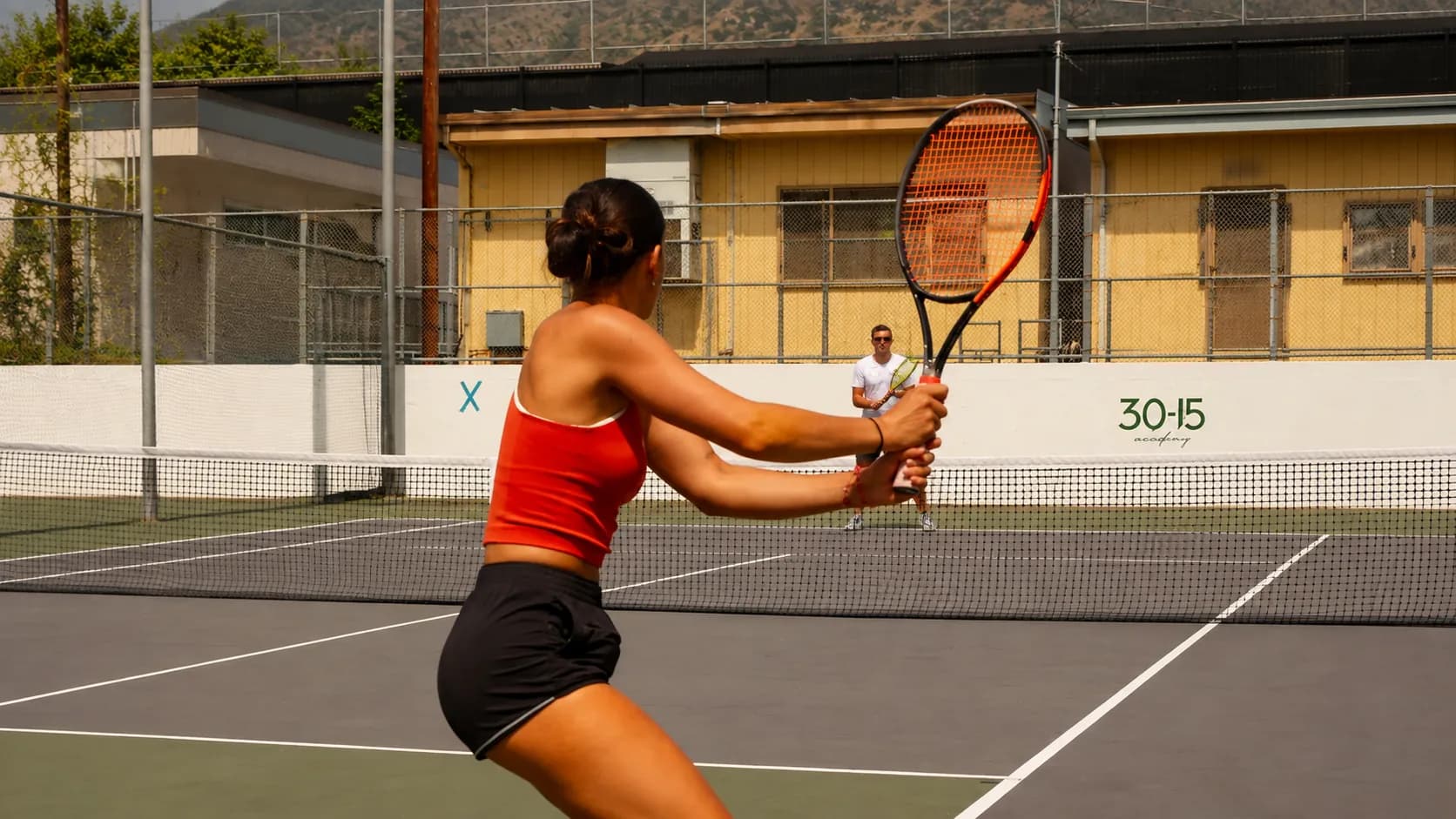
Couples tennis lessons give two people a reason to put their phones down, get outside, and do something together that is neither dinner nor a movie. You move, you laugh, you learn a skill side by side.
Tennis for couples also scales beautifully. You can keep it light and recreational, or you can train as a doubles team and start entering local mixers. Either way, the court becomes shared ground.
This guide covers how couples lessons work, what they cost, the doubles fundamentals you will pick up, and how to handle the one tricky part: playing a competitive sport with someone you love.
Why Tennis Works So Well for Couples
Shared activities build connection, and tennis adds a few things most date-night options lack.
It is active without being a grind. An hour of tennis is real exercise, but it feels like play because you are too busy chasing balls to notice you are working out.
It scales to any fitness level. A coach can run a session that challenges the fitter partner while keeping the other fully involved, so nobody is bored and nobody is overwhelmed.
And it creates natural teamwork. Doubles forces you to communicate, cover for each other, and celebrate points together, which carries over off the court more than people expect.
Recreational Versus Competitive Couples
Some couples want a fun, low-pressure activity they do once or twice a week. Others catch the bug and want to compete in leagues or mixers.
Both are valid, and a good coach will ask which one you are early on. The lesson plan for a relaxed date night looks different from training for a doubles tournament.
How Couples Tennis Lessons Are Structured
Couples lessons usually take one of a few shapes. Knowing them helps you pick the right fit.
Private Couples Lessons
Just the two of you with a coach. This is the most personalized option and the best when partners are at different levels.
Pros: fully tailored, fast progress, flexible scheduling Cons: highest cost, no other players to practice doubles patterns against
Small-Group Couples Classes
You join a small group of other players or other couples. Great for doubles because you get real opponents to rally and play points against.
Pros: lower cost per person, realistic doubles practice, social Cons: less individual attention, fixed schedule
Mixed Format Plans
Many couples do a blend: a private lesson to fix technique, plus a group session for live play. A coach can help you build this from the available coaching plans so you get personalized correction and genuine match reps in the same week.
What Couples Tennis Lessons Cost
Pricing depends on format and whether you split a private lesson or join a group. These ranges are typical for Glendale and nearby areas.
Private Couples Lessons
A private hour commonly runs $85 to $120 total, which the two of you effectively split. Per person, that is often cheaper than two separate private lessons.
Group and Membership Pricing
Small-group sessions are the value play, frequently $45 to $60 per person. Monthly memberships lower the per-session rate further and lock in a standing time slot, which is the single best way to keep a date night from slipping.
Getting the Most for Your Money
If you and your partner are close in level, group classes deliver the best value. If you are far apart in level, start with a couple of private lessons so the stronger player is engaged and the newer player is not overwhelmed, then graduate to groups.
Doubles Fundamentals You Will Learn
Doubles is its own game. Picking up a few core ideas turns two individuals into an actual team.
Positioning and Court Coverage
Who takes the middle, when to switch sides, and how to move together as a unit. Good positioning wins more points than big swings, especially early on.
Communication and Calls
Simple verbal cues like 'mine,' 'yours,' and 'switch' prevent the two most common doubles disasters: both players going for the same ball, or both leaving it.
The Serve-and-Volley Pattern
Doubles rewards coming to the net. You will learn how the server's partner sets up, when to poach, and how to finish points up close instead of grinding from the baseline.
Playing to Each Other's Strengths
Maybe one of you has a steady serve and the other has quick hands at net. A coach helps you build a strategy around what each partner does well rather than forcing both to play the same way.
What to Expect in Your First Few Lessons
Knowing the arc of early lessons takes the mystery out of starting and helps you stick with it past the awkward first hour.
Lesson One: Contact and Comfort
The first session is about making clean contact and getting comfortable moving on court. A coach keeps the targets simple so you both feel a few good shots early, which is what makes people want to come back.
Lessons Two and Three: Rallies
By the second or third lesson, most couples can sustain short rallies. This is the turning point, because rallying together feels like real tennis and far more fun than feeding drills.
Weeks Three to Six: Doubles Basics
Once your strokes are reliable enough to keep the ball in play, lessons shift toward doubles positioning and simple point play. This is where you start functioning as a team rather than two separate players.
Beyond: Strategy and Match Play
After a couple of months, couples who want more move into tactics, serve patterns, and competitive points. This is also the natural moment to consider a mixer or league if competition appeals to you.
Gear and Practical Tips for Couples
You do not need much to start, but a few small things make sessions smoother and more enjoyable.
Each of you needs your own racket. Many academies have loaners for a first session, but plan to buy entry-level rackets fairly soon so you are not sharing.
Wear proper court shoes. Running shoes do not support the side-to-side movement tennis demands, and the right shoes reduce the chance of a rolled ankle, especially early on.
Pick a standing weekly time you both protect. The couples who keep tennis going are the ones who treat the lesson like a recurring appointment rather than something they schedule week to week.
Playing a Sport With Your Partner Without Friction
Here is the honest part. Competing alongside someone you love can get tense. A little awareness keeps it fun.
Agree up front that lessons are for learning, not winning. Mistakes are the point of practice, so treat each other's errors the way a coach does: as the next thing to work on.
Avoid coaching your partner mid-point. That job belongs to the coach. Your job is to encourage and to play your side.
Celebrate the good shots out loud. Couples who high-five after a nice point stay relaxed, and relaxed players play better and enjoy it more.
When Partners Are at Different Levels
A skill gap is normal and totally workable. Start with a couple of private sessions with certified tennis coaches who can give each partner the right drills, then move into groups once you can rally together comfortably.
Couples Tennis at 30-15 Tennis Academy
At 30-15 Tennis Academy in Glendale, couples can start with a complimentary first session to see how it feels before committing. Small groups cap at roughly four to six players, so you get real coaching attention whether you book a private couples lesson or join a class together.
Coaching is led by founders Mher and Oleg, with coaches Alec and Erik, and the curriculum covers everything from first-timer fundamentals to competitive doubles strategy. If date night turns into a habit, the membership plans start around $390 per month for two weekly sessions and give you a standing time slot, which is the easiest way to actually keep showing up together.
There is also a practical upside: tennis is easy to keep doing. Once you have rackets and a standing court time, a date night costs almost nothing and never depends on a reservation, a crowd, or the latest movie being any good. Few shared hobbies are this cheap to sustain once you are past the first lessons.
Book Your First Date Night on the Court
Trade one ordinary date night for an hour on court and see how it feels. Call 30-15 Tennis Academy at 818-722-3015 or book a free trial to set up your complimentary first couples session. We are at School St, Glendale, CA 91202, and we coach all ages and levels from four years old through competitive adults. Bring your partner and we will handle the rest.
Frequently Asked Questions
Do couples tennis lessons work if we are total beginners?
Yes, and starting together can be ideal because you progress at a shared pace and build the same fundamentals. A coach keeps the first few sessions simple so you are rallying and having fun quickly rather than getting frustrated.
What if my partner and I are at very different levels?
That is common and manageable. Begin with a few private partner tennis sessions so each of you works at the right level, then transition to group play once your rallies are consistent. The stronger player can also work on placement and consistency while the newer player builds basics.
Is tennis a good date night activity?
It is one of the better ones. Date night tennis gets you moving, off your screens, and laughing together, and unlike dinner or a movie it leaves you with a skill that keeps improving every time you play.
How often should couples take tennis lessons?
Once a week keeps it fun and builds steady progress. Twice a week accelerates improvement noticeably, which matters if you want to compete in doubles. A standing weekly slot is the key to consistency.
Can we eventually play doubles in a league?
Definitely. Many couples start recreationally and move into local mixers or leagues within a few months. Tennis doubles lessons focused on positioning, communication, and net play will get you league-ready faster than playing on your own.