The honest answer to how long to learn tennis is: it depends, but the timeline is more predictable than most beginners expect. With regular practice, you can rally and enjoy real points within a few months and reach a solid intermediate level within a year or two.
Tennis has a reputation for being hard to pick up, and the early weeks can be humbling. But the learning curve is steep at first and then rewarding, because small technical gains quickly translate into longer rallies and more fun.
This guide lays out a realistic tennis learning timeline, the milestones you'll pass along the way, the factors that speed things up or slow them down, and how structured coaching in Glendale compresses the whole process.
What Learning Tennis Actually Involves
Tennis isn't one skill. It's a stack of them layered together, which is why progress feels uneven at first.
The Core Skills You Build
You're learning strokes, footwork, timing, court awareness, and strategy at the same time. Early on, getting the racket on the ball is the whole challenge. Later, the challenge becomes placement and tactics.
Because these skills develop at different rates, you might have a decent forehand long before your serve cooperates. That's normal and not a sign you're behind.
Strategy is the last layer to develop. Beginners focus on simply returning the ball, while experienced players think about where to place it and how to set up the next shot. Both of those grow over time.
Why It Feels Slow Then Fast
This early stretch is mostly about training your eyes and hands to work together. Once that coordination forms, the same swing that felt impossible starts landing in the court.
The first few weeks involve a lot of missing. Then timing clicks, rallies extend, and the game suddenly feels playable. That jump is the most motivating part of the tennis learning timeline.
A Realistic Tennis Learning Timeline
These ranges assume practicing or training roughly two to three times a week. More frequency speeds things up; less slows them down.
Weeks 1 to 4: The Basics
You learn grips, basic forehand and backhand swings, and how to make consistent contact. Expect plenty of mishits. By the end of the first month, you can usually rally a few balls in a row with a feeder.
Milestone: making clean contact on most balls fed to you and serving underhand or with a basic motion.
This stage is about repetition and comfort with the racket. Don't worry about power or spin yet. Simply getting the ball over the net consistently is the win.
Months 2 to 3: Sustained Rallies
Timing improves and rallies start to extend. You begin developing a serve, learn to move to the ball instead of waiting for it, and play your first casual points.
Milestone: rallying ten or more balls cooperatively and getting serves in consistently.
Footwork becomes the focus here. Many beginners can hit a still ball but struggle with a moving one, so learning to position yourself early changes everything.
Months 4 to 6: Playing Real Points
You can play full points and short sets. Strokes become more reliable, you start adding direction and depth, and basic strategy enters the picture.
Milestone: playing a complete match, even if scrappy, and holding serve occasionally.
Scoring, court positioning, and shot selection start to matter. This is where tennis turns from a drill into an actual game you can enjoy with friends.
Months 6 to 12: Solid Beginner to Early Intermediate
Consistency improves significantly. You develop spin, better serves, and the ability to construct points rather than just keep the ball in play.
Milestone: competing in beginner leagues or social matches and winning some points through strategy, not just steadiness.
This is also when many players fall in love with the sport, because the game finally feels like tennis rather than a struggle to keep the ball in.
Year 1 to 2: Confident Intermediate
With continued practice, you reach a genuine intermediate level. You have weapons, you can handle different opponents, and you understand how to adjust during a match.
Reaching advanced or competitive levels takes years of dedicated training. But becoming a confident, capable recreational player within one to two years is a realistic goal for most people.
The plateau most players hit around the intermediate level is normal too. Breaking through it usually requires deliberate work on a specific weakness rather than just more matches.
What Affects How Fast You Learn
Two beginners can follow very different curves. These are the factors that explain the gap and answer how fast can I get good at tennis.
Practice Frequency
This is the biggest factor by far. Training three times a week produces dramatically faster progress than once a week, because skills fade between long gaps.
Consistency beats intensity. Three focused sessions weekly outpaces one occasional marathon hit.
The brain consolidates motor skills between sessions, so spacing practice across the week is more effective than cramming it into a single long day.
Quality of Instruction
Self-taught players often build habits they later have to undo. Good coaching builds correct technique from the start, which is the single biggest lever on tennis improvement speed.
Learning it right the first time is far faster than learning it wrong and fixing it later.
Athletic Background
Players who come from other racket or ball sports often pick up hand-eye coordination and footwork quickly. But athletic newcomers catch up fast with consistent practice, so don't be discouraged if you're starting from zero.
General fitness also plays a role. Better movement and stamina let you practice longer and recover between sessions, which compounds over time.
Age and Expectations
Kids and adults both learn tennis well, just differently. Children absorb movement patterns naturally over time, while adults learn faster cognitively and can apply instruction immediately. Realistic expectations keep you motivated through the early grind.
Whatever your age, patience is part of the process. Improvement in tennis is rarely linear, and accepting the occasional flat week makes it far easier to stick with it long enough to get good.
How to Speed Up Your Progress
You can't skip the work, but you can make every hour count for more.
Train Consistently
Set a regular schedule and protect it. Standing weekly sessions remove the decision fatigue that causes practice to slip, and steady reps are what build lasting skill.
Booking the same time slots each week is the simplest way to guarantee the consistency that drives the whole timeline forward.
Practice Between Sessions
Wall drills, footwork, and racket-control work at home accelerate the tennis learning timeline noticeably. The players who improve fastest are the ones who do a little between lessons.
Even fifteen minutes against a wall a few times a week reinforces what you learned in your last session before it fades.
Get Feedback Early
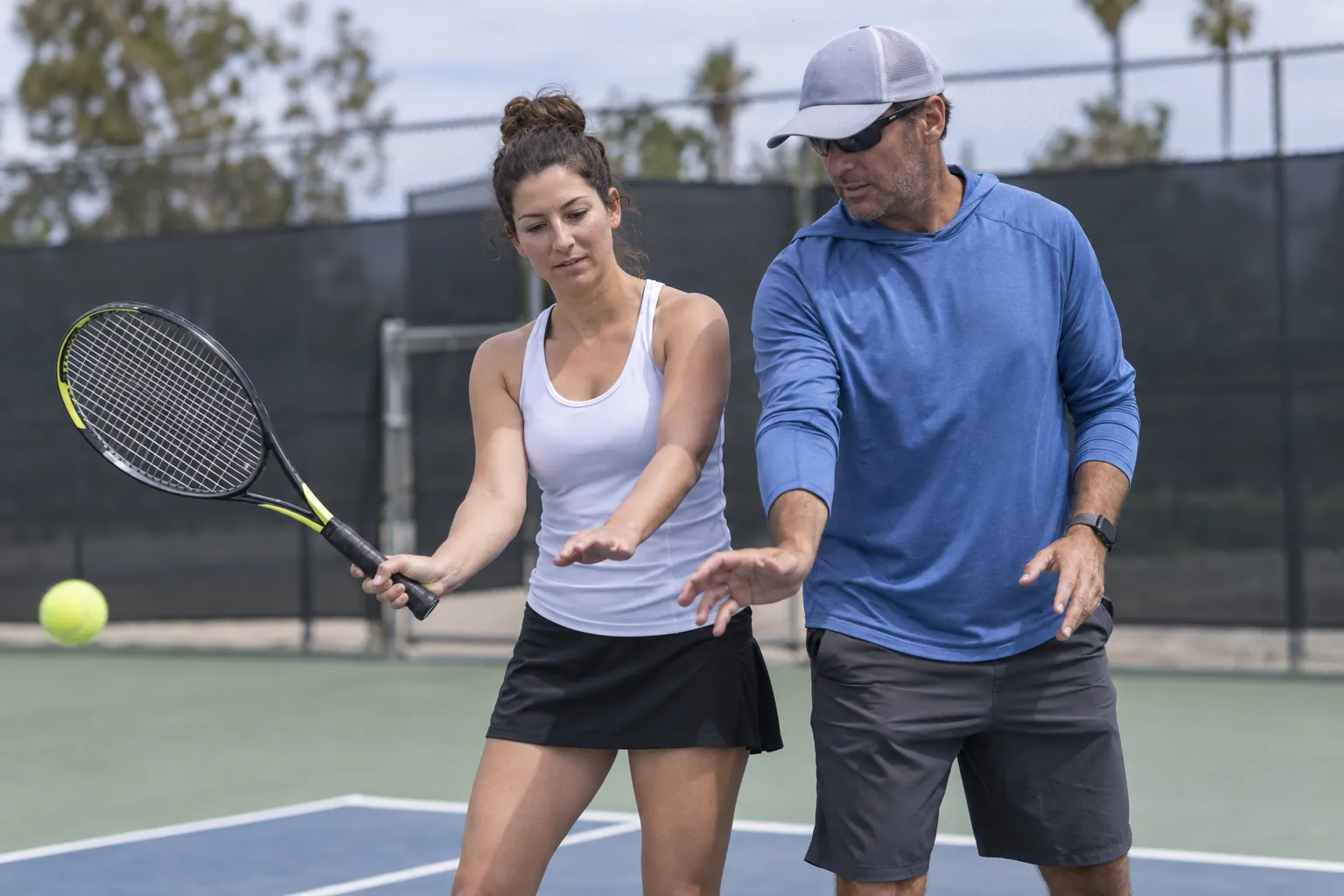
A coach catches and corrects flaws before they become ingrained. The earlier you get expert eyes on your strokes, the less you'll have to unlearn later.
Feedback also keeps you honest about what to work on. Left alone, most players practice what they're already good at and avoid their weaknesses, which stalls progress.
Play With Better Players
Hitting with people slightly better than you pulls your level up. It exposes weaknesses and forces you to raise your consistency and shot quality.
Just keep it balanced. Playing only against far stronger opponents can be discouraging, so mix in matches against peers where you can practice closing out points.
How Coaching at 30-15 Tennis Academy Speeds It Up
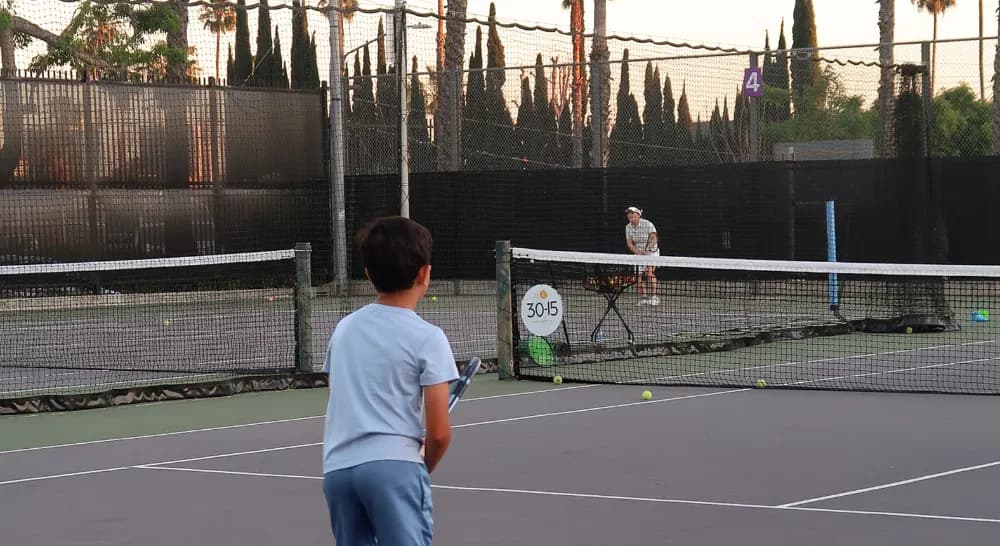
The fastest learners we see combine consistent training with proper technique from day one. At our tennis academy in Glendale, players train in small groups of four maximum, so beginners get real feedback instead of getting lost in a crowded clinic. Co-founders Mher and Oleg build strokes on sound biomechanics, which means fewer bad habits to undo later.
Our structured coaching plans provide the consistency that drives the timeline, with documented progression so you always know your next milestone. Younger players follow age-appropriate stages in our junior tennis program, and our certified tennis coaches adjust the pace to each player's goals.
Start Your Tennis Journey in Glendale
Learning tennis is a journey of months and years, but the early, satisfying progress comes quickly when you train consistently with good guidance. Your first eligible group class is completely free, so you can experience our coaching and see your own starting point. We welcome players ages 3 through adult at every level. Visit us at School St, Glendale, CA 91202, call 818-722-3015, or book a free trial to start your tennis journey with a clear, realistic plan. Free trials are available for eligible group classes, not adult advanced/Live Ball or private lessons.
Frequently Asked Questions
How long does it take to learn tennis as an adult?
With regular practice two to three times a week, most adults can rally and play casual points within two to three months and reach a solid recreational level within a year. Adults often learn faster than expected because they can apply instruction immediately.
How fast can I get good at tennis if I practice a lot?
Frequency is the biggest factor in tennis improvement speed. Practicing three or more times a week, especially with coaching, can get you to a confident intermediate level in roughly a year. There are no shortcuts past consistent, well-guided reps, but more quality practice genuinely accelerates everything.
Is tennis harder to learn than other sports?
Tennis has a steeper early learning curve than some sports because it combines strokes, footwork, and timing at once. The first month is humbling. But once timing clicks, progress feels rapid, and most people find it very rewarding to learn.
How long until I can play a real match?
Most beginners can play full points and short sets within four to six months of consistent practice. The matches will be scrappy at first, but playing real points is one of the most enjoyable and motivating milestones in the tennis learning timeline.
Does coaching really speed up tennis progress for a beginner?
Yes, significantly. Coaching builds correct technique from the start, so you avoid ingrained bad habits that take months to fix. For tennis progress as a beginner, expert feedback early is one of the most efficient investments you can make.