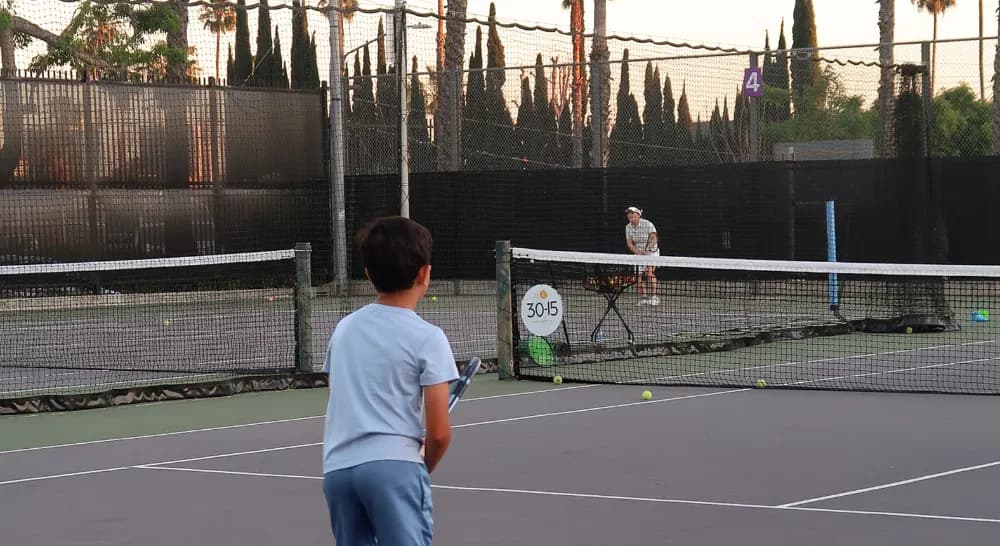
You don't need a court, a coach, or a hitting partner to get better at tennis. The right tennis drills at home build the footwork, racket control, and muscle memory that show up the moment you step back on court.
Lessons happen a few times a week. The other days are where a lot of improvement is won or lost. Players who practice between sessions progress noticeably faster than those who only pick up a racket at their scheduled times.
This guide covers wall drills, solo shadow work, racket-handling exercises, and fitness routines you can do in a driveway, garage, or living room. Everything here is practical, requires almost no equipment, and genuinely transfers to match play.
Why Practicing Without a Court Works
Tennis is built on repeatable movements. Many of those movements can be grooved away from a court, where there's no pressure and no ball flying back at you.
You Can Isolate One Skill
On a court, dozens of things happen at once. At home, you can slow down and drill a single piece, like your grip change or your split-step timing, until it becomes automatic.
Reps Add Up Fast
Fifteen minutes of focused tennis practice at home, five days a week, adds more than an hour of quality reps to your week. Over a month that's the equivalent of several extra lessons of pure technical work.
The trick is to practice with intent. Mindless swinging builds nothing. Deliberate, focused reps build real skill.
It also removes the biggest excuse most players have. Bad weather, a busy schedule, or no hitting partner stops court sessions, but rarely stops a ten-minute drill in the garage.
Tennis Wall Drills: Your Best Practice Partner
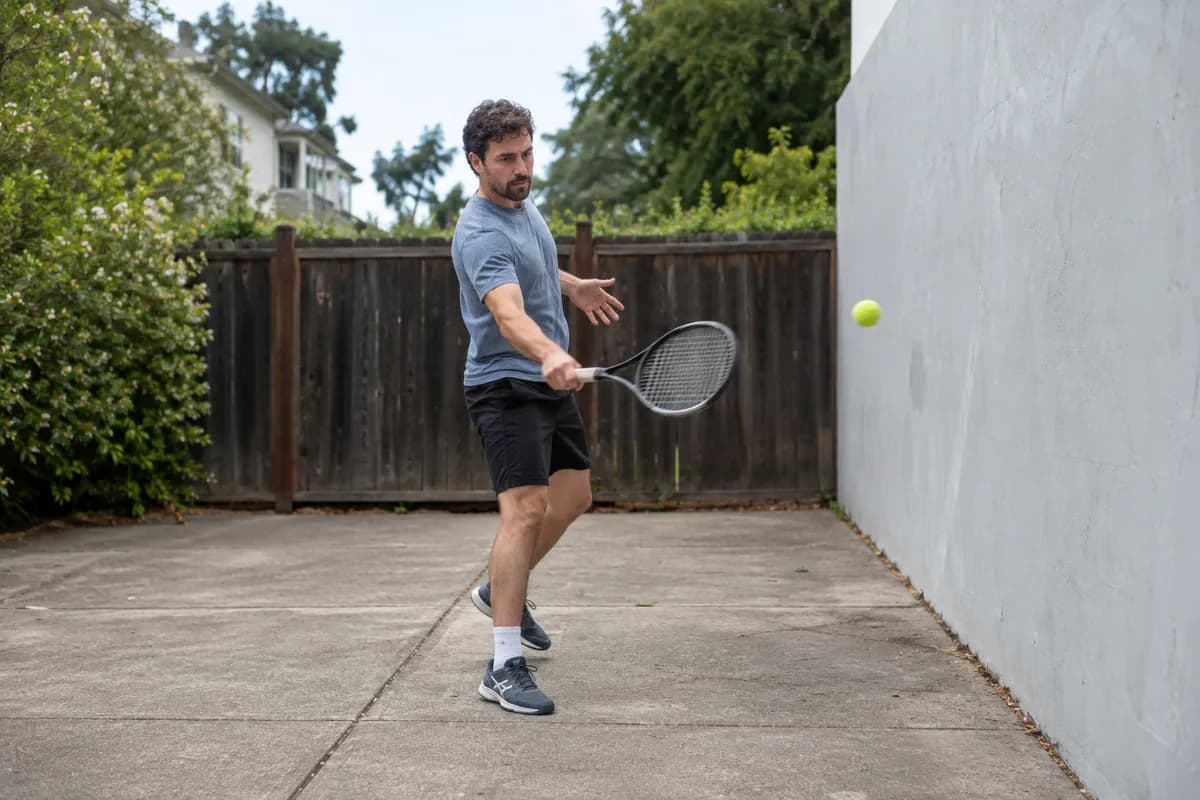
A solid wall is the single best tool for solo tennis. It returns every ball, never gets tired, and forces you to recover quickly. Any flat exterior wall or a garage door works, as long as you have a few feet of space.
Basic Rally Control
Stand about fifteen feet from the wall and rally with controlled groundstrokes. Aim for a target area chalked or taped on the wall at net height plus a few feet.
Goal: 20 shots in a row without losing control. The fast pace of tennis wall drills sharpens reactions and footwork far quicker than a relaxed court rally.
Keep your knees bent and feet moving the whole time. The wall comes back fast, so standing flat-footed is punished immediately.
Alternating Forehand and Backhand
Once you can rally steadily, alternate sides. This forces grip changes and quick recovery, exactly what you struggle with in matches.
Start slow. Step back a foot or two to give yourself time, then move closer as you improve.
Volley Reflexes
Stand close to the wall, around eight feet, and volley back and forth without letting the ball bounce. Keep the swing short and the racket up.
This builds the soft hands and fast reactions that make net play feel easy. Thirty seconds at a time is plenty to start.
As you improve, try to handle the ball off both the forehand and backhand sides without stepping back. Quick, compact volleys at the wall translate directly to confidence at the net in real points.
Wall Drill Cautions
Be considerate about noise and use a wall you have permission to hit against. A dead or low-bounce ball can make the drill more controllable indoors or in tight spaces.
Solo Drills With No Wall or Ball
Even without a wall, tennis solo practice can sharpen mechanics. These drills cost nothing and fit in a small space.
Shadow Swings
Swing your strokes slowly with no ball, focusing on the exact shape of the motion: unit turn, contact point in front, full follow-through. Do ten reps of each stroke.
Shadow swinging in front of a mirror lets you check your form in real time, which is one of the most underrated tennis drills at home.
Footwork Patterns
Set down two markers a few feet apart and practice side shuffles, split-steps, and crossover steps between them. Add the split-step as a habit before every imaginary shot.
Quick feet win points. Five minutes of footwork drills daily transfers directly to better court coverage.
Add a recovery step after each imaginary shot so you train the full pattern: move, hit, recover. Standing still after a shot is one of the most common habits home footwork drills can break.
Serve Motion Practice
Rehearse the full serve motion without a ball, or toss and catch to perfect a consistent toss. A reliable toss is something you can build entirely at home.
Stand near a wall or doorframe and toss the ball straight up so it brushes the surface on the way down. If it consistently grazes the same spot, your toss is repeatable, which is half of a good serve.
Racket and Ball Control Exercises
These build the feel for the racket that separates smooth players from stiff ones. All you need is a racket and one ball.
Ups and Downs
Bounce the ball upward off your strings (ups), then downward toward the ground (downs), keeping control. Aim for 25 in a row, then alternate ups and downs.
This simple drill develops touch and hand-eye coordination, the foundation of every good shot.
Once 25 feels easy, raise the bar to 50 or alternate hitting the ball off the frame and the strings to challenge your control even more.
Edge Balance
Balance the ball on the racket frame's edge and walk a few steps. It feels silly but it sharpens fine racket control quickly, which is why coaches use it with juniors.
Grip Change Speed
Practice switching between your forehand, backhand, and continental grips quickly and smoothly. Slow grip changes cause late shots, so making this automatic helps your whole game improve without a court.
Do it with your eyes closed once you have the feel. Being able to change grips by touch alone means you never have to look at your hand mid-rally.
Fitness and Conditioning at Home
Tennis demands explosive movement, balance, and endurance. You can build all of it without leaving home.
Agility and Footwork
Use a ladder taped on the floor or simple cone drills for quick-feet patterns. Lateral bounds and short sprints in the driveway build the explosive first step tennis rewards.
Strength Without Equipment
Squats, lunges, planks, and push-ups build the legs, core, and upper body tennis relies on. Two or three short sessions a week noticeably improve how long you can play before fatigue sets in.
Core strength in particular stabilizes every stroke and protects your back during the serve.
Endurance matters too. Skipping rope or short interval runs build the cardio base that keeps your footwork sharp in long third sets.
Flexibility
Gentle stretching and mobility work keeps you moving freely and lowers injury risk. A few minutes after each home session is enough to feel the difference.
Building a Simple Weekly Home Routine
Structure beats randomness. Spreading short sessions across the week keeps you consistent without burning out.
A Sample Week
Monday: 15 minutes wall rallies. Tuesday: footwork and shadow swings. Wednesday: ball-control exercises. Thursday: fitness and agility. Friday: wall volleys and serve motion. Keep weekends for actual court time or rest.
None of these sessions needs to be long. Consistency, not duration, is what makes home practice pay off.
If you miss a day, just pick the routine back up the next. A flexible plan you actually follow beats a perfect plan you abandon after a week.
Track Your Progress
Count your best wall rally streak or your longest ups-and-downs run and try to beat it weekly. Measurable goals keep solo practice motivating when there's no opponent across the net.
Turning Home Practice Into Court Results at 30-15 Tennis Academy
Home practice builds the raw skills, but a coach turns those skills into a complete game. At our tennis academy in Glendale, we help players connect what they drill at home to real match situations, fixing the small flaws that solo practice can quietly reinforce.
Players who supplement lessons with focused home work progress the fastest, which is why our certified tennis coaches often send students home with specific drills to practice. Our coaching plans give you the consistent court time that turns home reps into real improvement, and our junior tennis program sets young players up with the right habits from the start.
Take Your Home Practice to the Next Level in Glendale
Home drills build the foundation, and coaching turns that foundation into a game you can trust in matches. Your first eligible group class is completely free, so you can see how your home practice translates on court with expert eyes watching. We welcome players ages 3 through adult at every level. Visit us at School St, Glendale, CA 91202, call 818-722-3015, or book a free trial to combine smart home practice with structured coaching. Free trials are available for eligible group classes, not adult advanced/Live Ball or private lessons.
Frequently Asked Questions
Can I really improve at tennis without a court?
Yes. You can improve your grip, footwork, racket control, fitness, and serve motion entirely at home. Wall practice even lets you rally. You'll still need court time to put it all together, but consistent home work absolutely speeds up your progress.
What are the best tennis drills at home for beginners?
Start with ups-and-downs for racket control, shadow swings in front of a mirror for stroke shape, and basic wall rallies for timing. These three cover feel, form, and consistency, and they require almost no space or equipment.
How effective are tennis wall drills?
Very. A wall returns every ball and forces quick recovery, so tennis wall drills sharpen reactions and footwork faster than a casual court rally. Many strong players credit a wall for their consistency. Just use a wall you have permission to hit against.
How much should I practice tennis at home?
Even 15 minutes a day, five days a week, makes a real difference. Short, focused sessions of tennis practice at home beat occasional long ones. Consistency and intent matter far more than total time spent.
Will home practice replace lessons?
No, it complements them. Solo practice can quietly reinforce bad habits because no one corrects you. The most effective approach combines regular coaching with focused home drills so you're grooving the right movements, not the wrong ones.