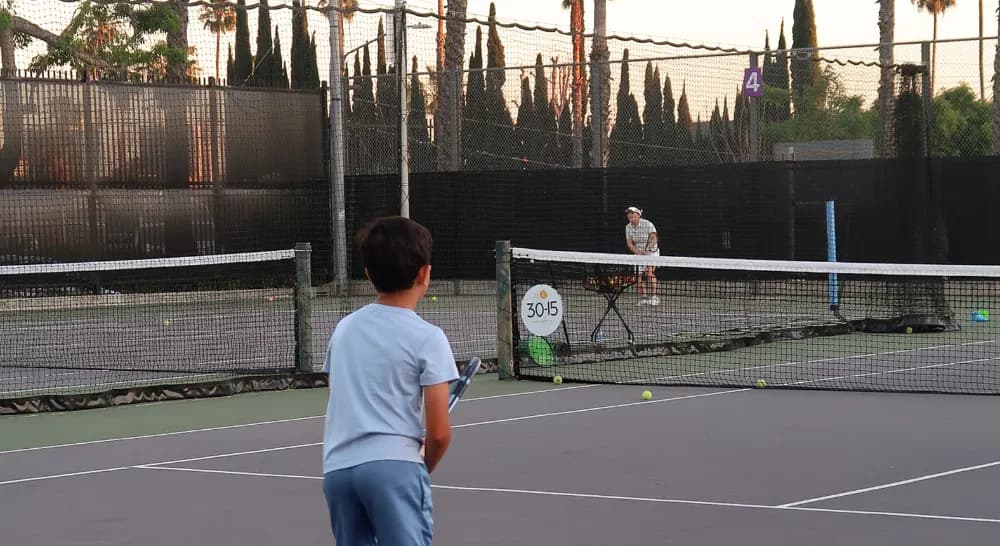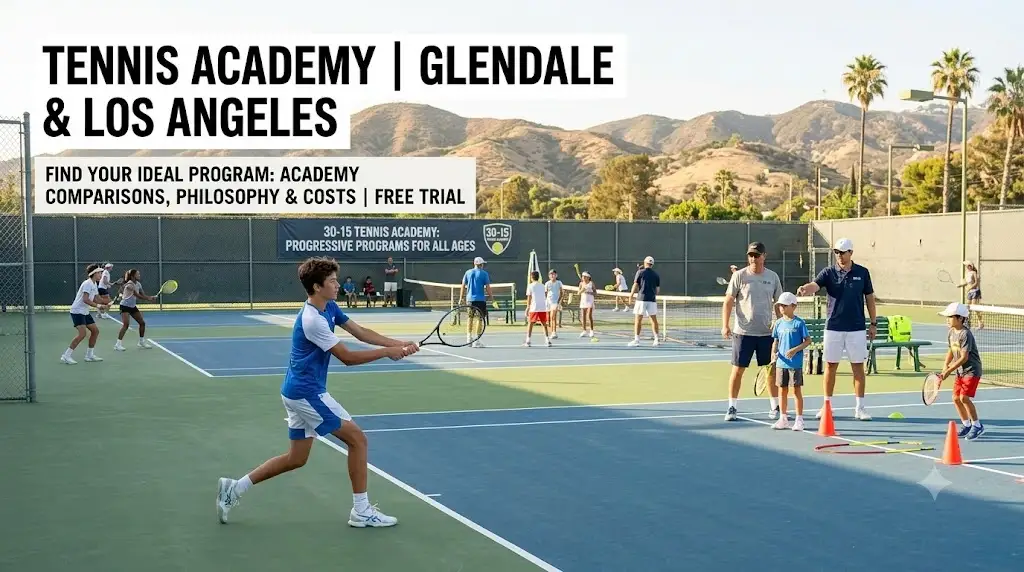
Choosing a tennis academy means evaluating coaching philosophy, training structure, and whether the program matches your actual goals. Some academies focus exclusively on competitive tournament players. Others accommodate recreational students but apply tournament training methods that don't fit casual learners.
The difference matters. A competitive junior preparing for college tennis needs different training than a 40-year-old learning the sport for fitness. The best academies structure programs around student goals instead of forcing everyone through identical training.
This guide explains what separates quality tennis academies from average ones, what to look for when comparing programs in the Glendale and Los Angeles area, and how 30-15 Tennis Academy approaches skill development differently.
What Defines a Quality Tennis Academy
Tennis academies differ from casual coaching in several specific ways.
Structured Curriculum With Clear Progression
Quality academies don't just offer lessons. They provide systematic skill development where each session builds on previous work.
This means documented progression standards, regular assessments, and advancement based on demonstrated skill rather than just age or time served.
You should be able to ask what skills your child is currently working on, what comes next, and how progress gets measured. If the academy can't answer these questions clearly, there's no real curriculum.
Certified Coaching Staff
USPTA or PTR certification indicates coaches learned proper teaching methods and passed competency testing. Not all excellent coaches hold certification, but it provides baseline assurance of training.
Beyond certification, look for specialization in the age group and skill level you need. A coach who develops competitive juniors might not be the best fit for adult beginners.
Small Group Sizes That Allow Individual Attention
Four students per court is ideal. Six is acceptable. Eight or more per court means kids spend more time waiting than hitting.
Some academies advertise small groups but pack courts during high-demand times. Ask about maximum group size during the specific time slots you're considering.
Age-Appropriate Equipment and Methods
Younger players need modified equipment (red, orange, green balls) and scaled courts. Academies using standard equipment for all ages don't understand child development.
This applies to teaching methods too. Kids learn differently than adults and need approaches designed for their developmental stage.
Facilities Designed for Training
Dedicated academy facilities maintain courts properly, provide adequate lighting for evening training, and offer amenities beyond just the court surface.
Programs operating at public parks work fine for casual play but lack the controlled environment needed for serious skill development.
Tennis Academy Options in Glendale and Los Angeles
The Glendale and greater Los Angeles area includes several academy programs with different philosophies and focuses.
Glendale Tennis Academy
Founded 2004
Locations Fremont Park (600 Hahn Ave) and Scholl Canyon (3800 E Glenoaks Blvd)
Focus Competitive junior development with USTA partnership
Glendale Tennis Academy emphasizes tournament preparation and has produced nationally ranked junior players. The academy partners with USTA junior development programs.
Programs run for all ages and levels but the training philosophy centers on competitive development. Recreational players can enroll but should understand the academy's primary focus.
Contact: (323) 719-4975 or glendale-tennis.com
30-15 Tennis Academy
Location School St, Glendale, CA 91202
Focus Biomechanical fundamentals and individualized development for all levels
Motto "Train. Compete. Evolve."
30-15 Tennis Academy structures all programs around proper technical foundations and individual skill progression. The academy serves ages 3 through adult at all competitive levels.
Co-founders Mher and Oleg lead coaching staff with emphasis on biomechanical precision. Their approach prioritizes building correct movement patterns and technique that create long-term development.
Groups never exceed 4 players per court. This ratio ensures every student gets meaningful feedback and adequate court time during each session.
The academy follows proper youth progression (red, orange, green ball systems) for juniors and offers structured beginner through advanced programs for adults.
Contact: (818) 722-3015 or 3015tennisacademy.com
Burbank Tennis Center Academy Programs
Location 249 E Amherst Dr, Burbank, CA 91504
Focus Full-service programs for all ages
Burbank Tennis Center operates structured academy programs alongside court rental services. The facility includes 10 hard courts plus 2 clay courts.
Programs cover group clinics, private instruction, and league play. The facility has been used for television and film productions.
Contact: (818) 843-4105 or burbanktenniscenter.com
Independent Coaches vs Academy Programs
Several independent coaches operate in the Glendale/LA area, teaching at public courts or through private arrangements.
Independent coaching works well for specific needs like tournament preparation or technique corrections. The downside is lack of structured progression and no built-in practice partners.
Academy programs provide curriculum, peer groups, and consistent progression standards that independent coaching can't match.
What 30-15 Tennis Academy Does Differently
30-15's approach differs from typical academy models in several ways that affect training quality.
Biomechanical Focus Over Quick Wins
Many programs prioritize getting kids into matches quickly, even if fundamental technique isn't solid. This creates short-term success but limits long-term potential.
30-15 prioritizes proper movement patterns and stroke mechanics before competitive play. This takes longer initially but builds technique that supports continued improvement.
The academy identifies and fixes the root cause of technical problems rather than applying quick fixes that don't last.
True Small Groups (4 Maximum Per Court)
Four players maximum means everyone stays actively involved. No standing around watching others hit.
This ratio costs more to operate but creates better training. Each player gets significant individual feedback during every session.
Other academies claim small groups but run 6-8 players during popular time slots. 30-15 maintains the 4-player cap regardless of demand.
Free Trial Before Commitment
The academy offers your first class free. This lets you evaluate teaching style, group dynamics, and facility quality before paying for packages.
Programs requiring upfront payment without trial sessions prevent you from making informed decisions. 30-15's trial policy reflects confidence in their coaching approach.
Programs for All Ages and Goals
30-15 structures programs for competitive juniors preparing for tournaments, recreational youth learning fundamentals, and adults at all skill levels.
Each track gets appropriate training methods. Competitive juniors work on match strategy and tournament preparation. Recreational students focus on technique development and enjoying the sport.
The academy doesn't force recreational players through competitive training methods or treat serious players like casual learners.
What Tennis Academy Programs Cost
Academy pricing varies based on training intensity, group size, and program structure.
Typical Cost Ranges in Glendale/LA
Recreational group programs: $200-350 per month for 2-4 sessions per week
Competitive training: $400-600+ per month for daily training
Private academy lessons: $85-120 per hour depending on coach experience
Semi-private training: $50-70 per person per hour
What Affects Academy Pricing
Group size. Four players per court costs more than eight players per court. The smaller group delivers better training but requires more coach hours per student.
Coach credentials. Certified coaches with extensive experience command higher rates. You pay for expertise and proven teaching ability.
Facility quality. Dedicated facilities cost more to maintain than public park programs but provide controlled training environments.
Training frequency. Programs meeting 2-3 times weekly cost less than daily training blocks designed for competitive players.
30-15 Pricing Structure
Monthly membership programs at 30-15 range from $390-955 depending on training frequency (2-4 lessons per week). This breaks down to approximately $48-60 per group session.
All programs maintain the 4-player maximum per court. Pricing reflects the true small-group instruction you receive.
Private lesson rates run $85 per hour. Package deals reduce per-session costs.
Understanding Value vs Just Price
Cheapest doesn't mean best value. A $25 class with 8 kids per court gives each student roughly 15-20 minutes of actual hitting time per hour.
A $50 class with 4 kids per court provides 30-40 minutes of active hitting time. You pay more but get double the training.
Calculate cost per actual training hour, not just session price.
How to Choose the Right Tennis Academy
These questions help you evaluate academy programs.
What's the Maximum Group Size?
Don't accept vague answers. Get the specific maximum for the time slot you're considering.
Some academies advertise small groups but pack courts during peak evening and weekend hours.
Can You Observe or Try a Class?
Quality programs welcome observation and offer trial sessions. This confidence in their coaching means you can evaluate before committing.
Programs requiring immediate payment without trials prevent informed decision-making.
What's the Coaching Philosophy?
Ask how they balance technique development versus match play. Programs emphasizing matches before solid fundamentals create problems later.
Understand whether the academy focuses primarily on competitive development or accommodates recreational goals.
How Is Progress Measured and Communicated?
Quality academies assess students regularly and communicate progress to parents. You should know what skills are being worked on and what comes next.
Programs without documented progression standards just run random drills without clear development goals.
What Equipment and Teaching Methods Do They Use?
For youth programs, confirm they use age-appropriate balls (red, orange, green) and scaled courts.
Ask about teaching methodology. Do they explain the why behind techniques or just demonstrate and expect copying?
How to Join 30-15 Tennis Academy
Enrollment at 30-15 follows a straightforward process designed to ensure proper program placement.
Step 1: Schedule Your Free Trial Class
Call (818) 722-3015 or visit 3015tennisacademy.com to schedule a complimentary first session.
The trial lets you experience the coaching approach, meet instructors, see the facility, and evaluate whether the program fits your needs.
Step 2: Assessment and Placement
During the trial, coaches assess current skill level and discuss goals. This ensures placement in the appropriate group.
Students group by skill level and age, not just chronological age alone.
Step 3: Select Program Structure
Choose training frequency based on goals and schedule. Options range from 2 sessions weekly for recreational development to 4+ sessions for competitive training.
Staff can recommend appropriate frequency based on your situation.
Step 4: Enrollment and Payment
Monthly programs provide consistent training schedules. Payment covers the selected number of weekly sessions.
Clear terms mean you know exactly what you're paying for before starting.
Choose an Academy That Matches Your Goals
The right tennis academy provides structured skill development with certified coaches who understand proper progression. Quality programs maintain small groups, use age-appropriate methods, and measure progress systematically.
30-15 Tennis Academy structures all training around biomechanical fundamentals and individual development rather than one-size-fits-all group instruction. The 4-player maximum per court ensures meaningful feedback during every session.
Your first class is free. Experience the coaching approach, evaluate the facility, and decide if the program fits your needs before committing to paid sessions. Located at School St in Glendale, serving ages 3 through adult at all skill levels. Contact 3015tennisacademy.com or call 818-722-3015 to schedule your complimentary trial session.
Frequently Asked Questions
What's the difference between a tennis academy and regular lessons?
Academies provide structured curriculum with documented progression standards, while regular lessons may lack systematic development. Academies typically offer peer groups, consistent training partners, and clear advancement paths. Regular lessons work fine for casual players or specific technique fixes. Serious skill development benefits from academy structure.
Can recreational players join tennis academies or are they only for competitive players?
Depends on the academy. Some focus exclusively on tournament training. Others structure separate tracks for recreational and competitive students. 30-15 accommodates both. Competitive juniors get tournament preparation. Recreational students get technique-focused development appropriate to their goals.
How do I know if my child is ready for academy training?
Academy training works for any child who can follow basic instructions and maintain focus for 45-60 minutes. Most academies accept students starting around age 3-5. Readiness depends more on attention span and willingness to learn than athletic ability. Academies develop skills from scratch.
What if we need to miss sessions or take breaks?
Policies vary by academy. Some offer makeup sessions in other classes that week. Others provide credits toward future training. A few have no makeup policy. Ask about flexibility before enrolling. Life happens and good academies accommodate occasional absences.
How long until we see improvement?
Noticeable progress typically shows after 8-12 weeks of consistent training. Technical improvements appear before match results. Timeline depends on practice frequency and effort between sessions. Weekly lessons create slower progress than twice-weekly training with additional practice.