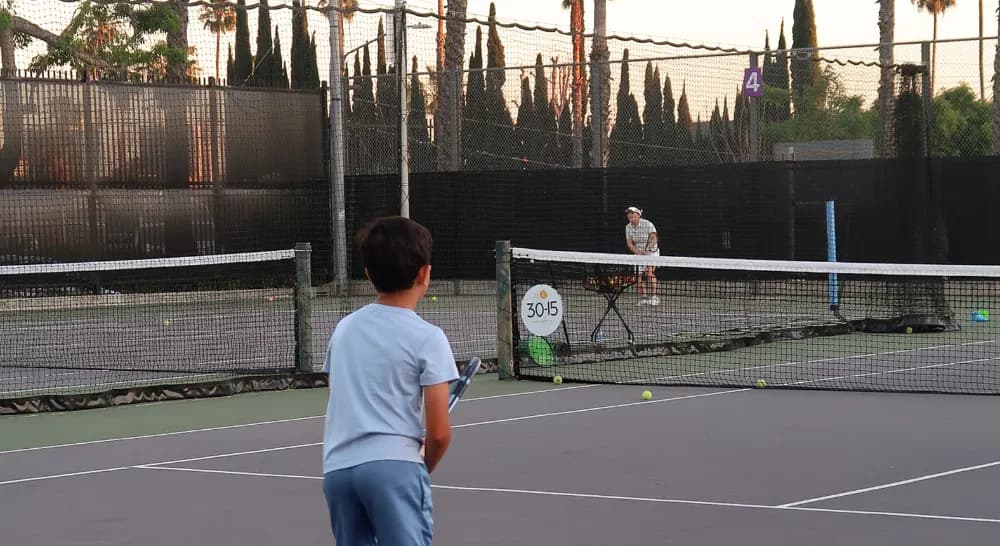
Tennis for seniors is one of the few sports you can genuinely start, or restart, in your fifties, sixties, or beyond and play for decades. It builds strength, balance, and a social circle at the same time, which is rare for any single activity.
The hesitation is usually the same: people worry it is too hard on the joints, too fast, or that everyone on court will be half their age. None of that has to be true with the right program.
This guide covers how senior tennis programs are structured, the real health benefits backed by how the body actually responds, what it costs in the Glendale area, and the exact steps to get on court safely.
Why Tennis Works So Well After 50
Tennis checks boxes most senior fitness options miss. It is weight-bearing, social, skill-based, and endlessly adjustable to your level.
Unlike a treadmill, it keeps your mind engaged. You are reading the ball, planning the next shot, and reacting in real time, which is exactly the kind of stimulation that keeps the brain sharp.
It Scales to Your Body, Not the Other Way Around
Doubles cuts the court you cover roughly in half. Slower-bouncing balls and shorter court formats reduce sprinting. A good coach adjusts pace so you are challenged, not overwhelmed.
This is the key difference between recreational running and tennis. You control the intensity shot by shot.
The Social Element Is Real Medicine
Isolation is a genuine health risk as people age. Tennis builds a standing group you see every week, which is a built-in defense against it.
Many players say the friendships keep them coming back long after the fitness goals are met.
The Health Benefits, Specifically
The benefits of tennis over 50 go well beyond general exercise. The sport hits several systems at once.
Cardiovascular Health
Tennis alternates short bursts of effort with recovery, which is a natural form of interval training. That pattern is strongly linked to heart health and longevity.
Even doubles, which looks gentle, keeps your heart rate in a productive zone across an hour of play.
Balance and Fall Prevention
Every shot involves a small balance challenge: stopping, changing direction, reaching, and recovering. This trains the exact stabilizing muscles and reflexes that prevent falls.
Fall prevention is one of the most underrated long-term benefits of active aging tennis.
Bone Density and Strength
Tennis is weight-bearing and involves quick loading through the legs and core. That stimulus helps maintain bone density, which matters more every decade.
Cognitive Sharpness
Tracking the ball, anticipating angles, and adjusting on the fly are cognitive workouts. Sustained, complex movement under decision-making pressure supports brain health in ways simple cardio does not.
Mood and Stress
The combination of movement, sunlight, and social contact is a reliable mood lift. Players consistently report sleeping better and feeling sharper on the days they play.
Joint Health, Done Right
Contrary to the worry, controlled tennis can support joint health rather than wreck it. Gentle, repeated loading strengthens the muscles around the knees and hips, which protects the joints over time.
The key word is controlled. Sprinting on hard courts with no warm-up is risky at any age. Small-group sessions on a managed pace are not.
Types of Senior Tennis Programs
Senior programming usually comes in a few formats. Match the format to your goal and experience.
Beginner and Returning-Player Clinics
Built for people new to tennis or coming back after years away. The focus is fundamentals: grip, contact point, and movement, taught at a patient pace.
Pros Low pressure, technique-first, peers at the same starting point
Cons Slower progression if you are already experienced
Cardio and Social Tennis
Lighter on technical instruction, heavier on movement and fun. Often mixed with social time before or after.
Pros Great fitness and community, low intimidation factor
Cons Less individual correction
Senior Leagues and Match Play
Organized competitive or semi-competitive play, often through a senior tennis league grouped by age and level. You play actual matches on a schedule.
Pros Goals, structure, camaraderie, real competition at an appropriate level
Cons Requires a baseline of stroke reliability first
Private and Semi-Private Coaching
One-on-one or two-player sessions built entirely around your body and goals. The fastest path to clean technique and the gentlest on the joints, because the coach controls every ball.
Pros Fully personalized, ideal for managing past injuries
Cons Higher per-hour cost than group formats
What Senior Tennis Costs in Glendale
Cost depends on format and frequency. Here is the realistic range.
Group Clinics and Classes
Small-group senior clinics generally run $25 to $50 per session, with package and membership rates bringing the per-session cost down.
Group size matters as much as price. A cap of four to six players keeps the coaching personal and the pace manageable.
Monthly Memberships
Ongoing plans built around two to three sessions a week typically fall in the $390 to $585 per month range at structured academies.
Comparing membership plans is the best way to find a frequency that fits both your schedule and your body, since recovery time between sessions matters more after 50.
Private Lessons
Private coaching commonly runs $80 to $120 per hour. Many seniors use a few privates to build clean strokes, then move into small groups to keep cost down.
A blended approach often delivers the best value: privates for technique, groups for volume and community.
Common Mistakes Senior Players Make
A few avoidable errors cause most of the frustration and the injuries. Skip these and the experience stays enjoyable.
Skipping the Warm-Up
This is the number one cause of pulled muscles after 50. The warm-up is not optional; it is part of the session. Five to ten minutes of easy movement makes everything that follows safer.
Joining a Group That Is Too Fast
Trying to keep up with younger or stronger players leads to bad technique and tweaked joints. There is no shame in starting in a steadier group and moving up when you are ready.
Treating Soreness and Pain the Same
Muscle soreness a day after playing is normal and fades. Sharp or joint pain during play is a stop signal. Learning the difference keeps small issues from becoming layoffs.
How to Get Started Safely
Starting right protects your joints and your confidence. Follow these steps.
Step 1: Get a Quick Medical Green Light
If you have heart, joint, or blood-pressure concerns, a short conversation with your doctor first is worth it. Tennis is adaptable, but it helps to know your limits going in.
Step 2: Start in the Right Group
Be honest about your current activity level. Starting in a true beginner or returning-player group beats struggling to keep up with faster players.
A good academy will assess your level during a first session and place you correctly. You can book a free trial to get that assessment before committing to anything.
Step 3: Invest in Proper Footwear
Court shoes, not running shoes. Tennis involves lateral movement that running shoes are not built for, and the wrong shoe is a common cause of rolled ankles.
This single piece of gear matters more than the racket when you start.
Step 4: Warm Up Every Time
Five to ten minutes of easy movement and gentle stretching before you hit. Cold muscles after 50 are far more injury-prone, and the warm-up itself becomes part of the workout.
Step 5: Build Volume Gradually
Start with one or two sessions a week and let your body adapt before adding more. Soreness is normal; sharp pain is a signal to rest. Consistency beats intensity every time.
Tennis for Seniors at 30-15 Tennis Academy
At 30-15 Tennis Academy in Glendale, senior players train in small groups capped at four to six, so the pace stays manageable and the coaching stays personal. Programs run for every level from true beginner through experienced league player.
The certified tennis coaches, led by founders Mher and Oleg, adjust drills to each player's body and goals, which is exactly what active aging tennis needs. Players from Glendale, Burbank, La Crescenta, and Pasadena train across recreational and social formats.
Sessions emphasize clean technique and controlled movement over raw speed, so you build a game that holds up for years rather than one that burns you out in a month. Your first session is complimentary, which makes trying it genuinely low-risk.
Get on Court This Week
The hardest part is the first session, and at 30-15 Tennis Academy that one is free. You can feel the pace, meet the coaches, and see how the small-group format fits your body before paying anything. Book a free trial by calling 818-722-3015 or stopping by School St in Glendale. Programs serve ages 3 through adult, including dedicated, patient coaching for players 50 and up. Come find out how good your game still has in it.
Frequently Asked Questions
Is tennis safe to start in my 60s or 70s?
Yes, for most people, with the right format and a sensible warm-up. Doubles, slower balls, and small-group coaching keep the intensity controllable. If you have specific medical conditions, get a quick green light from your doctor first. The sport is far more adjustable than its reputation suggests, and a good coach will scale every drill to you.
I played decades ago. Will I be too rusty?
Old muscle memory comes back faster than you expect. Returning players almost always progress quicker than true beginners, even after twenty or thirty years away. A returning-player clinic is built exactly for this.
Are there senior tennis leagues in the Glendale area?
Yes. Senior leagues organized by age and level run throughout the region, and many players move into a senior tennis league once their strokes are reliable. A coaching program is the easiest on-ramp, since coaches can point you toward leagues that match your level.
How often should seniors play to see health benefits?
Two sessions a week is the sweet spot for steady cardiovascular, balance, and strength gains while leaving enough recovery time. Some players add a third once they have adapted. Consistency matters more than long, occasional sessions.
What does tennis over 50 do that walking does not?
Walking is excellent steady cardio, but tennis adds balance training, lateral strength, quick decision-making, and a social structure in one activity. The variety of movement and the cognitive demand are what set tennis over 50 apart.