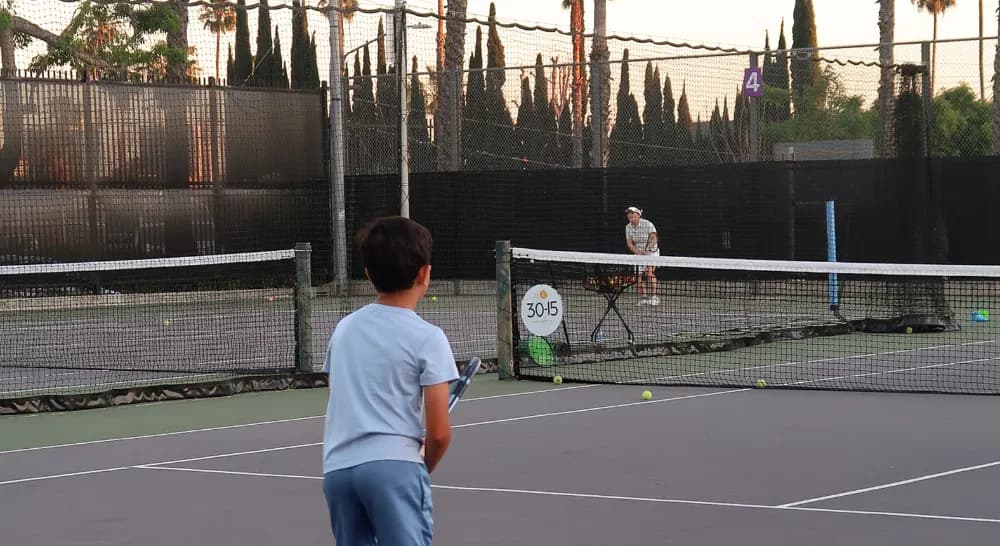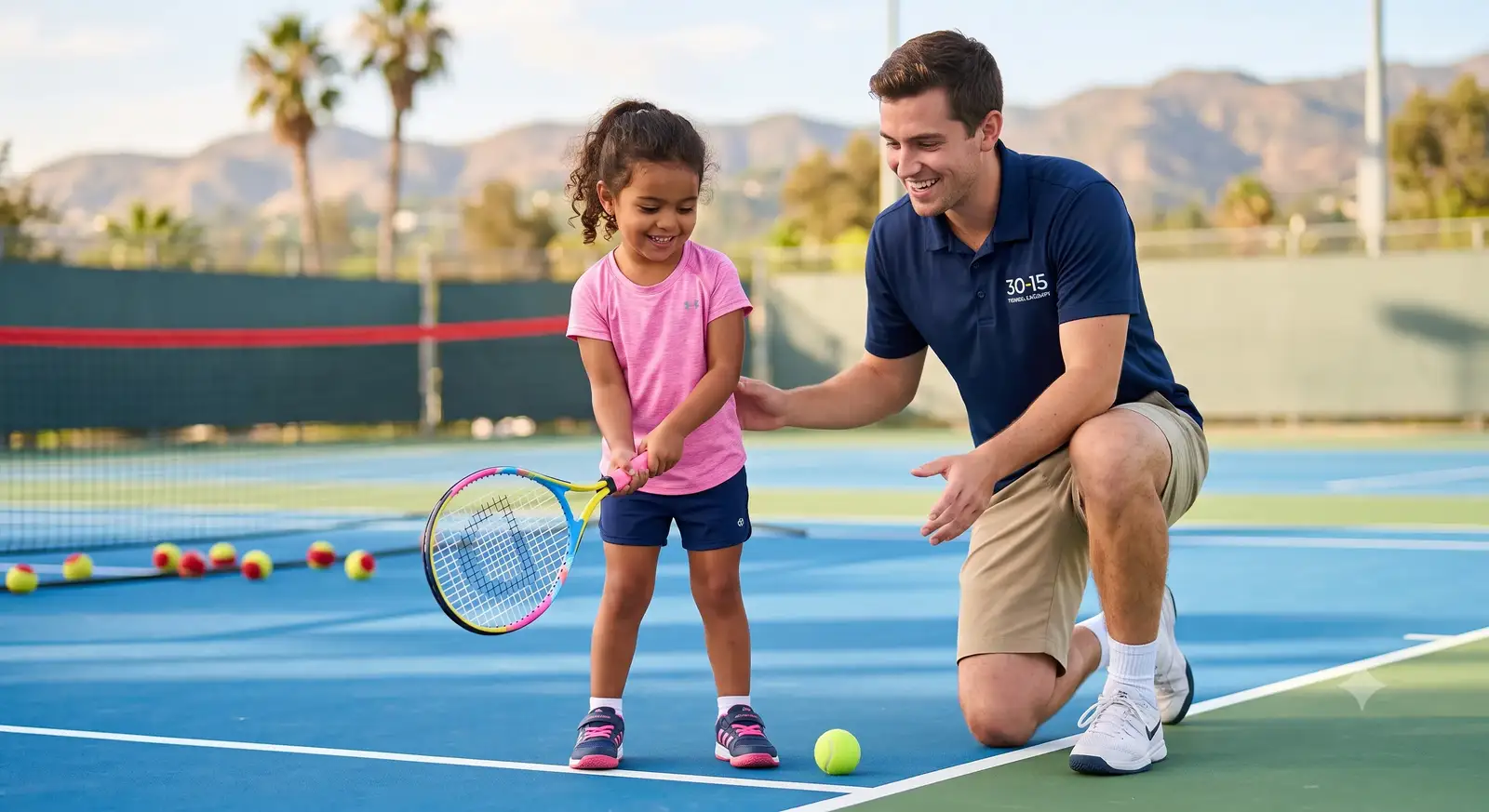
Tennis lessons for toddlers look nothing like adult tennis, and that is exactly the point. At ages 3 to 6, the goal is not a forehand; it is coordination, balance, listening, and fun with a racket in hand.
Parents often wonder whether their child is too young or too uncoordinated to start. The honest answer is that this age is ideal, as long as the program is built for little kids rather than scaled down from a big-kid class.
This guide explains how mini tennis works, what red ball training actually is, what to realistically expect at this age, and how to choose a program that fits a three-, four-, or five-year-old.
Can a 3-Year-Old Really Play Tennis?
Yes, with the right equipment and expectations. Tennis for 3 year olds is movement and play, not match tactics.
Sessions focus on the building blocks: running, stopping, hand-eye coordination, and following simple instructions. The racket is a tool for fun, not a test.
What Toddlers Are Actually Learning
Gross motor skills like running, jumping, and changing direction. Hand-eye coordination from rolling, catching, and tapping a ball. Listening and taking turns in a group.
These foundations matter more than any stroke at this age, and they transfer to every sport the child tries later.
Why Starting Young Helps
Early, playful exposure builds comfort and athletic confidence before self-consciousness sets in. Kids who start with games rather than pressure tend to stick with sport longer.
The Benefits Beyond Tennis
Most parents are not signing a four-year-old up to make a tennis player. The real payoff is broader and starts on day one.
Physical Development
Running, stopping, reaching, and swinging build the gross motor skills and balance that underpin every sport. A child who moves well at five has an easier time with anything athletic later.
Social Skills
Group classes teach taking turns, listening to a coach who is not a parent, and sharing space with other kids. These are real, transferable lessons wrapped inside a game.
Focus and Following Directions
Short, structured activities gently stretch a toddler's attention span and ability to follow a sequence of simple instructions, which helps in preschool and beyond.
What Mini Tennis Actually Is
Mini tennis is a scaled-down version of the sport designed specifically for young children. Everything is smaller and slower to match their bodies.
Smaller Courts
Toddlers play on short, narrow courts rather than a full-size one. A small court means more contact, more success, and less time chasing balls into the distance.
Shorter Rackets
Rackets for this age are light and short, sized so a child can actually swing and control them. An adult racket is far too heavy and long for a four-year-old.
Slower, Softer Balls
This is where red ball tennis comes in. The balls are larger, softer, and bounce low and slow, giving little kids time to track, move, and make contact.
Slow balls are the single biggest reason mini tennis works. Standard balls move far too fast for a developing eye to follow.
Understanding Red Ball Tennis
Red ball is the first stage of the official youth progression. It is built around the realities of how young children move and see.
How the Progression Works
The standard pathway runs red, then orange, then green, then the yellow ball adults use. Each stage uses a slightly faster ball and a larger court as the child grows and improves.
Red ball is the entry point for ages roughly 3 to 7. Children advance when they are ready, not on a fixed timeline.
Why Red Ball Comes First
A red ball travels about 25 percent of the speed of a regular ball and bounces lower. That gives a small child the precious extra moment needed to react and succeed.
Success early is what keeps kids coming back. Constant misses with a fast ball would frustrate any toddler into quitting.
What to Realistically Expect at This Age
Setting the right expectations keeps the experience joyful for both child and parent.
Short Attention Spans Are Normal
A good toddler class changes activities every few minutes. Coaches expect wandering attention and design around it with games, not lectures.
If a class expects three-year-olds to line up quietly and drill, it is the wrong class.
Progress Looks Like Confidence, Not Strokes
Early wins are a child happily running to the ball, swinging without fear, and wanting to come back. Clean technique comes later, after the foundation is set.
Some Days Are Off Days
Toddlers have tired days, shy days, and big-feeling days. A skipped activity or a clingy morning is normal and not a sign tennis is wrong for your child.
Mistakes Parents Make at This Age
A few well-meaning errors can take the fun out of it. Avoiding them keeps your child eager to return.
Pushing for Technique Too Early
Correcting a four-year-old's grip mid-game usually backfires. At this age, enthusiasm matters more than form. The technique comes naturally once the love of the game is there.
Comparing Kids
Children develop coordination on wildly different timelines. The shy child hanging back today may be the most eager one next month. Comparison only adds pressure that little kids feel.
Expecting Linear Progress
Toddlers move in fits and starts. A great session followed by a clingy one is completely normal. Consistency over weeks, not performance on any single day, is what counts.
Getting Your Toddler Ready for the First Class
A little preparation makes the first session smoother for everyone.
Dress for Movement
Comfortable clothes they can run in and proper court shoes with non-marking soles. Skip anything stiff or fussy that will distract them mid-game.
Feed and Rest Beforehand
A tired or hungry toddler will not enjoy any activity. Schedule the class for a window when your child is usually alert and fed, not right before nap time.
Keep Your Own Energy Light
Kids read parents closely. Treating the first class as low-pressure fun, rather than a big performance, helps a nervous child relax and dive in.
How to Choose a Toddler Tennis Program
Not every kids' program is built for this age. Look for these signs of a true toddler-ready setup.
Age-Appropriate Equipment and Format
Confirm they use red balls, short rackets, and small courts. A program scaling down an older-kids class with regular balls is not built for toddlers.
A strong junior tennis program will have a clear stage for the youngest players, separate from the older juniors, with its own equipment and pace.
Small Groups and Patient Coaches
Look for small groups and coaches who clearly enjoy working with little kids. Patience and a playful manner matter far more than a coach's competitive resume at this age.
It is worth checking the certified tennis coaches and their experience with early-childhood instruction, since teaching a three-year-old is a different skill from coaching a teen.
A Trial Before You Commit
Toddlers vary enormously, and the only real test is watching your child in an actual session. A program confident in its approach will let you try one first.
Tennis for Toddlers at 30-15 Tennis Academy
At 30-15 Tennis Academy in Glendale, kids' programs start at age 3 and use proper red, orange, and green ball progression with age-sized rackets and small courts. Little ones learn through games in small groups, not scaled-down adult drills.
The coaching staff, led by founders Mher and Oleg, keeps sessions playful and patient, and the junior tennis program gives young players a clear path to grow into as they develop. Families come from Glendale, Burbank, Pasadena, and La Crescenta.
The aim at this age is simple: a positive first experience that makes a child want to come back. Skills build naturally on top of that foundation, which is why the youngest groups stay small, slow, and built around fun.
Give Your Child a Joyful First Experience With Tennis
The best way to see if your toddler is ready is to let them try, and the first session is complimentary at 30-15 Tennis Academy. You will see how your child responds to the games, the coaches, and the small-group setting before committing. Book a free trial by calling 818-722-3015 or visiting School St in Glendale. Programs begin at age 3 and run through adult, with patient, play-based coaching for the littlest players. Bring your child and watch them have fun with a racket.
Frequently Asked Questions
What is the right age to start tennis lessons for toddlers?
Children can begin a true play-based mini tennis class around age 3. The key is that the class uses red balls, short rackets, and games rather than formal drills. Tennis lessons for toddlers should look like guided play, not instruction. If your child can run, follow simple directions, and enjoys group activity, they are likely ready.
Is tennis for 3 year olds actually worth it?
Yes, when the program is built for the age. Tennis for 3 year olds develops coordination, balance, and listening through fun, which benefits every future sport and activity. You are not paying for tennis skill at this point; you are paying for movement, confidence, and a positive first experience with sport.
What is red ball tennis and why does it matter?
Red ball tennis uses a larger, softer, slower ball that bounces low, giving young children time to track and hit it. It is the first stage of the official youth progression. Without it, a fast standard ball would move too quickly for a small child to succeed, and frustration would set in fast.
How long are toddler tennis classes?
Classes for this age are short by design, usually 30 to 45 minutes, to match toddler attention spans. Coaches pack that time with varied games so the kids stay engaged from start to finish rather than tiring of one activity.
Does my little kid need their own racket and gear?
Many programs provide age-sized rackets for the youngest players, so you can try before buying. For tennis for little kids, the most important gear is comfortable clothes and proper court shoes; the program supplies the right balls and usually the racket to start.