Walking into a sporting goods store as a new player is overwhelming. There are forty rackets on the wall, prices range from $25 to $300, and nobody explains the difference. Most people either overspend on gear they do not need or grab the cheapest option and fight their equipment for a year.
Choosing a tennis racket for beginners does not have to be complicated. You need a handful of items to start playing well, and the right choices cost far less than you would expect.
This guide covers exactly what tennis gear you need to start in 2026, what to skip, real price ranges, and the mistakes that cost beginners money and progress.
The Tennis Racket: Your Most Important Purchase
Your racket affects every shot you hit. Getting this one item right matters more than anything else in your bag.
What to Look For in a Beginner Racket
Three numbers decide whether a racket suits a beginner: head size, weight, and balance.
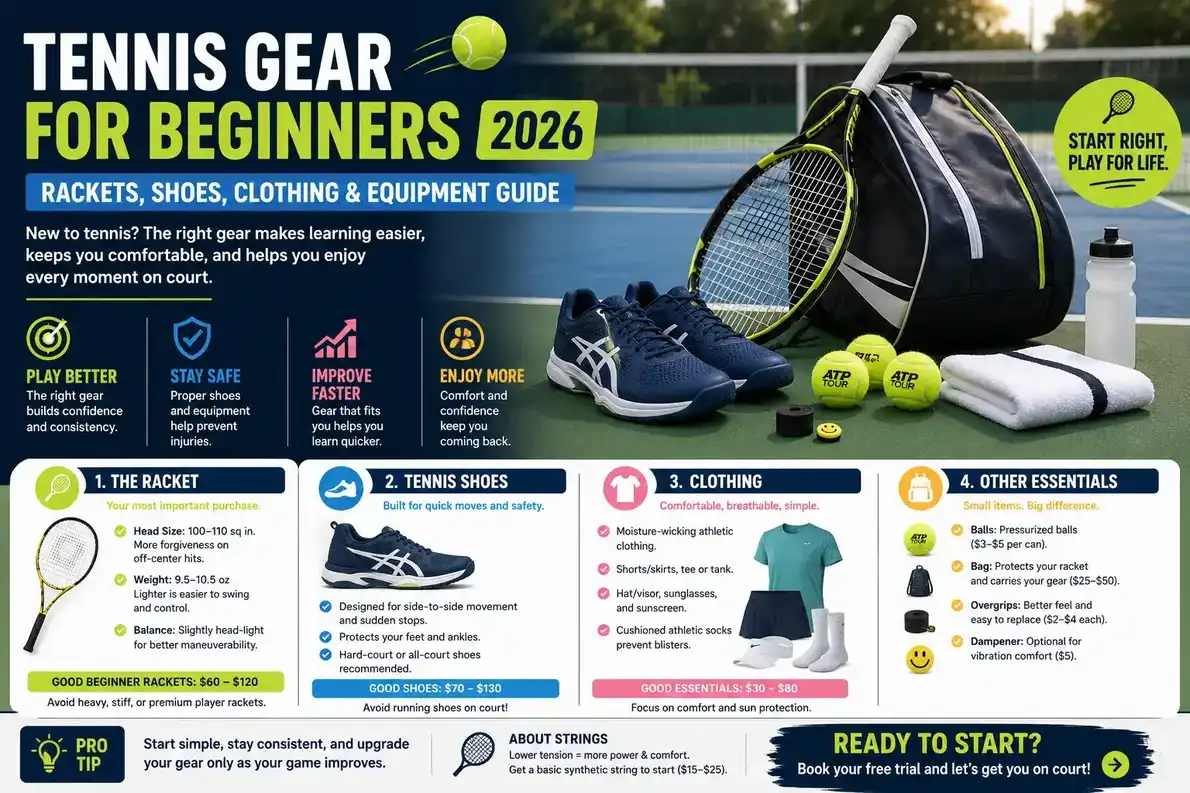
Head size. Look for 100 to 110 square inches. A larger head gives you a bigger sweet spot, so off-center hits still go in. This forgiveness matters enormously when you are learning.
Weight. Beginners do best with lighter frames, roughly 9.5 to 10.5 ounces unstrung. Lighter rackets are easier to swing and gentler on your arm.
Balance. Slightly head-light frames feel more maneuverable, which helps when your timing is still developing.
How Much Should You Spend
A good beginner racket costs $60 to $120 new. Spending more buys advanced features you cannot use yet.
Pros of buying mid-range. Durable, properly balanced, room to improve before upgrading.
Cons of buying the cheapest $25 racket. Heavy, poor balance, tiny sweet spot, and it often teaches bad habits.
Avoid premium $250-plus player frames. They are stiff, heavy, and demand technique you have not built. They will frustrate you.
Grip Size Matters More Than People Think
A grip that is too big or small causes the racket to twist on contact and strains your wrist. To check size, hold the racket and slide your non-hitting index finger between your fingertips and palm. It should fit snugly.
Most adults need grip size 2 (4 1/4) or 3 (4 3/8). When unsure, size down. You can always add an overgrip to build it up, but you cannot shrink a grip.
Tennis Shoes: Do Not Use Running Shoes
This is the gear mistake that causes the most injuries. Running shoes are built for forward motion. Tennis demands constant side-to-side movement, sudden stops, and pivots.
Why Court Shoes Are Non-Negotiable
Tennis shoes have flat, durable outsoles and lateral support that running shoes lack. Wearing running shoes on court rolls ankles and wears through the toe in weeks.
On hard courts, which is what most Glendale-area public and academy courts are, look for shoes labeled for hard-court or all-court use. Expect to pay $70 to $130 for a solid pair.
One honest note: shoes are where spending a bit more pays off. Your feet take a beating, and a $90 pair lasts far longer than a $40 pair while protecting your joints.
What to Wear to Tennis
You do not need a tennis-specific wardrobe to start. Comfort and movement matter more than brand names.
Clothing Basics
Wear moisture-wicking athletic clothing, the same kind you would wear to the gym. Cotton t-shirts get heavy with sweat and chafe.
Men typically wear athletic shorts and a polo or performance tee. Women often choose tennis skirts or shorts with a tank or tee, though any breathable athletic outfit works fine for lessons.
Southern California sun is no joke. A hat or visor, sunglasses, and sunscreen belong in your bag from day one. Many courts have little shade.
Socks and Small Comfort Items
Cushioned athletic socks prevent blisters during long rallies. Some players use two thin pairs to reduce friction. A sweatband or wristband helps keep grip dry in summer.
Tennis Equipment for Beginners: The Extras
Beyond the racket, shoes, and clothing, a few inexpensive items make practice smoother.
Balls
Buy pressurized balls for regular play. A can of three costs $3 to $5. For drilling at home or with a partner, a larger bucket of practice balls is worth it.
Beginners and kids often benefit from low-compression balls, sometimes called red, orange, or green dot balls. They move slower and bounce lower, giving you time to set up. Quality coaching programs use these for early development.
Bag, Overgrips, and Dampeners
A simple racket bag protects your frame and carries balls, water, and a towel. A basic two-racket bag runs $25 to $50.
Overgrips, at about $2 to $4 each, go over your factory grip for better feel and easy replacement when they wear out. A vibration dampener is a $5 optional accessory some players like for string feel. Neither affects how you play, so do not stress over them.
What You Can Skip for Now
Ball machines, multiple rackets, premium strings, and high-tech wearables are not beginner purchases. Master the fundamentals first, then invest in extras that match where your game actually is.
Strings: The Detail Beginners Overlook
Most beginners never think about strings, but they quietly shape how the racket feels. New rackets come pre-strung, which is fine to start, yet two factors are worth knowing.
String tension. Lower tension gives more power and is gentler on your arm, which suits beginners. Higher tension gives more control but demands cleaner technique. If you string your racket, ask for the lower end of the recommended range printed on the frame.
String type. Soft synthetic or multifilament strings are comfortable and forgiving. Stiff polyester strings, popular with advanced players for spin, are harsh on developing arms. Skip them until your technique and strength catch up.
Strings also lose tension over time, even if they do not break. If you play regularly, a fresh restring once or twice a year keeps the racket responsive. A basic restring runs $15 to $30.
Where to Buy Your Tennis Gear
Where you shop affects both price and how well your gear fits you.
Specialty tennis shops. Staff can check your grip size, recommend a frame for your level, and let you demo rackets before buying. This guidance is worth a small price premium for a first racket.
Big-box sporting goods stores. Convenient and often cheaper, but expect less expert help. Fine if you already know the specs you want.
Online. The widest selection and best prices, but you cannot feel the racket or confirm grip fit. Best once you know exactly what you want, or for restocking balls and overgrips.
A smart move for beginners is to demo a racket through a shop or coaching program before committing. Hitting with a frame for twenty minutes tells you more than any spec sheet.
Common Gear Mistakes Beginners Make
Knowing these traps saves money and speeds up your progress.
Buying a pro-level racket too soon. Heavy, stiff frames hurt your arm and slow your learning. Start forgiving, upgrade later.
Skipping proper court shoes. The single most common cause of preventable beginner injuries.
Ignoring grip size. A wrong grip undermines every shot and can cause wrist and elbow pain.
Overbuying accessories. You do not need a $300 bag of gadgets to learn solid technique.
Buying used strings or a cracked frame to save money. Damaged equipment behaves unpredictably and frustrates new players.
Choosing gear by brand or looks alone. The prettiest racket is useless if it is too heavy or the wrong grip size for you.
Tennis Gear and Coaching at 30-15 Tennis Academy
Having the right gear is only half the equation. The other half is learning correct technique from the start, which is exactly what our certified tennis coaches focus on with every new student.
If you are unsure which racket or shoes suit you, bring what you have to a session. The team at our tennis academy in Glendale will tell you honestly whether your equipment is helping or holding you back, and they will recommend beginner-friendly options without pushing you toward expensive gear you do not need.
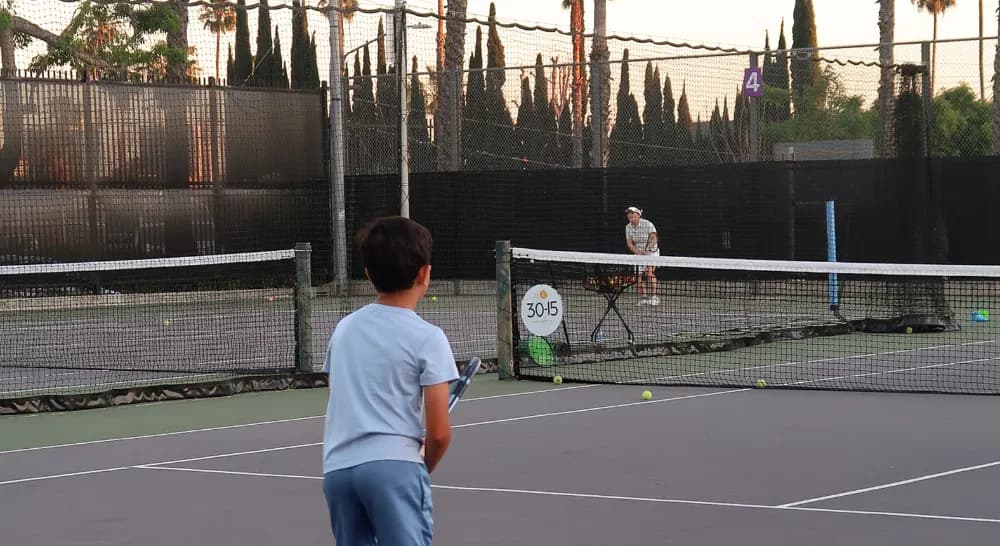
Buying a child's first racket is its own challenge, since size and weight matter even more for kids. Our junior tennis program uses age-appropriate equipment and low-compression balls, so younger players learn with gear built for them.
Once you know tennis is for you, ongoing coaching plans keep you progressing with structured sessions, and the coaching team continues to guide your equipment choices as your game develops.
Programs serve players ages 3 and up, from first-timers to competitive juniors, so you are never the only beginner on court.
Get on Court With the Right Setup
You do not need a closet full of gear to start, just a forgiving racket, proper court shoes, and the willingness to learn. Bring all of that to your complimentary first session and let our coaching team set you on the right path. We serve players ages 3 and up at School St, Glendale, CA 91202. Call 818-722-3015 or book a free trial to get started this week.
Frequently Asked Questions
What is the best tennis racket for beginners in 2026?
The best tennis racket for a beginner has a head size of 100 to 110 square inches, weighs around 9.5 to 10.5 ounces, and is slightly head-light for easy swinging. Look in the $60 to $120 range from any major brand. The exact model matters less than getting these specs and the right grip size right.
How much does it cost to get started with tennis gear?
A complete beginner setup runs roughly $150 to $300. That covers a racket ($60 to $120), court shoes ($70 to $130), balls, and a basic bag. You likely already own suitable athletic clothing, so you do not need to buy a tennis wardrobe to begin.
What should I wear to tennis if I do not have tennis clothes?
Any breathable, moisture-wicking athletic outfit works. Think gym shorts and a performance shirt, plus court shoes, a hat, and sunscreen for outdoor play. Specialized tennis apparel is optional and not needed for lessons or recreational play.
Can I use running shoes to play tennis?
No. Running shoes lack lateral support and have soles built for forward motion only. Tennis involves constant side-to-side movement, so running shoes increase your risk of rolled ankles and wear out quickly. Proper court shoes are the one piece of gear you should not skip.
Do beginners need an expensive racket to improve?
No, and an expensive racket often slows beginners down. High-end frames are heavy and stiff, demanding technique you have not developed. A forgiving mid-range racket helps you learn faster and protects your arm. Upgrade once your game outgrows it.