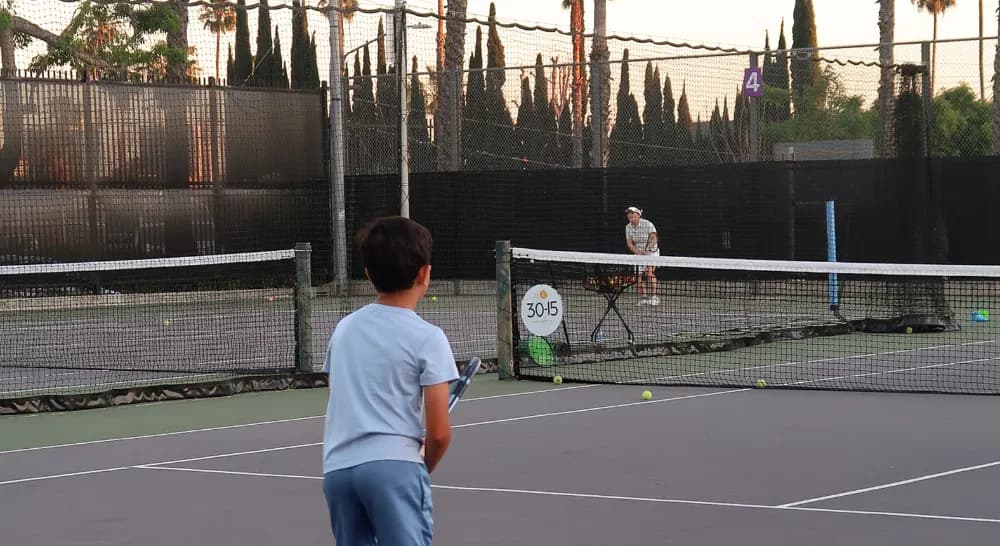
Tennis is hard on the body in predictable places: the elbow, the shoulder, the knees. Most of these issues build up slowly from repetition and poor mechanics, which means smart tennis elbow prevention and good habits can keep many of them from ever starting.
This guide covers the most common tennis injuries, simple ways to lower your risk, a warm-up routine that actually prepares you to play, and clear signs that it's time to stop guessing and see a professional.
One important note up front: this article is educational, not medical advice. We are tennis coaches, not doctors. For any pain that persists, worsens, or limits your daily life, see a physician or physical therapist for a proper diagnosis.
The Most Common Tennis Injuries
Knowing what tends to go wrong helps you protect those areas before they become a problem.
Tennis Elbow
Tennis elbow is irritation of the tendons on the outside of the elbow, usually from repeated backhands or gripping the racket too tightly. It often shows up as a dull ache that worsens with lifting or twisting.
Despite the name, it affects recreational players more than pros, often because of late contact points and a death grip on the handle.
Shoulder Pain
A shoulder injury in tennis usually involves the rotator cuff, the group of muscles that stabilize the joint during the serve and overhead. Pain often appears when reaching overhead or after long serving sessions.
Players who serve hard without conditioning the shoulder are the most likely to feel it.
A good rule of thumb: if your shoulder aches the morning after every match, your serving load is outrunning your conditioning.
Knee Pain
Knee pain in tennis comes from the constant stopping, starting, and lateral movement on hard courts. It ranges from general soreness to patellar tendon irritation, sometimes called jumper's knee.
Worn-out shoes and skipping the warm-up are two of the biggest contributors.
Playing on harder surfaces with little recovery between sessions raises the risk further, so spacing out intense days helps the knees stay fresh.
Calf and hamstring tightness also pulls on the knee, which is why flexibility work matters as much as strength.
Ankle and Wrist Issues
Rolled ankles happen during quick direction changes, especially when fatigued. Wrist strain usually traces back to poor grip technique or trying to add wrist snap where the arm and shoulder should do the work.
Fatigue is a hidden factor across all of these. Most non-contact injuries happen late in a session when form breaks down, so knowing when to stop is its own form of prevention.
Tennis Elbow Prevention That Actually Works
Tennis elbow is one of the most preventable tennis injuries because so much of it comes down to mechanics and equipment.
Fix Your Technique First
Late contact on the backhand is the leading cause. Meeting the ball out in front, with the larger muscles of the shoulder and core driving the shot, takes load off the elbow tendons.
This is exactly the kind of habit a coach can spot in minutes that you might never feel on your own.
Two-handed backhand players also tend to load the elbow less than one-handers, which is worth knowing if your elbow flares up repeatedly.
Check Your Grip and String Tension
A grip that's too small forces you to squeeze harder, which strains the forearm. Looser string tension and softer strings absorb more shock and reduce stress on the elbow.
Gripping the racket only as tightly as needed, and relaxing between points, makes a real difference over a long session.
Build Forearm Strength
Light wrist curls, reverse wrist curls, and simple grip exercises strengthen the muscles that protect the elbow. Strong, conditioned tendons tolerate the repetitive load of tennis far better.
Effective tennis elbow prevention is mostly boring and consistent: good mechanics, sensible equipment, and a little strength work.
Use a Brace Only as a Backup
A counterforce brace can ease symptoms during play, but it treats the symptom, not the cause. Rely on technique, grip size, and conditioning first, and treat a brace as temporary support rather than a permanent fix.
Protecting Your Shoulders and Knees
The serve and your movement put the most strain on these joints, so a little prevention goes a long way.
Shoulder Care
Reduce the risk of a shoulder injury in tennis by conditioning the rotator cuff with light resistance band work two or three times a week. Strengthen the muscles that decelerate the arm after the serve, not just the ones that power it.
Avoid sudden jumps in serving volume. A shoulder used to 20 serves a session will protest if you suddenly hit 100.
Knee Care
Address knee pain in tennis by replacing court shoes before the tread wears smooth, usually every six to twelve months for regular players. Worn soles reduce traction and force the knees to absorb more shock.
Strengthening the quads, hamstrings, and glutes stabilizes the knee. So does learning to bend at the hips and knees rather than landing stiff-legged.
Cooling down with gentle static stretching after you play keeps the muscles around the knee and shoulder from tightening up overnight, which reduces next-day soreness.
A Tennis Warm-Up Routine That Prepares You to Play
Cold muscles are far more likely to strain. A proper warm-up is the single easiest step in staying healthy playing tennis, and it takes about ten minutes.
Step 1: Get the Blood Moving
Start with three to five minutes of light cardio: a jog around the court, jumping jacks, or skipping. The goal is to raise your heart rate and warm the muscles, not to tire yourself out.
Step 2: Dynamic Stretching
Use movement-based stretches rather than holding static poses before play. Arm circles, leg swings, lunges with a twist, and side shuffles prepare the joints through the ranges tennis demands.
Save long static stretches for after you play, when the muscles are warm.
Step 3: Easy On-Court Rally
Begin hitting from the service line with gentle, controlled shots before moving back to the baseline. Add serves gradually, starting at half pace. Never start a session with full-power first serves on a cold shoulder.
Hydration and sleep belong in the prevention conversation too. A tired, dehydrated body fatigues faster and moves with sloppier mechanics, which is when most strains occur.
When to See a Doctor
Some soreness after playing is normal. Certain signs, however, mean you should stop self-managing and get a professional opinion. Again, we coach tennis, so treat the following as general guidance rather than diagnosis.
Signs You Should Get Checked
See a doctor or physical therapist if pain lasts more than a week or two despite rest, if it's sharp rather than a dull ache, if a joint swells or feels unstable, or if pain interferes with sleep or everyday tasks.
Sudden, severe pain, a pop at the moment of injury, numbness, or an inability to bear weight all warrant prompt medical attention.
Consistent, well-structured training also reduces overuse injuries by spreading load sensibly across the week. Our coaching plans build that consistency into a manageable schedule rather than occasional, intense bursts that strain the body.
Why Pushing Through Backfires
Playing through a nagging tennis injury usually turns a short layoff into a long one. Early rest and proper assessment almost always get you back on court faster than ignoring the problem.
A physical therapist can also identify the movement pattern that caused the issue so it doesn't simply return.
In our experience, players who treat a small problem early miss a couple of weeks. Players who ignore it often miss a couple of months. The math favors caution.
Staying Healthy Playing Tennis at 30-15 Tennis Academy
Good mechanics are the foundation of injury prevention, and that's exactly what structured coaching builds. At our tennis academy in Glendale, our coaches teach efficient strokes that protect the elbow, shoulder, and knees rather than overloading them. Sessions begin with a proper warm-up so players develop the habit from day one.
Working with certified tennis coaches in small groups means someone is watching your technique, catching the late contact points and tense grips that lead to injury. For families, our junior tennis program emphasizes age-appropriate movement and load so young players build healthy habits early.
Play Smart and Stay on Court in Glendale
The best way to avoid tennis injuries is to build efficient technique and consistent warm-up habits from the beginning, and coaching makes that far easier. Your first eligible group class is free, so you can experience our approach with no commitment. We coach players ages 3 through adult at all levels. Visit us at School St, Glendale, CA 91202, call 818-722-3015, or book a free trial to start playing healthier tennis. For any ongoing pain, please consult a medical professional. Free trials are available for eligible group classes, not adult advanced/Live Ball or private lessons.
Frequently Asked Questions
How can I prevent tennis elbow as a beginner?
Focus on tennis elbow prevention from the start: meet the ball in front of you, avoid squeezing the racket too tightly, and use a comfortable grip size with softer strings. Adding light forearm strengthening a couple of times a week helps the tendons handle repetitive load.
Is it normal to have knee pain after playing tennis?
Mild soreness after a hard session can be normal, especially on hard courts. Persistent or sharp knee pain in tennis is not something to ignore. Check your shoe wear, strengthen the muscles around the knee, and see a professional if the pain lasts more than a week or two.
What causes shoulder injury in tennis?
Most shoulder problems come from overuse during serving and overheads, often combined with weak rotator cuff muscles. A sudden spike in serving volume is a common trigger. Conditioning the shoulder and building up serve volume gradually both lower the risk.
Do I really need to warm up every time I play?
Yes. A ten-minute warm-up is one of the most reliable ways of staying healthy playing tennis. Cold muscles and stiff joints are far more prone to strains and pulls, and the warm-up also improves your timing in the first few games.
When should I stop playing and see a doctor?
See a doctor or physical therapist if pain is sharp, persistent beyond a week or two, accompanied by swelling or instability, or if you felt a pop at the moment of injury. This article is general guidance only, not a diagnosis, so when in doubt, get it checked.