Most players plateau not because they lack effort but because they repeat the same flawed movement thousands of times. These tennis serve tips and stroke breakdowns target the specific habits that hold recreational and competitive players back.
Technique is the part of the game you can actually control. You can't always control an opponent's pace, but you can build a repeatable serve, a forehand that holds up under pressure, and a backhand that stops leaking errors.
This guide walks through each major stroke, the most common mistakes we see on court every week, and the drills that fix them. We finish with how structured coaching in Glendale shortens the path from frustrating inconsistency to dependable shots.
How to Improve Your Tennis Serve
The serve is the only shot you fully control, yet it's where most players waste free points. Improving it starts with the parts you can feel and measure.
Fix the Toss First
An inconsistent toss creates an inconsistent serve. If the ball lands in different spots, your contact point changes every time.
Toss with a straight arm and release at eye level or higher. The ball should land just inside the baseline, slightly to your hitting side for a flat or slice serve.
Drill: place a target on the court where the toss should drop, then toss 20 balls without hitting. Let them bounce. If 16 of 20 land on the target, your toss is reliable enough to build on.
Use the Trophy Position and Leg Drive
Power comes from the ground up, not from the arm. Bend your knees, load into a stable trophy position, then drive up into contact.
Players who muscle the serve with the shoulder tire quickly and lose accuracy. Players who use leg drive generate more pace with less effort.
One of the fastest tennis serve tips: pause for half a second in the trophy pose during practice. It forces proper sequencing before you swing.
Keep your tossing arm up longer than feels natural. Dropping it too early causes the chest to open and the ball to fly long. The arm should stay extended until the racket starts moving up to the ball.
Add Spin Before You Chase Speed
A flat serve that misses helps no one. Brush up and across the ball to add topspin and slice, which pulls the ball down into the box and raises your first-serve percentage.
Aim for a 65 percent first-serve make rate in practice before worrying about miles per hour. Knowing how to improve your tennis serve usually means trading a little raw pace for far more consistency.
Common Serve Mistakes to Avoid
Three errors account for most missed serves we see. First, a low or wandering toss that changes the contact point. Second, no knee bend, which forces the arm to do all the work. Third, slowing the racket down at contact instead of accelerating through it.
Fix these in order. A player who tosses consistently, loads the legs, and swings up with intent will hold serve far more often, even without elite pace.
Forehand Technique That Holds Up Under Pressure
The forehand is the weapon most players want to dominate with. Good tennis forehand technique balances power and control so the shot doesn't collapse when the points get long.
Grip and Unit Turn
A semi-western grip suits most modern players. It lets you generate topspin and handle higher bounces without changing your swing.
Start the shot with a unit turn, rotating shoulders and hips together as a single piece. Players who only swing the arm lose power and timing.
Hit Through the Contact Zone
The most common forehand error is pulling off the ball early. Keep your head still through contact and extend the racket toward your target before you wrap into the follow-through.
Drill: shadow-swing ten forehands focusing only on a long, low-to-high path. Then feed yourself easy balls and reproduce that exact shape.
Watch where your non-hitting hand goes. It should point toward the incoming ball during preparation, then tuck across your body as you swing. That hand controls your shoulder turn more than most players realize.
Recover After Every Ball
Technique includes what you do after the shot. Strong tennis forehand technique always ends with a split-step recovery back toward the center of the court.
If you admire your shot and stand still, your next ball will catch you out of position. Movement is part of the stroke, not separate from it.
Building a Reliable Tennis Backhand
For most players, the tennis backhand is the side that breaks down first. Whether you use one hand or two, the fix usually comes down to preparation and contact point.
One-Handed vs Two-Handed: Which to Choose
Two-handed backhands are easier to learn, more stable on high balls, and better for juniors building strength. One-handed backhands offer more reach and slice variety but demand more timing.
Pros of two hands: stability, easier topspin, simpler to time. Cons: less reach, harder on low wide balls.
Pros of one hand: reach, elegant slice, disguise. Cons: tougher on high balls, longer learning curve.
There's no universally correct choice. Pick the one that fits your build and commit to it rather than switching back and forth.
Prepare Early and Meet the Ball in Front
Late preparation kills the tennis backhand more than anything else. Turn your shoulders as soon as you read the ball coming to that side.
Make contact out in front of your body, not beside your hip. Contact behind the body sends the ball long or weak almost every time.
Use the Slice as a Tool
A reliable slice backhand buys time, changes rhythm, and keeps the ball low. Even players with strong topspin backhands benefit from having the slice as a defensive option.
To slice cleanly, start with the racket above the ball and brush down and forward through contact. Keep the face slightly open and finish out toward the target rather than chopping straight down, which sends the ball sitting up.
Sharpening Your Volleys and Net Play
Net play wins matches that baseline rallies can't close out. Volleys reward simplicity, so the goal is to do less, not more.
Keep the Swing Short
A volley is a punch, not a swing. Use a continental grip, keep the racket head up, and let the ball come to you.
Drill: stand a few feet from a partner or wall and exchange controlled volleys with no backswing. The aim is clean contact, not pace.
Move Forward Through the Ball
Step into the volley with the opposite foot and transfer weight forward. Volleys hit while leaning back float and sit up for easy passing shots.
Working all of this into one session is a lot, which is why guided practice with certified tennis coaches makes such a difference for stroke improvement.
Turning Drills Into Real Tennis Stroke Improvement
Practicing strokes in isolation builds the movement. Combining them under live conditions makes the movement hold up in a match.
Practice in the Right Order
Groove the technique slowly with feeds, then add movement, then add a live opponent. Skipping to live play before the pattern is built simply reinforces the old habit.
Track One Change at a Time
Real tennis stroke improvement comes from fixing one thing at a time. Trying to overhaul the serve, forehand, and backhand in a single week guarantees confusion.
Spend two to three weeks on a single change until it feels automatic, then move to the next priority.
Film Yourself and Compare
What a stroke feels like and what it looks like are often very different. A 30-second phone video from the side reveals late preparation, a dropping toss arm, or a short follow-through instantly.
Record one rally a week and compare it to the previous one. Visible progress keeps you motivated and confirms that the change you're drilling is actually showing up in live play.
Technique Coaching at 30-15 Tennis Academy
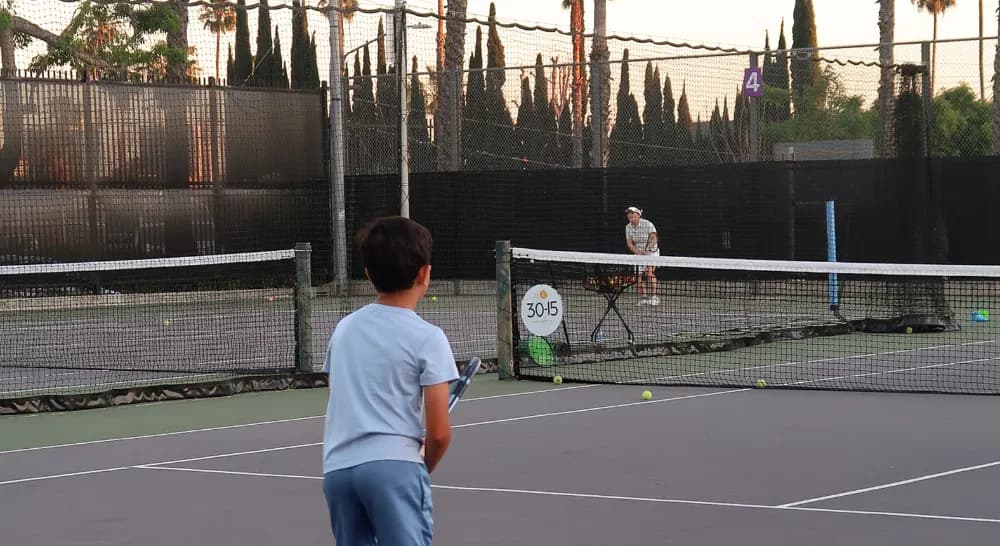
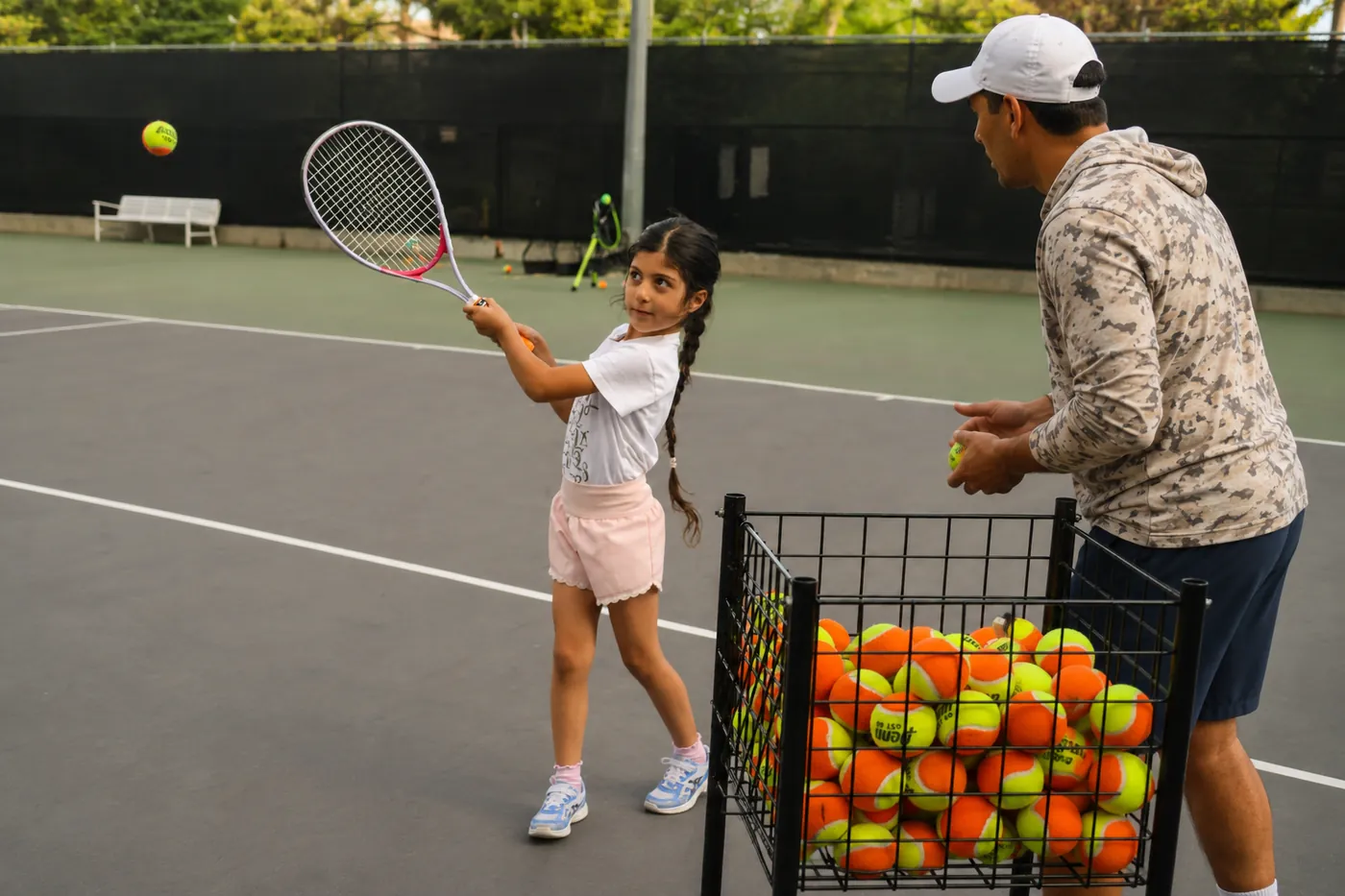
At our tennis academy in Glendale, technique work happens in small groups of four players maximum, so every player gets real feedback on the serve, forehand, backhand, and volley in the same session. Co-founders Mher and Oleg emphasize clean biomechanics over quick fixes, which is why players leave with habits that hold up in matches.
Whether you're an adult fixing a long-standing slice or a junior building strokes from scratch, our coaching plans are built around consistent, structured repetition.
Younger players develop through our junior tennis program using age-appropriate progressions.
Start Building Better Strokes in Glendale
Solid technique is learnable at any age, and the fastest way to build it is with eyes on your strokes. Your first eligible group class is completely free, so you can feel the difference small-group coaching makes before committing. We work with players ages 3 through adult at every level. Visit us at School St, Glendale, CA 91202, call 818-722-3015, or book a free trial to start sharpening your serve, forehand, backhand, and volley with our coaching team. Free trials are available for eligible group classes, not adult advanced/Live Ball or private lessons.
Frequently Asked Questions
What are the best tennis serve tips for beginners?
Start with a consistent toss and proper grip before chasing power. A reliable toss and a continental grip let you add spin, which raises your first-serve percentage far more than swinging harder ever will.
How long does it take to improve a tennis forehand?
With focused practice two to three times a week, most players notice cleaner contact and better tennis forehand technique within four to six weeks. Deep, automatic changes that hold up in matches usually take a few months of consistent work.
Should I learn a one-handed or two-handed tennis backhand?
Two hands are easier to learn and more stable, which is why most juniors and beginners start there. A one-handed tennis backhand offers more reach and slice variety but takes longer to time. Choose one and commit rather than switching repeatedly.
Can I work on tennis stroke improvement in a group setting?
Yes. Small groups are actually ideal because you get coaching feedback plus realistic, varied feeds from other players. The key is keeping groups small enough that everyone gets individual attention on each stroke.
How do I stop making the same mistake on every shot?
Fix one habit at a time and slow the practice down. Most repeated errors come from rushing into live play before the corrected movement is grooved. A coach watching from the side can spot the cause faster than you can feel it.