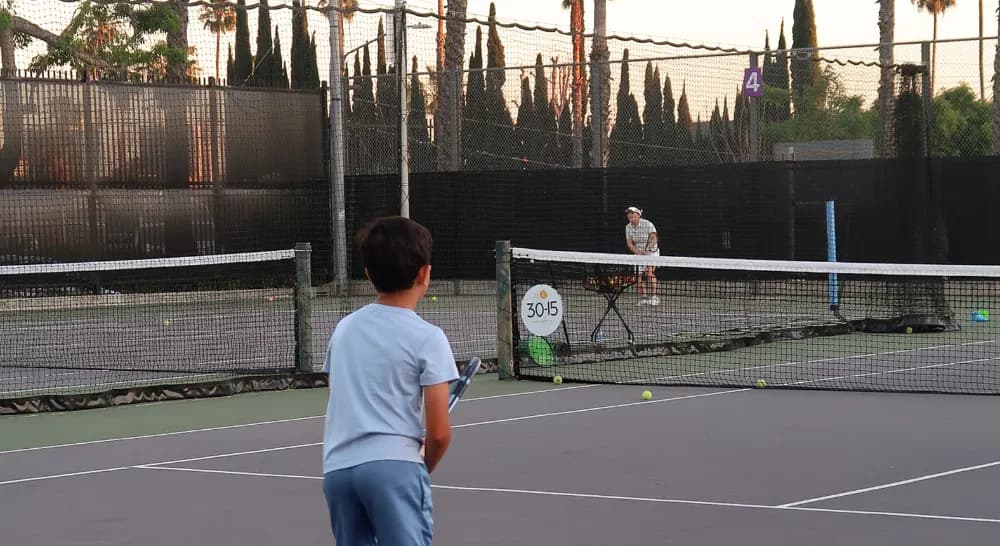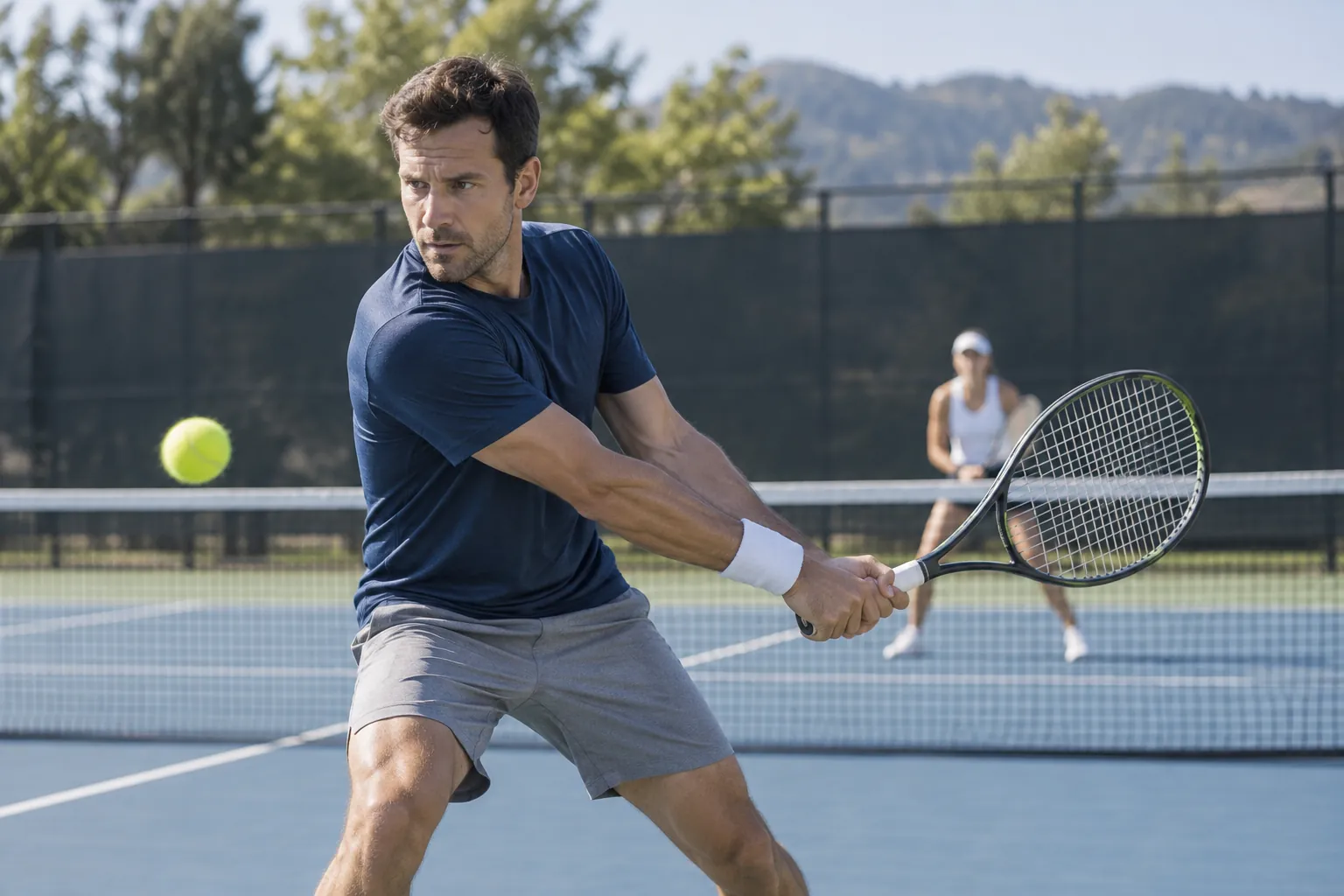
There is a ceiling most recreational players hit around the 6-12 month mark. Rallies feel consistent. You can keep the ball in play. But your game is not actually getting better, it is just getting more comfortable. Breaking through that ceiling requires a different kind of training: structured competitive drilling, coached match play, and programming designed to expose and fix specific weaknesses rather than reinforce what you already do well.
At 30-15 Tennis Academy in Glendale, advanced tennis training is built around that exact problem. This guide covers what serious-player programs look like, which drills and formats move the needle fastest, and how to find the right coaching structure for where your game is right now.
What Separates Advanced Training from Regular Tennis Lessons
Most intermediate players think they need more lessons. What they usually need is more intentional practice and those are two very different things.
A standard group lesson gives you instruction and court time. Advanced training programs layer in competition pressure, video-style feedback on shot patterns, physical conditioning, and match analysis. The goal is not just to hit better strokes in isolation, it is to perform those strokes when the point matters, when you are tired, and when your opponent is making you uncomfortable.
At 30-15, the advanced coaching programs separate players by actual ability, not self-reported level, so you are always training with people who push you rather than people you outrun.
Who Advanced Tennis Training in Glendale Is For
Advanced training at 30-15 is the right fit if any of these describe you:
You play regularly but have plateaued same shots, same errors, same losses
You are preparing for a USTA league season or local tournament
You competed in high school or college and want to get back to a competitive level
You already take lessons and want to add match-play programming on top
You are a junior player on the Yellow Ball track preparing for interscholastic or USTA junior tournament play
Players who are still developing basic consistency may be better placed in intermediate programming first. Coaches assess ability and recommend the right level; contact the academy if you are unsure which program to select.
Core Components of Advanced Training at 30-15
Competitive Drilling
Competitive drilling is the backbone of serious training. Unlike feed-based drilling where your coach hand-feeds you balls, competitive drilling uses live ball scenarios with targets, consequences, and pressure.
Examples of what this looks like in practice:
Cross-court battle: Two players drill crosscourt forehand to forehand. The first player to miss 3 shots loses the round. Simple format, enormous pressure, forces shot-making under competition conditions.
Inside-out forehand patterns: Players work from the center of the court, running around the backhand to hit inside-out forehands, one of the most important patterns in advanced singles play. Repetition builds the footwork habit; competitive scoring forces execution under pressure.
Approach shot and volley sequences: Player hits an approach shot to a target zone, moves to net, and finishes the point. Coaches track success rate over the session so improvement is measurable.
Serve plus one: After serving, the player must hit a specific first ball crosscourt, down the line, or to a particular zone regardless of where the return lands. Forces planning the point before it starts.
These are not complicated. What makes them effective is the repetition volume and the pressure element. Competitive drills help players connect stroke mechanics with decision-making under match conditions.
Match Play Formats
Live match play is where technique either holds or breaks down. Advanced training at 30-15 includes structured match-play sets not just open hitting with coaching intervention between games or sets.
Scenario sets: Players play games starting from a specific scenario 30-40 down, deuce, or after a specific shot pattern. Forces practice of high-pressure moments that rarely come up naturally in recreational play.
Tiebreak training: Practicing tiebreaks gives players experience with high-pressure scoring. Ask your coach how to work these scenarios into your training.
Point-based match analysis: After a set, coaches identify the 2-3 patterns where points were lost most consistently. The next drilling block targets those patterns directly. This closes the loop between match play and practice in a way that recreational tennis never does.
Private Coaching for Advanced Players
For players who want the fastest individual improvement, private training sessions at 30-15 allow coaches to work on specific technical issues that group formats cannot address efficiently.
Common advanced technique work done in private sessions:
Serve mechanics: Toss consistency, pronation timing, kick serve development, second serve depth and spin. Serve is the one stroke where private instruction dramatically outperforms group work because it requires individual video-level attention to small technical details.
Backhand slice: Often the weakest shot in an intermediate player's arsenal. Adding a reliable slice opens up tactical options holding the baseline, changing pace, setting up approaches to the net that transform how you construct points.
Net game: Most recreational players almost never practice volleys. A dedicated block of private sessions on volley technique and net positioning adds a weapon most opponents at the 3.5-4.0 level cannot handle.
Second serve: Advanced players who double fault under pressure almost always have a second serve they do not trust. Rebuilding second serve mechanics with a coach spin first, then pace is one of the highest-ROI investments a serious player can make.
Physical Conditioning for Tennis
Advanced tennis is a physically demanding sport. Players who are well-conditioned recover faster between points, move better in the third set, and make fewer unforced errors under fatigue.
Advanced training programming at 30-15 incorporates tennis-specific conditioning built into sessions:
Lateral agility: Cone drills and shadow swings that replicate the side-to-side movement pattern of a baseline rally. Most gym cardio builds endurance in a straight line tennis movement is almost entirely lateral.
Split-step timing: The split-step (a small hop as your opponent strikes the ball) is the most important movement habit in tennis and the one most intermediate players do inconsistently. Drilling it until it becomes automatic noticeably improves court coverage.
Recovery sprints: After hitting, players sprint back to the center mark before the next ball is fed. Simulates the recovery demand of real match play, which most drilling formats skip.
For players who want to pair court training with dedicated tennis fitness work, the full breakdown of conditioning approaches is covered in the tennis fitness and conditioning overview.
Training Frequency for Serious Players
How often you train determines how fast you improve but there is a ceiling beyond which additional court time yields diminishing returns without adequate recovery.
The recommended baseline for competitive improvement:
3 court sessions per week minimum (two group/drilling sessions + one match play or private)
1-2 off-court conditioning sessions per week
Review of patterns between sessions (even mental rehearsal of shots improves performance)
Players training twice a week can still improve. Higher frequency may provide more practice opportunities, but progress depends on coaching, recovery, starting level and match experience. Moving up a USTA rating is not guaranteed on a set timetable.
For junior players in competitive preparation, the Yellow Ball program includes the structure and frequency needed for tournament readiness.
How to Start Advanced Training at 30-15 Tennis Academy
Start by discussing your current level and goals with the academy. Adult advanced/Live Ball sessions do not offer free trials; sign up for those programs. Junior players can book a free trial for coach assessment and placement.
Advanced players are sometimes placed into intermediate programming first if their game has identifiable gaps that would limit their benefit from competitive drilling right away. This is not a setback. Spending 4-6 weeks building specific tools before moving into full advanced training produces better results than rushing placement.
If you already know you want to jump into a structured program, the signup page has current program options and scheduling. The coaches page gives you background on the instructors you will be working with.
For context on how advanced training fits into the broader coaching structure at 30-15, the tennis training overview covers the full progression from recreational to tournament-level play.
If you are serious about improving your tennis game in Glendale, not just maintaining it, advanced training is a structured environment for that work. Sign up for adult advanced training, or contact the academy for a coach's guidance on placement.
Frequently Asked Questions
What USTA rating is considered "advanced" at 30-15?
Advanced training programs are generally designed for 3.5+ rated players, though the actual placement is based on what coaches observe on court rather than a self-assigned rating. Many 3.5 players benefit from structured competitive drilling. Strong 3.0 players transitioning toward competition are also a common fit.
Can I combine advanced group training with private lessons?
Yes, and most serious players do. Group competitive drilling builds volume and tactical awareness. Private sessions fix individual technical problems. They complement each other well.
How long before I see improvement in match results?
Results vary with starting level, training consistency and competition experience. Look for improvements in decision-making and error reduction under pressure rather than expecting a guaranteed result by a particular week.
Do you offer video analysis of match play?
Ask your coach about video review options when you enroll. Point pattern analysis is part of the advanced coaching approach at 30-15.
I have not played competitively in years. Do I still qualify for advanced training?
Possibly. Former competitive players may retain tactical knowledge and stroke mechanics after a break. Discuss your experience with a coach to find the right starting group; returning to advanced training depends on your current readiness.