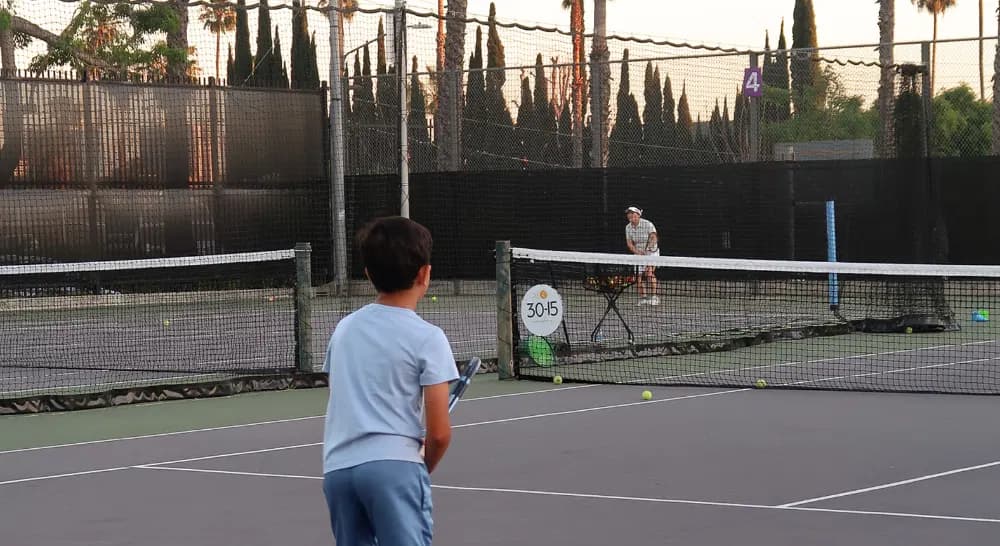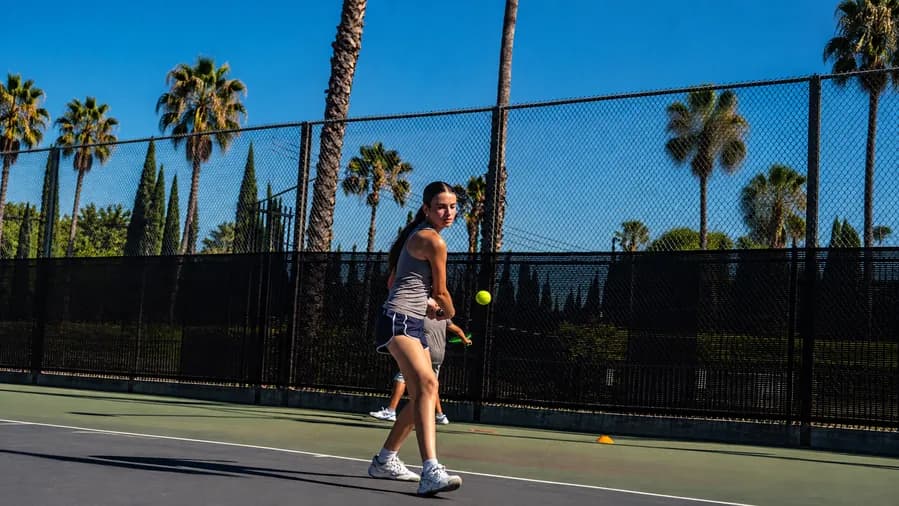
Entering your first tennis tournament is one of the more clarifying experiences in the sport. Everything you have been working on in practice suddenly has a context: a score that matters, an opponent who is trying to win, and no coach on the sideline telling you what to do.
Quick answer: To prepare for your first tennis tournament, focus your training in the final two to three weeks on match play and point construction rather than technique refinement. Get your gear sorted well in advance, develop a simple tactical game plan, practice your service routine, and treat the event as a learning experience rather than a pass-or-fail test.
That framing, learning over judging, is the most important thing to carry into your first event. Here is how to prepare so you walk onto the court with something to execute.
Are You Ready to Enter a Tournament?
The honest answer is that most players wait longer than they need to. If you can sustain a rally, serve consistently into the box, and understand the basic scoring rules, you are ready to compete. You do not need to be winning practice matches before you play your first tournament.
What the first tournament teaches you cannot be replicated in lessons or drills. The pressure of a real match, even at the most entry-level competitive format, reveals things about your game and your mental state that you simply cannot discover any other way. Enter earlier than you think you are ready, and treat the result accordingly.
That said, entering with some preparation makes the experience more productive. You get more out of it when you arrive with a game plan rather than improvising everything from zero.
The Two to Three Weeks Before: Training Priorities
In the lead-up to your first tournament, the training focus should shift from technique acquisition to match-play consolidation. You are not learning new shots in this window. You are making what you already have reliable under mild pressure.
Play more points, hit fewer drills. Replace a portion of your usual drill work with live point play. Serve and return games, short sets, and first-to-five-points formats build the habit of constructing points rather than just keeping the ball in play.
Work on your serve. The serve is the one shot in tennis you control completely. A reliable, consistent serve going into your first tournament is worth more than any other technical development you could prioritize in this window. You do not need a big serve; you need a dependable one.
Practice under mild discomfort. Play tie-breaks, play games where you start down 0-40, play sets where the score is kept and actually matters. Mild competitive pressure in practice is the closest approximation to tournament conditions.
Book a session with your coach. A focused private lesson in the final week before a tournament is a useful checkpoint. Your coach can give you a clear picture of your most reliable patterns and help you identify two or three tactical principles to take into the event.
For players who have been building toward competitive play through structured training, our advanced training and competitive drills program covers the kind of work that prepares you specifically for match contexts.
Match Strategy for First Tournaments: Keep It Simple
First-tournament strategy should be simple. One of the most common mistakes first-time competitors make is attempting shots in matches that they cannot execute consistently in practice, because the competitive context feels like it demands more.
It does not. Your opponents at entry-level tournaments are managing the same nerves and making the same errors you are. The player who misses fewer unforced errors usually wins more matches at this level than the player attempting the most ambitious tennis.
Build your game plan around your most reliable patterns. If your forehand is more consistent than your backhand, direct play to your forehand side whenever you have the choice. If your cross-court rally is more reliable than your down-the-line, default to cross-court.
Identify three tactical principles and stick to them. For most first-tournament players, a workable framework looks like this: start every point with a dependable serve and a solid first-ball return; keep the ball in play on neutral rallies rather than going for winners; attack only when you have created a clear opportunity.
Return the serve deep and central. The return of serve is underpracticed by most recreational players. A deep, central return is far more effective than an attempted winner, because it gives your opponent no angle and starts the rally from a position of rough neutrality.
Have a plan for when you are losing. Decide in advance what you will do when you drop a set or go down a break. For most first-tournament players, the answer is to simplify further and focus on each point individually. Our post on mental toughness and match discipline covers the specific psychological frameworks that help players stay grounded when the score is against them.
The Day Before: Gear and Logistics
Gear problems on tournament day are avoidable. Handle everything the day before.
Rackets: Bring two rackets, both strung. If you only have one racket, string it at least a week in advance so the strings have settled. A freshly strung racket the day before a tournament plays differently than one with a week of use on it.
Shoes: Wear the shoes you are going to play in to practice at least several times before the tournament. New shoes on tournament day are a blister risk.
Clothing: Pack a second shirt and a towel. If your tournament runs long or you play multiple matches, a dry shirt between rounds makes a real difference.
Water and snacks: Bring more water than you think you need. A light snack for between matches, something that sits well for you during physical activity, is worth having in your bag.
Know where you are going. Look up the venue the day before. Know what time check-in opens and plan to arrive at least thirty minutes early. Arriving rushed and parking at the last minute adds a layer of stress you do not need.
Tournament Morning: Warm-Up and Preparation
What you do in the hours before your match affects how you play.
Sleep matters more than a late practice. The night before your first tournament, prioritize sleep over any additional practice session. A tired player who has not slept well will not execute as well as a rested player who skipped one evening of hitting.
Eat something familiar. Tournament morning is not the time to experiment with food. Eat a normal meal that you know agrees with your digestion before physical activity.
Warm up your body before you warm up your shots. Arrive early enough to do a proper physical warm-up: light movement, dynamic stretching, and a few minutes of easy jogging before you pick up a racket. Your first few rally balls should be gentle and cooperative rather than competitive; you are waking up your mechanics, not proving something to your opponent.
Review your tactical principles. During warm-up, remind yourself of the two or three things you decided to focus on. Keep it simple and concrete.
Mental Preparation: What to Focus On During the Match
The mental game in a first tournament tends to be more disruptive than the technical game. Most players lose more points to their own nerves than to their opponent's quality.
Focus on process, not outcome. Instead of thinking about winning the match, think about executing your serve routine. Instead of thinking about the score, think about your return position. Process focus keeps your attention on things you can control.
Use the time between points. Competitive tennis has built-in recovery time between points: walk slowly, breathe deliberately, and reset. This is not dead time; it is where the mental game is actually played.
Expect errors and plan for them. You will miss shots you routinely make in practice. This is normal under competitive conditions and does not mean you are playing badly. The players who maintain composure after errors outlast the players who unravel.
Play one point at a time. The score is a byproduct of individual points, not the other way around. When you are down a set, the only thing that matters is the next point. Everything else is noise.
For a deeper framework on managing pressure and staying disciplined through a full match, the mental toughness guide covers these principles in detail.
After the Match: What to Take Forward
Win or lose, first-tournament experience is data. The match reveals things your coach and your practice sessions cannot.
After the match, give yourself an honest but brief review. What patterns worked under pressure? Where did you make the most unforced errors? Which parts of the game felt controlled and which felt chaotic? Take two or three specific answers to that last question back to your next practice session and your next conversation with your coach.
Your coaching team can help you structure your training around what the tournament actually exposed, rather than what you assumed you needed to work on. This is where players who compete regularly improve faster than players who only train.
Frequently Asked Questions
How do I find beginner-level tennis tournaments in Glendale?
USTA Southern California and USTA's event search list competitions by age and playing level. Junior Circuit events are designed for players beginning competitive play; eligibility and formats vary. Ask your coach which junior event or adult rating division fits your experience, then read the organizer's entry requirements.
How many tournaments should I play in my first year?
There is no universal answer, but playing three to five events in a first competitive season gives you enough match exposure to see meaningful development without burning out. Each tournament builds on the last, and the improvements between events tend to be rapid in the early stages of competitive play.
What is the warm-up format in a tennis tournament?
Most recreational and local tournaments allow a brief warm-up period before matches, typically five minutes of cooperative rallying with your opponent. This is not competitive time; it is a mutual warm-up. Use it to find your rally rhythm and get a touch on your serve rather than to probe your opponent.
Should I watch other players' matches before my own?
If it relaxes you, yes. If it makes you more anxious, no. Some players benefit from watching the court conditions and the general level of play at a tournament before they compete. Others find it increases pre-match nerves. Know which applies to you.
What if I lose badly in my first tournament?
Losing in a first tournament is more common than winning, and it is more instructive. A decisive loss tells you clearly what you need to work on, which is more useful than a lucky win that leaves you unsure what actually happened. Players who keep competing after a difficult first event tend to improve faster than those who wait until they feel more ready.