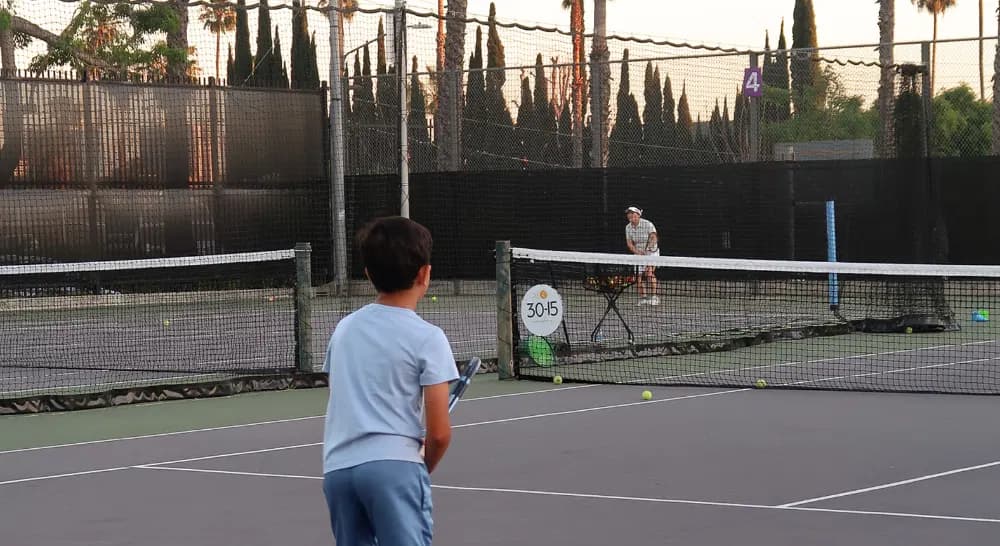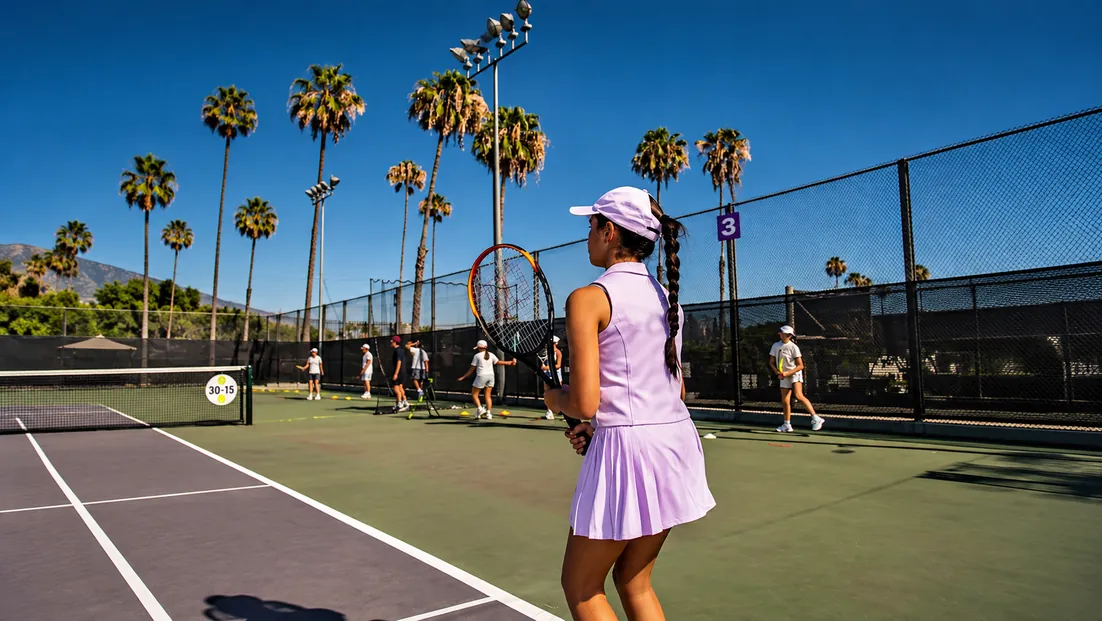
Quick answer: Green Ball is the stage just before standard tennis, typically for children around ages 9 to 12 at 30-15 Tennis Academy. It uses a ball slower than a regular tennis ball on a full-size court, so players can learn real strokes, tactics, and point play. Yellow Ball is the standard ball on the full 78-foot court. Children usually move from Green to Yellow when they rally consistently, serve reliably, and handle the faster ball.
Green Ball is often the stage where tennis becomes serious in a good way. Children have the coordination for proper strokes, the focus to follow tactics, and the interest to start playing real matches. At 30-15 Tennis Academy in Glendale, the Green Ball program is built for this transition, between Orange Ball and Yellow Ball in our junior tennis pathway.
This guide covers who Green Ball is for, how the format differs from Orange and Yellow, the skills to master, and the signs a player is ready to move up. For all four levels together, see our guide to how kids move through the colored-ball stages. Format background is on the USTA level guide.
What Ages Is Green Ball Tennis For?
Green Ball typically serves children around ages 9 to 12. As at every junior stage, age is a guideline. A coach places players by skill and physical development, so a strong 8-year-old might train with Green players while an 11-year-old who started late may spend more time at Orange.
What matters is whether the child can handle the equipment and the demands of longer rallies. By this stage most players have the strength and coordination for a longer racquet and for moving well around a bigger court.
The Green Ball Format: Ball, Court, and Racquet
The Green stage moves the game close to the adult version while softening the ball’s pace. The ball is slower and bounces lower than a regular ball, the court is full size, and racquets are longer than in Orange while still junior-sized. Exact specifications are published by the USTA, so check the link above for current details.
This setup does three things. Players learn on the same court dimensions they will use as adults. The slower ball gives time to set up, swing fully, and recover. Rallies stay longer, which means more practice per session. Equipment varies between programs, so ask your coach what a session uses.
How Green Ball Differs From Yellow Ball
| Factor | Green Ball | Yellow Ball |
|---|---|---|
| Usual academy age | Around 9 to 12 | Around 13 to 17 |
| Ball | Slower, lower bounce than standard | Standard tennis ball |
| Court | Full 78-foot court | Full 78-foot court |
| Focus | Technique, tactics, early point play | Consistency, power, patterns, match play |
| Typical goal | Build real tennis habits | Compete and refine the full game |
The central difference is speed. Yellow Ball is faster and bounces higher, which exposes weak technique and rewards consistent footwork. Green Ball is the bridge where children build those habits without being overwhelmed. For the next level, see our Yellow Ball program.
Skills to Master in Green Ball
A Green Ball player is no longer just rallying. They are learning how to play tennis.
Stroke technique
Forehands and backhands should have a consistent shape: a proper grip, a full swing, and a balanced finish. One-handed or two-handed backhand becomes a real decision here, and a coach can help based on comfort.
The serve
A reliable serve is a major goal. Children work on the toss, the motion, and getting the ball into the box. Consistency comes before power.
Footwork
Split step, recovery, and efficient movement are crucial. Many Green players improve more from better footwork than from stroke changes.
Directional control
Hitting crosscourt and down the line, and aiming for depth, teaches players to control where the ball goes.
Basic tactics
Point construction begins: hitting deep to create time, moving the opponent, and finding open space. Even simple patterns give a child a plan.
Match play and scoring
Playing sets, keeping score, and managing nerves are part of development. When a player is ready for formal events, our guide to preparing for a first tennis tournament is a useful next read.
Signs Your Child Is Ready for Yellow Ball
Coaches look at several practical signals before moving a player up:
- Rally consistency. The child keeps the ball in play for extended exchanges, even under some pressure.
- A dependable serve. Most serves land in, with a repeatable motion.
- Stroke stability. Forehands and backhands hold up when the ball is hit harder.
- Footwork habits. The child moves to the ball and recovers without being told every time.
- Physical readiness. They handle the pace and length of Yellow sessions without losing form.
- Tactical understanding. They think about where to hit, not just whether to hit.
- Confidence and enjoyment. They want the challenge and are not just being pushed.
Moving up too early can cause frustration because the faster ball exposes technical gaps quickly. Many coaches prefer to see a child handle Green comfortably first. If you are unsure, a short assessment during a free group trial can give a clear answer.
How Parents Can Support a Green Ball Player
- Encourage regular play. Consistent practice matters more than occasional long sessions.
- Praise effort, not only results. Children this age compare themselves to peers, and confidence can be fragile.
- Support rest and recovery. Growing bodies need sleep and downtime. See our guide to tennis fitness and conditioning.
- Keep the focus on development. Wins and losses matter less than learning at this age.
- Add focused work if needed. One-on-one sessions can target a single skill such as the serve. See our junior private lessons.
Mental habits start to matter too. Our guide to mental toughness in tennis has ideas that translate well to older juniors.
What a Green Ball Session Looks Like
Sessions are more structured than at younger levels but still active and varied: a dynamic warm-up, technical drills on one stroke, cooperative rallying, serve practice, and competitive games or points. Coaches balance repetition with fun so players stay engaged. You can meet the people who run sessions on our coaches page.
Frequently Asked Questions
What age is Green Ball tennis for?
Green Ball is typically for children around ages 9 to 12. Placement depends on skill, not just age, so a coach may place a child earlier or later based on rally ability, strokes, and coordination.
What is the difference between Green Ball and Yellow Ball?
Green Ball uses a slower, lower-bouncing ball on a full-size court, helping children build technique and tactics. Yellow Ball is the standard ball on a full 78-foot court and demands faster reactions.
How long does a child stay in Green Ball?
It varies. Some children progress in under a year, and others take longer. The goal is consistent strokes, a reliable serve, and basic tactics before moving to Yellow. Rushing the move rarely helps.
What skills should my child have before Yellow Ball?
Consistent rallying, a reliable serve, good movement, and solid forehands and backhands, plus a basic understanding of tactics such as hitting deep and varying direction.
How can I find out which level my child belongs in?
Book a free group trial at 30-15 Tennis Academy. A coach will watch your child play and recommend a stage. You can also review all levels on our junior tennis page.