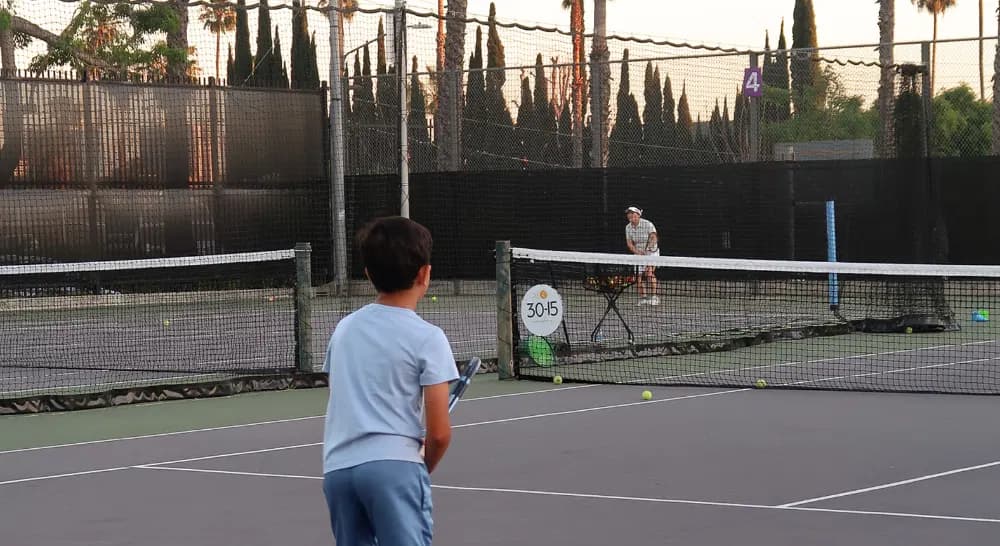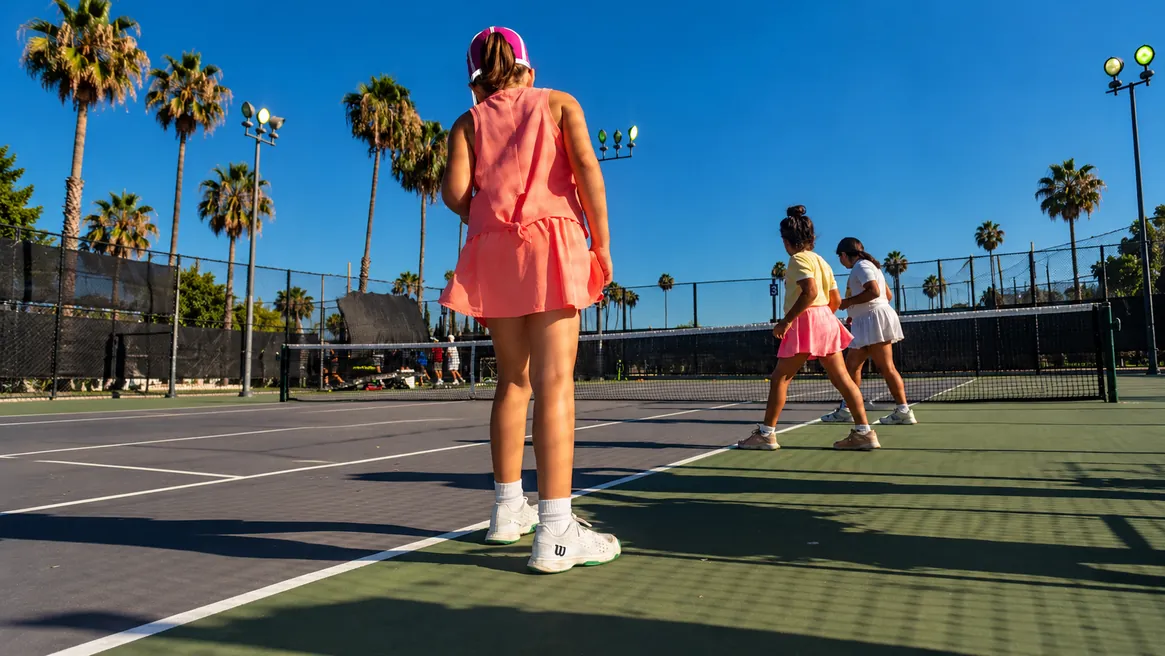
Quick answer: Orange Ball tennis is a stage in the junior development pathway, using a lower-compression ball and a shorter court to make rallies and technique development manageable. At 30-15, Orange Ball usually serves ages 6 to 8; Green Ball usually serves ages 9 to 12. Families exploring tennis for a 7- to 10-year-old should ask coaches which stage fits the child's age, coordination, and current skills.
Why the Orange Ball Stage Exists
Junior tennis is not a single program with a single start age. It is a structured progression built around what a child's body and brain can actually do at different stages of development. The Orange Ball stage sits in the middle of that progression, between the very early-stage Red Ball format and the more technical Green Ball level.
The reason for a separate Orange Ball stage is straightforward: a standard yellow tennis ball bounces too high and too fast for most children under 11 to make consistent contact with. A child who cannot make contact reliably cannot learn technique, cannot rally, and cannot experience the part of the game that makes tennis engaging. The Orange Ball uses a lower-compression design that produces a slower, lower bounce, giving developing players more time to move, set their feet, and swing through the ball.
This is not a workaround or a simplified version of tennis. It is the appropriate version of tennis for this age range. At the Orange Ball level, kids learn the same strokes, the same footwork fundamentals, and the same tactical concepts they will carry into Green Ball and ultimately into standard play. The equipment is scaled; the learning is not.
What Ages Does Orange Ball Tennis Cover?
Orange Ball is used in junior tennis for developing players, including some children in the 7–10 age range. At 30-15, the Orange Ball program is generally aimed at ages 6 to 8, and Green Ball at ages 9 to 12. Coaches assess coordination, physical development, and prior experience when recommending placement.
A child entering tennis at age 8 may be placed in Orange Ball after an assessment. A child who began in Red Ball at age 4 or 5 may be ready to progress at 6. Families with a 9- or 10-year-old should discuss the appropriate starting stage with the coaching team rather than assuming placement from the article's age range.
Parents sometimes ask whether their child is "behind" if they are still in Orange Ball at age 9 or 10. The short answer is no. Staying in Orange Ball until a child has genuinely mastered the fundamentals protects their long-term development. Rushing to Green Ball before the skills are solid typically means going back to fix technique issues later, which takes longer than learning them correctly the first time.
What Kids Work on in Orange Ball Lessons
Orange Ball is where groundstrokes become real. In Red Ball, the emphasis is on hitting the ball at all, building the physical pattern of the swing, and learning that tennis involves two people hitting back and forth. In Orange Ball, the standard rises. Here is what a structured Orange Ball curriculum addresses:
Groundstroke consistency. The primary focus is on forehand and backhand groundstrokes hit with enough control to complete short rallies. Students practice hitting to a target zone rather than just making contact. Coaches look for a consistent swing path, reasonable racquet face angle at contact, and body rotation.
Footwork and court positioning. At this stage, kids learn to recover to a ready position after each shot, to read where the ball is going before it bounces, and to take a split step as the opponent swings. These movement habits, once learned correctly, carry through every level of the game.
Serve development. Orange Ball players begin working on a functional serve. This does not mean a technically advanced serve at first. It means learning the toss, the motion, and the rhythm of the service action in a way that can be refined as they grow. Many kids this age find the serve challenging because it requires coordinating multiple body segments simultaneously.
Rallying cooperatively. A significant part of Orange Ball practice is cooperative rallying, where the goal is to keep the ball in play rather than to win the point. This develops patience, ball tracking, and the ability to adjust to incoming balls that are not perfectly placed.
Introduction to basic tactics. By the later part of the Orange Ball stage, players begin to understand the difference between playing to the open court versus keeping the ball in play, and the concept of controlling the center of the court.
For an overview of how the Orange Ball stage fits within the full junior program structure, the junior tennis program page outlines the progression from Red Ball through Yellow Ball and what each stage emphasizes.
Orange Ball Court Setup
Orange Ball is played on a 60-foot court, which is shorter than the standard 78-foot court used in adult and advanced junior tennis. Net height is typically reduced as well. This smaller court lets kids play real points and rallies without having to generate power they do not yet have.
As kids get stronger, faster, and more consistent, the court dimensions become less of an advantage and more of a limitation. Recognizing when a player is starting to feel constrained by the shorter court is one signal coaches look for when assessing Green Ball readiness.
Skill Milestones: What Does "Ready for Green Ball" Look Like?
Parents and coaches often watch for a cluster of signals rather than one definitive moment when a child is ready to move to the Green Ball stage. The following milestones provide a useful framework, though coaches will assess readiness individually.
Rally consistency. A child who can sustain a groundstroke rally of 6 to 8 or more shots with reasonable regularity is showing the control and court movement the Green Ball stage requires. Occasional good rallies are not enough; the consistency needs to be present more often than not.
Serve reliability. The child can put the ball in play on the serve with enough regularity that service games feel like real tennis rather than a string of faults. The technique does not need to be polished, but the pattern needs to be there.
Footwork habits. The split step and recovery steps are becoming automatic rather than requiring active reminders. This is a meaningful marker because Green Ball requires more court coverage, and players who are still learning to move will struggle to keep up.
Point play. The child can play out a point using intentional shot selection rather than just hitting the ball back. This means choosing to hit crosscourt, going for a specific target, or changing direction when the opportunity presents itself.
Attitude toward challenge. Green Ball is more competitive than Orange Ball. Players who are ready tend to show interest in competing and in the outcome of points, rather than being satisfied with just keeping the ball in play. This is not about aggression; it is about competitive engagement.
Moving from Orange Ball to Green Ball is not a race. Players who move up before these patterns are solid can find the full court and faster, higher-bouncing ball frustrating. The Orange Ball stage gives coaches time to address technical weaknesses before adding those demands.
How Orange Ball Fits into the Full Junior Pathway
The junior development pathway is designed to give every player a foundation that carries forward. Understanding where Orange Ball sits in that sequence helps parents set realistic expectations and support their child at home.
Red Ball (typically ages 3 to 5) focuses on coordination, motor skills, and the very basics of racquet handling. The ball is very slow, the court is short, and the emphasis is on making tennis fun and achievable.
Orange Ball at 30-15 (roughly ages 6 to 8) builds the strokes and footwork patterns that form the technical foundation of the game. This is where kids spend meaningful time developing consistent skills.
Green Ball at 30-15 (roughly ages 9 to 12) uses a lower-compression ball on a full-size court. Technique is refined, competitive formats become more common, and players begin working on more advanced tactics.
Yellow Ball at 30-15 (roughly ages 13 to 17) is standard tennis on a full-size court. Players continue developing the physical and technical tools needed for full-speed rallies and match play.
This progression is covered in more detail in the guide to kids tennis programs, ages, costs, and enrollment in Glendale, which outlines what parents can expect at each stage.
Group Lessons vs. Private Lessons at the Orange Ball Level
Orange Ball players can learn effectively in both group and private lesson formats, and many benefit from a combination of both.
Group lessons offer the advantage of cooperative practice with other kids at a similar stage. Rallying, game formats, and point play require a partner, and group sessions naturally provide this. There is also a social element that keeps the game fun and motivating for kids who enjoy the environment of training with others.
Private lessons allow coaches to focus entirely on one child's specific technical issues. A child who has a persistent pattern in their groundstroke, or who is working through the mechanics of the serve, can make faster progress on those specific elements in a private session because the coaching is entirely directed at them.
Parents interested in how these formats compare can find a full breakdown in the post on group vs. private tennis lessons in Glendale.
Supporting Your Child at Home During the Orange Ball Stage
Tennis development does not happen only on the court. Kids who practice basic physical patterns between sessions tend to progress faster, though this does not require elaborate home setups.
Catching and tossing a ball against a wall builds the hand-eye coordination that translates directly to groundstrokes. Balancing on one foot, hopping, and simple agility activities support the footwork development that is central to Orange Ball training.
Perhaps most importantly, parents who show interest in what their child is learning, without pressuring them about results, consistently report that their kids stick with the sport longer and enjoy it more. Asking your child what they worked on in practice, attending sessions occasionally, and letting them show you a stroke they are proud of all reinforce the value of what they are learning.
For families where more than one child is involved in junior tennis, or where parents also play, the guide to family tennis programs in Glendale covers how different family members can be active at the same time.
Frequently Asked Questions
What age is Orange Ball tennis for?
At 30-15, Orange Ball generally serves ages 6 to 8, while Green Ball generally serves ages 9 to 12. Coaches assess readiness and experience individually. Parents of children ages 7–10 should ask which group fits their child instead of treating the broader article age range as an enrollment guarantee.
How long does the Orange Ball stage typically last?
There is no fixed duration. Some kids move through Orange Ball in one to two years; others spend three years or more developing their fundamentals at this level. The timeline depends on how frequently the child practices, how quickly they absorb new patterns, and their physical development. Coaches assess readiness for the next stage based on skill milestones rather than time spent in the program.
Can my child skip Orange Ball if they seem coordinated?
Starting a child at a higher level than their skills support typically creates frustration rather than faster development. Coaches use an initial assessment to place new students appropriately. Even a very coordinated child benefits from building correct technique at the Orange Ball level rather than developing compensations to manage a faster ball.
What equipment does my child need for Orange Ball tennis?
A junior racquet sized for the child's arm length and strength, comfortable athletic shoes with lateral support, and appropriate athletic clothing are the essentials. Coaches can guide parents on racquet sizing at enrollment. Orange Ball tennis balls are provided during lessons.
How do I know when my child is ready to move to Green Ball?
Coaches monitor student development across sessions and discuss progression with parents. The readiness markers include consistent groundstroke rallies of several shots, a reliable serve motion, automatic footwork habits, and the ability to play out points with some intentionality. Coaches typically initiate the conversation about advancement rather than leaving parents to ask.