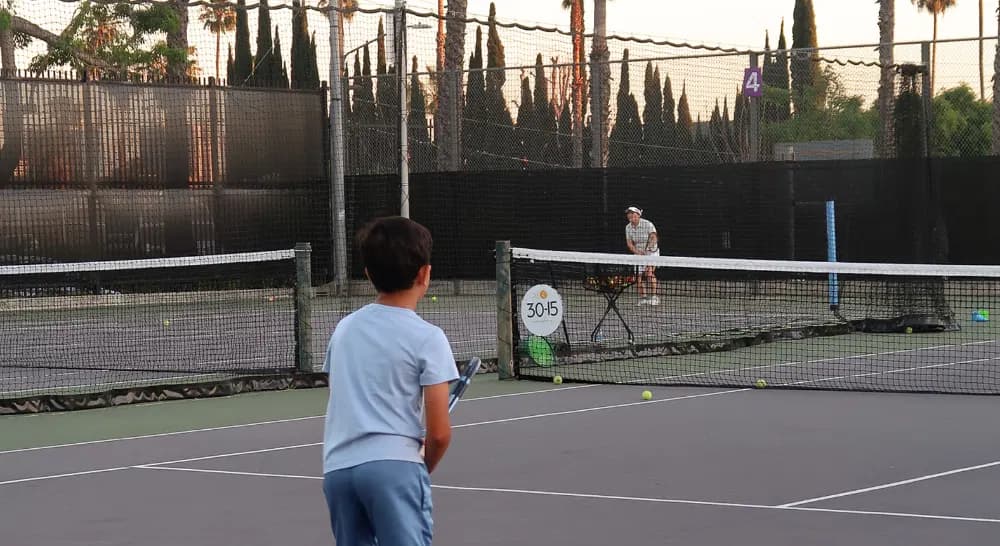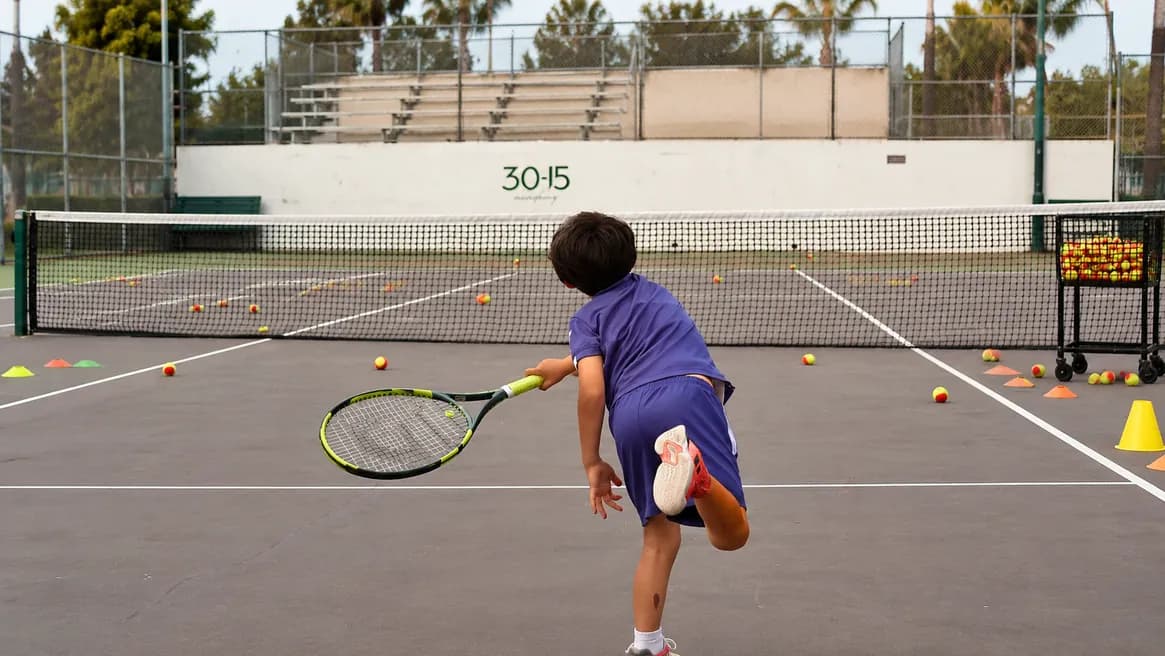
Quick answer: Solo tennis practice is more productive than most players realize. A wall or backboard lets you work on stroke mechanics and consistency without a partner. Serve practice requires only a court and a basket of balls. Footwork drills need nothing but open space. The key is knowing what to work on at your level and building routines that complement what you are doing in coached sessions rather than reinforcing bad habits on your own.
Why Solo Practice Matters
Tennis is unusual among racquet sports because so much of the technical work happens away from match play. A player who only hits during lessons or group sessions is getting a fraction of the repetitions needed to make new techniques feel automatic. Solo practice fills that gap, and for most players it is the difference between slow improvement and genuinely building the game they are working toward.
The players who tend to improve fastest are not always the ones with the most natural ability. They are the ones who show up consistently, whether or not a coach or partner is available. For players in the adult tennis program or the junior development pathway in Glendale, solo work between sessions compounds the coaching they are already receiving. This post gives you specific drills organized by level and by what you have available.
What You Need for Solo Practice
Solo tennis practice does not require a full court or a partner. Different types of solo work have different space and equipment requirements.
A wall or backboard. This is the most versatile solo tennis tool available. A flat, solid wall returns the ball reliably and lets you generate a high volume of controlled repetitions in a short time. Many public parks have backboards alongside their courts. The wall does not replicate match conditions, but it builds the stroke mechanics and hand-eye coordination that make match play easier.
A court and a basket of balls. Serve practice is the one area of the game you can develop almost entirely on your own. You need a court, a basket of balls, and time. Working through a structured serve routine once or twice per week produces significant improvements in consistency and placement over the course of a season.
Open space. Footwork drills require nothing except room to move. A driveway, a backyard, a gym floor, or any flat surface works. Shadow footwork is underrated as a solo practice tool, particularly for players who know their court movement is holding their game back.
Wall Drills for Beginners
If you are in the early stages of learning, the wall is your best practice partner. It gives you immediate feedback: the ball comes back at a pace and angle that reflects exactly how you hit it.
Forehand consistency drill. Stand roughly 10 to 12 feet from the wall and work on hitting continuous forehands at a controlled pace. The goal is not power but rhythm. Count your consecutive hits and try to beat your previous record each session. This builds the swing pattern and timing that translate directly to on-court play.
Backhand introduction. Repeat the same exercise using your backhand. Beginners often find the wall reveals which side of their game is less consistent. Use this information rather than avoiding it: if your backhand keeps going wide or into the net, that tells you exactly what to work on with your coach at your next session.
Alternate sides. Once you can sustain a rally on each side separately, try alternating forehand and backhand with each hit. This requires you to reposition between shots and begins to simulate the movement demands of real play.
Keep wall sessions short: 15 to 20 minutes of focused work is more productive than an hour of distracted hitting. Take breaks and reset your technique between sets.
Wall Drills for Intermediate Players
Intermediate players can use the wall to work on more specific technical elements and to build the kind of repetition that locks in technique changes.
Topspin forehand development. Set up closer to the wall, around 8 feet, and practice hitting with a low-to-high swing path. The wall amplifies any inconsistency in your brushing angle: if your topspin is inconsistent, you will see it immediately in where the ball goes. Move back to 12 to 15 feet as you build control.
Slice backhand. Work on the slice backhand at medium distance from the wall. The goal is a low, flat return rather than a high bounce. The wall gives you enough feedback to feel whether you are cutting through the ball correctly or just patting it.
Two-shot combination practice. Hit a forehand to the wall, let it return, then move around it and hit a forehand again as if running around a weak ball. This simulates the footwork of hitting an inside-out forehand and helps you practice the recovery step back to the center afterward.
Drive volley. Stand 5 to 6 feet from the wall and work on taking balls out of the air with a compact swing. This builds hand speed and the ability to handle pace, both of which translate to better net play and better returns.
Serve Practice Routines
The serve is the only shot in tennis that is entirely under your control. You decide when to start the point, where to aim, how hard to hit, and what spin to use. This makes it uniquely well-suited to solo practice.
The placement grid. Before hitting, choose a target: wide, body, or T, in the deuce or ad court. Hit a set of 10 serves aiming for that target and track how many land in the correct zone. Rotate through all six combinations over the course of a session. This builds intentional serving rather than just swinging in the general direction of the service box.
Spin serve development. If you are working on adding kick or slice to your serve, solo sessions are ideal for this kind of mechanical work. Focus on one element at a time: toss position, racquet angle at contact, or follow-through direction. Trying to change everything at once makes it impossible to isolate what is and is not working.
Second serve consistency. Many recreational players have a first serve they like and a second serve they fear. Devote at least half of every solo serve session to second serve work. The goal is to hit a serve you can rely on under pressure, not just one that goes in occasionally. Players preparing for competition will find this work directly addressed in the tournament preparation guide.
A typical serve session can be a short, focused block of around 15 minutes, tracking placement by target. Adjust the number of balls to your experience and how you feel, take breaks, and stop if you develop pain.
Footwork Drills Without a Court
Court movement is one of the areas most often neglected in practice because it does not feel as satisfying as hitting. But footwork is often the limiting factor that prevents technically capable players from using their strokes in match situations.
Split step timing. Practice the split step by marking a spot on the floor and repeatedly jumping to a split position, then pushing off to a forehand or backhand side. The goal is to make the split step automatic rather than something you think about consciously.
Lateral shuffle. Set up two cones or markers about 10 feet apart and shuffle laterally between them, stopping in a ready position at each end. Add a shadow swing at the end of each shuffle to simulate arriving at the ball and setting up for a groundstroke.
Spider drill. This is a classic agility drill. Place five markers in a pattern from the center mark to each corner of an imagined baseline, plus the two service T positions. Sprint to each, touch it, and return to center. This builds the acceleration and direction-change habits that make court coverage much easier.
Cone to cone forehand setup. Shuffle from a cone to a forehand position, set your feet, swing through with a shadow stroke, recover to center, and repeat. Do 10 reps, rest, and switch to the backhand side. Players working on this kind of movement in parallel with structured coaching will find it builds the habits that coaches can then refine.
Building a Solo Practice Schedule
The most effective solo practice is regular and focused rather than occasional and open-ended. A realistic schedule for someone training two to three times per week with a coach might look like this:
One or two wall sessions of 20 minutes per week, focused on whichever stroke the coach identified as the current priority. One serve session of 15 minutes per week, targeting a specific placement goal. Footwork work done at home for 10 to 15 minutes, two or three times per week.
Depending on the frequency you choose, this adds roughly an hour to just under two hours of solo work per week on top of coached sessions. The extra repetitions can compound meaningfully over a season.
Players who are working toward competitive play and want to understand how to structure their preparation more fully can read the post on advanced training programs in Glendale for context on how coaches approach structured development.
The mental side of solo practice also matters. Practicing with intention, tracking metrics, and maintaining focus during repetitive drills builds the concentration habits that carry into match play. The post on mental toughness and pressure tennis covers how those habits develop.
When Solo Work Needs a Coach
Solo practice builds what you already know. It does not self-correct technique errors. A player who practices a flawed stroke 200 times per week is not improving; they are making the flaw more permanent.
This is why solo work is most valuable when it runs alongside regular coaching, not as a substitute for it. If you have not been getting consistent instruction, and your solo sessions feel like they are going in circles rather than building something, that is the signal to get a coach involved. A single private lesson can identify the two or three technical priorities worth working on alone and give your solo sessions a clear direction.
The coaching team at 30-15 works with players at every level, including adults and juniors who are using solo practice to accelerate their development between sessions.
Frequently Asked Questions
How long should a solo tennis practice session be?
Twenty to thirty minutes of focused work is generally more productive than longer sessions where concentration drops. Wall sessions and serve practice both benefit from short, high-quality blocks rather than extended low-focus hitting. If you have more time, take a break between types of work rather than hitting continuously.
Can wall practice hurt my technique?
Wall practice can reinforce bad habits if you are already swinging incorrectly and repeat that swing hundreds of times. The solution is to get coaching input on your stroke mechanics first, then use the wall to build on that feedback. If something feels consistently wrong during wall sessions, bring it to your next coached session rather than guessing at a fix.
What is the best wall drill for tennis beginners?
The forehand consistency drill is the best starting point. Stand 10 to 12 feet from the wall and focus on making continuous contact with a controlled swing. Count your consecutive hits. This one drill builds timing, rhythm, and the basic forehand pattern that everything else builds on.
Do I need a tennis-specific backboard or will any wall work?
Any flat, solid wall works for basic stroke and consistency drills. A tennis-specific backboard often has a net line marked on it, which gives you the added benefit of seeing whether your shots would clear the net in a real match. If a marked backboard is available, use it. If not, a standard wall is still valuable.
How do I make serve practice more effective on my own?
Track your results by target zone rather than just hitting balls into the service box. Choosing a specific target before each serve and recording whether you hit it turns a repetitive exercise into meaningful data about your consistency and placement. This kind of intentional practice produces faster improvement than volume alone.