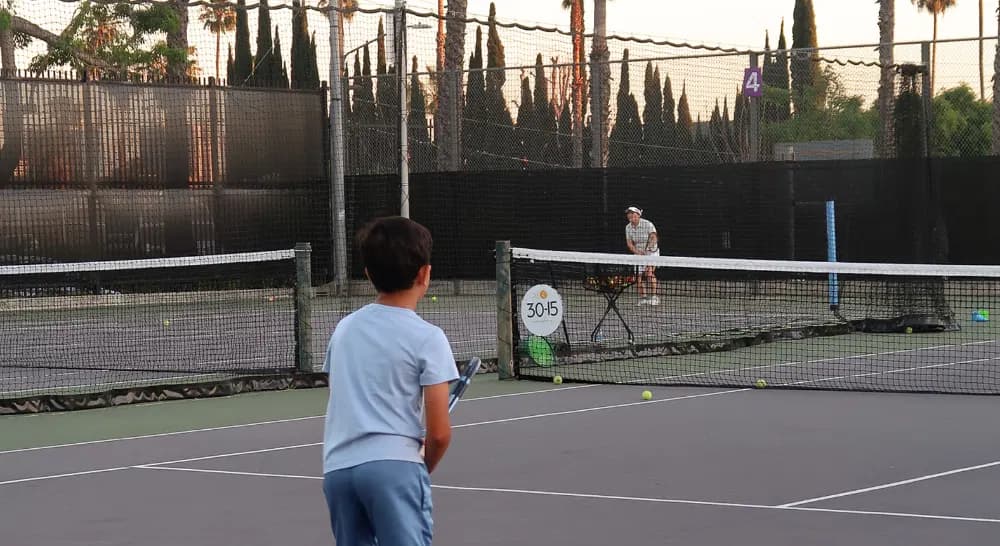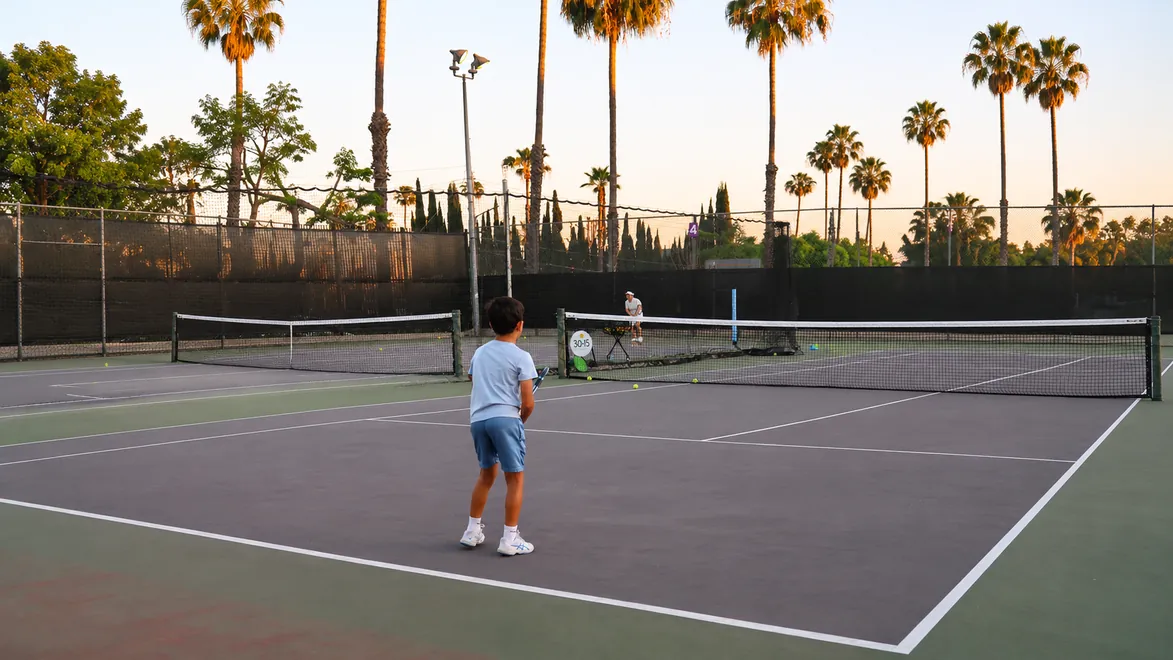
Quick answer: Red Ball is the entry stage of junior tennis, typically for children around ages 3 to 5 at 30-15 Tennis Academy. It uses a large, soft, slow-bouncing ball on a short court (36 feet long in the USTA format), with a focus on coordination, contact, and fun. Children usually move to Orange Ball once they rally comfortably and show consistent basic strokes.
Parents of young children often wonder whether tennis is too much too soon. In a scaled-down format, it is not. Red Ball is built for small hands and short attention spans, with sessions that feel like games rather than lessons. At 30-15 Tennis Academy in Glendale, it is the first step of the junior tennis program.
Below we cover who Red Ball is for, how the court and equipment are scaled, what children practice, what a first class looks like, and the signs a child is ready for Orange Ball. If you want the big picture first, our guide to the full pathway from Red to Yellow shows how each stage connects. Official format details are on the USTA equipment guide.
What Ages Is Red Ball Tennis For?
Red Ball is typically designed for children around ages 3 to 5. A coach may place an older first-time player in Red if they have never held a racquet. The range is a guide, not a rule.
Readiness matters more than the number. A child usually does well when they can follow short instructions from an adult, stay with a group activity for a few minutes, run and stop without much difficulty, and be comfortable in a class setting, either on their own or with a parent nearby.
If your child is closer to three and still building those habits, a trial session is a low-pressure way to see how they respond. Our guide to tennis for toddlers ages 3 to 6 in Glendale goes deeper on introducing very young players.
Court Size, Ball, and Racquet at the Red Stage
The defining feature of Red Ball is that the game is scaled down. Under the USTA’s 10 and Under Tennis format, which follows the ITF Play and Stay model, the Red court is 36 feet long and 18 feet wide, compared with the standard 78-foot court, and the net is 2 feet 9 inches high.
The ball is larger and softer than a standard tennis ball and is designed to bounce lower and travel more slowly. Racquets are short and light, so a small child can swing without struggling to control the frame.
This setup matters for four reasons:
- More contact. A slower ball gives a child time to reach it, so they succeed more often.
- Better movement. A small court teaches children to move toward the ball.
- Less frustration. Soft balls and light racquets make early swings easier.
- Real play sooner. Children can rally early instead of waiting years for standard tennis.
Equipment can vary between programs, so ask your coach what a session uses.
What Skills Do Kids Learn in Red Ball?
Red Ball is not about perfect strokes. It builds the athletic and tennis foundations that make later stages easier.
Hand-eye coordination
Throwing, catching, bouncing, and striking a ball are the building blocks. Coaches use balloons, foam balls, and targets to practice tracking and contact.
Movement and balance
Running, hopping, and quick stops teach body control. Early footwork habits start here, long before formal patterns.
Basic racquet skills
Children learn to hold the racquet, bounce a ball on the strings, and hit forehands to a partner or coach. Backhands and grips come later.
Listening and group skills
Taking turns, following rules, and working with others are real skills at this age.
First games
Many sessions include mini-games and simple point play so children learn what tennis is for: playing, not just hitting.
What Does a First Red Ball Class Look Like?
Expect a short, active session with frequent changes: a movement warm-up, a ball-skills station, a racquet activity, and a closing game. Young children focus best in small bursts, so coaches change activities often.
Parents sometimes expect rows of children hitting balls. You will usually see stations, games, and small-group play instead, and that is intentional. For this age, long drills tend to hurt enthusiasm and do little for development.
On a first visit, bring water, put your child in comfortable athletic clothing and shoes with a good grip, and let them set the pace. It is normal for a three-year-old to watch for a few minutes before joining in.
Signs Your Child Is Ready for Orange Ball
Moving up should feel natural. Coaches commonly look for these signals:
- Consistent contact. The child hits the ball cleanly most of the time.
- Short rallies. They can exchange a few hits with a coach or partner.
- A basic forehand shape. The swing looks like a tennis stroke, not just a swat.
- Movement to the ball. They run to position instead of reaching from where they stand.
- Attention span. They stay focused through a longer, more structured session.
- Interest in more. They ask to play points or keep score.
Orange Ball introduces a bigger court and faster ball, so a child who is not yet comfortable at Red may become discouraged. In coaching experience, extra time at Red is usually safer than an early move. Our Orange Ball guide explains what changes at the next level.
How to Support Your Child at Home
You do not need a court. Simple activities build the same skills:
- Play catch with a soft ball and increase the distance gradually.
- Bounce a balloon with a paddle or racquet.
- Set up targets in the yard and practice rolling or tossing at them.
- Play stop-and-go running games.
- Keep it brief and playful. Ten minutes of fun beats thirty of pressure.
Avoid correcting technique too much at this age. Praise effort and enjoyment.
Choosing a Red Ball Program
When comparing programs, consider:
- Group size. Smaller groups usually mean more attention per child.
- Equipment. Does the program use true Red Ball gear?
- Coaching approach. Are lessons game-based and encouraging?
- Pathway. Is there a clear route to Orange, Green, and Yellow within the same academy?
You can meet our coaches and see how the program works through a free group trial. Families with older siblings may also like our guide to family tennis in Glendale.
Frequently Asked Questions
What age can a child start tennis?
Many programs welcome children from around age 3, usually in Red Ball. Readiness depends on listening, balance, and willingness to join a group more than on the exact birthday.
How big is a Red Ball tennis court?
It is much shorter and narrower than a standard court, which is 78 feet long. The USTA format uses a Red court 36 feet long and 18 feet wide, with a 2-foot-9-inch net.
What does my child need for a first class?
Comfortable athletic clothes, shoes with good grip, and water are enough. Ask the academy whether racquets and soft balls are provided so you can skip buying gear.
How do I know my child is ready to leave Red Ball?
Look for clean contact most of the time, short rallies, a forehand that looks like a tennis swing, and good movement to the ball. A coach can confirm during a session.
How do I book a first Red Ball class?
Start with a free group trial at 30-15 Tennis Academy in Glendale so a coach can see how your child responds. You can sign up when you are ready.